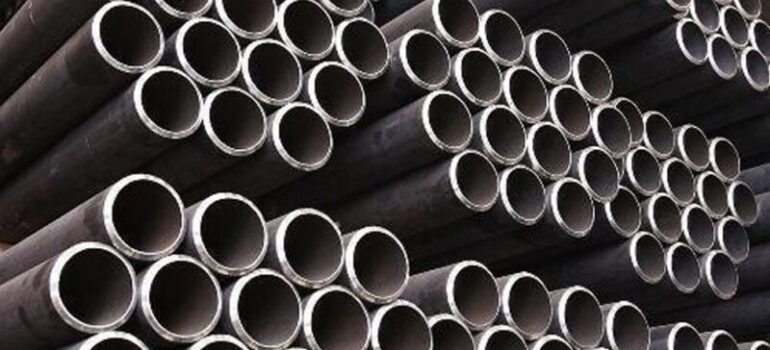
Choosing ASTM A335 P9 Pipes for High-Pressure Applications in Nigeria

High-pressure industrial piping systems in Nigeria require materials capable of maintaining mechanical strength, thermal stability and dimensional integrity under demanding operating conditions. ASTM A335 P9 Pipes in Nigeria are used for applications where elevated temperature, pressure, oxidation and long-term mechanical performance are important considerations.

Industries such as oil and gas, refining, petrochemicals, power generation, chemical processing and industrial heating operate equipment that can expose piping to substantial thermal and pressure loads. ASTM A335 P9 Pipes in Nigeria provide a chromium-molybdenum alloy steel option for selected high-temperature and high-pressure piping systems.

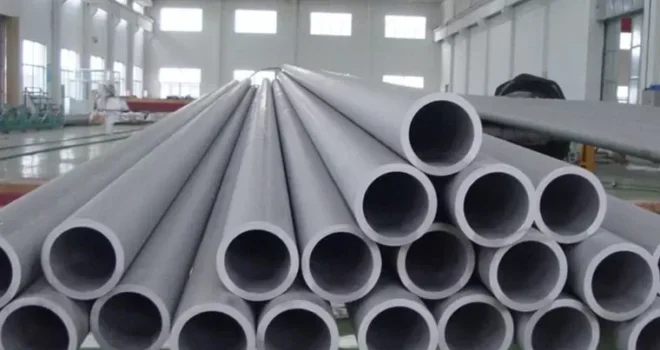
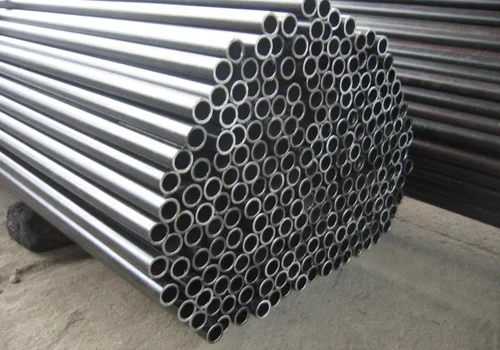
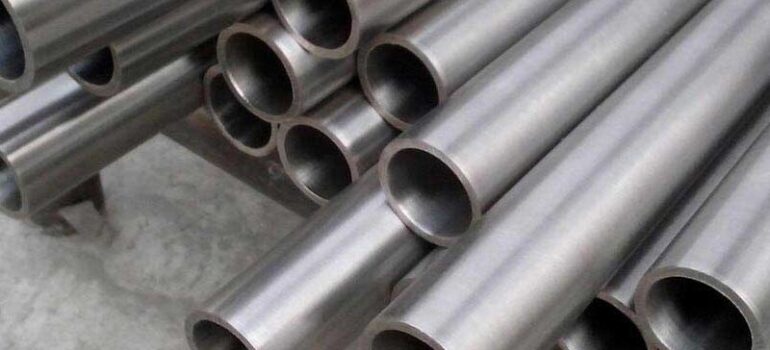
Mcneil Instrument supplies ASTM A335 / ASME SA335 P9 Pipes for industrial applications, including Nigerian projects. P9 is a seamless ferritic alloy steel pipe grade covered by ASTM A335 for elevated-temperature service. Mcneil Instrument’s published information identifies approximately 8–10% chromium and 0.90–1.10% molybdenum for P9.


What Are ASTM A335 P9 Pipes?

ASTM A335 P9 Pipes are seamless chromium-molybdenum alloy steel pipes intended for high-temperature service. The P9 grade contains a comparatively high chromium content together with molybdenum, providing properties suited to demanding thermal environments.

For Nigerian industrial projects, ASTM A335 P9 Pipes in Nigeria can be evaluated for systems involving:

  • High operating temperatures
  • High internal pressures
  • Thermal cycling
  • Oxidizing conditions
  • Long-term mechanical loading
  • Steam service
  • High-temperature process fluids
  • Refinery and petrochemical operations

ASTM A335 / ASME SA335 is the relevant specification for seamless ferritic alloy steel pipes intended for elevated-temperature applications. Mcneil Instrument identifies P9 among its ASTM A335 alloy steel pipe grades.

The final grade and pipe dimensions should always be selected according to design temperature, pressure, process medium, applicable engineering codes and project specifications.


Why Choose ASTM A335 P9 Pipes in Nigeria?

Nigeria has major industrial sectors where piping systems may encounter high temperatures, elevated pressure and demanding process conditions. Oil and gas facilities, refineries, petrochemical plants, power stations and industrial processing facilities all have different piping requirements.

ASTM A335 P9 Pipes in Nigeria can be considered when the engineering design requires a chromium-molybdenum alloy steel pipe with enhanced high-temperature and oxidation performance.

Key characteristics include:

  • High-temperature mechanical performance
  • Improved oxidation resistance
  • Thermal stability
  • Creep resistance
  • Pressure-handling capability
  • Resistance to high-temperature scaling
  • Long-term service performance
  • Seamless construction

Mcneil Instrument’s published Nigerian alloy steel information specifically identifies P9 for applications involving heat exchangers, furnace components, high-pressure boilers, petrochemical process lines and high-temperature steam systems.


Chemical Composition of ASTM A335 P9 Pipes

The chemical composition of P9 contributes significantly to its elevated-temperature characteristics.

ElementTypical P9 Composition
Carbon (C)0.15% max
Manganese (Mn)0.30–0.60%
Phosphorus (P)0.025% max
Sulfur (S)0.025% max
Silicon (Si)0.25–1.00%
Chromium (Cr)8.00–10.00%
Molybdenum (Mo)0.90–1.10%

The published Mcneil Instrument information identifies approximately 8–10% chromium and 0.90–1.10% molybdenum for P9. Exact chemical requirements should be verified against the applicable ASTM material specification and the material test certificate for the supplied pipe.

Importance of Chromium

Chromium contributes to oxidation and scaling resistance, which is particularly useful when piping operates continuously at elevated temperatures.

Importance of Molybdenum

Molybdenum contributes to high-temperature strength and resistance to deformation under sustained thermal and mechanical loads.

The combination makes P9 relevant to demanding high-temperature industrial systems.


Key Properties of ASTM A335 P9 Pipes in Nigeria

1. High-Temperature Strength

ASTM A335 P9 Pipes in Nigeria can be selected for piping systems exposed to sustained elevated temperatures where conventional carbon steel may not provide the required material performance.

2. Oxidation Resistance

The relatively high chromium content helps improve resistance to oxidation and scaling during elevated-temperature operation.

3. Creep Resistance

P9 provides characteristics suitable for applications where long-term exposure to temperature and mechanical stress can lead to creep deformation.

4. Thermal Stability

The chromium-molybdenum alloy composition provides improved thermal stability for demanding process conditions.

5. High-Pressure Capability

When the correct wall thickness, dimensions and design parameters are specified, P9 pipes can be used in high-pressure industrial piping systems.

6. Long-Term Performance

Correct material selection, heat treatment, fabrication, welding and inspection are important for achieving the intended service performance of P9 piping.


ASTM A335 P9 Pipes for High-Pressure Applications in Nigeria

The selection of ASTM A335 P9 Pipes in Nigeria for high-pressure service should be based on more than the nominal pressure rating.

Engineers and procurement teams should evaluate:

  • Design pressure
  • Design temperature
  • Pipe outside diameter
  • Wall thickness
  • Pipe schedule
  • Process medium
  • Thermal cycling
  • Corrosion environment
  • Creep requirements
  • Welding requirements
  • Applicable design code
  • Inspection requirements

The correct P9 pipe must be capable of satisfying the complete operating envelope of the piping system.


ASTM A335 P9 Pipes for Nigerian Oil & Gas Industry

Nigeria’s oil and gas sector includes production facilities, gas-processing plants, refineries, terminals and associated process infrastructure.

ASTM A335 P9 Pipes in Nigeria can be evaluated for selected high-temperature applications such as:

  • Refinery process piping
  • Furnace systems
  • Steam lines
  • Heat exchangers
  • High-temperature process lines
  • Gas-processing systems
  • Petrochemical units
  • Industrial heating systems
  • High-temperature utility piping

Material selection should account for the process fluid, operating temperature, pressure, corrosion mechanisms and applicable project specifications.


ASTM A335 P9 Pipes for Refineries in Nigeria

Refineries contain heaters, furnaces, steam systems, heat exchangers and process units operating under demanding conditions.

P9 pipes can be considered for selected applications including:

Refinery Heater Systems

P9 can be evaluated for high-temperature piping associated with refinery heating equipment.

Furnace Piping

Industrial furnace systems can expose piping to continuous thermal loading. The oxidation and high-temperature characteristics of P9 can make it suitable for specified applications.

Steam Systems

P9 can be used where engineering requirements call for an ASTM A335 alloy steel grade for elevated-temperature steam service.

Heat Exchangers

P9 pipes can be considered for selected heat-transfer systems where the temperature and pressure conditions require alloy steel piping.

Mcneil Instrument’s published Nigerian information identifies P9 for refinery and high-temperature process applications.


ASTM A335 P9 Pipes for Power Plants in Nigeria

Power-generation systems contain boilers, steam lines, superheaters, heat exchangers and other equipment exposed to elevated temperature and pressure.

ASTM A335 P9 Pipes in Nigeria may be considered for:

  • High-temperature steam piping
  • Boiler systems
  • Superheater circuits
  • Heat exchangers
  • Industrial heating systems
  • Steam distribution systems
  • High-pressure process piping

The final pipe grade should be determined from the plant’s design conditions and applicable power-piping standards.


ASTM A335 P9 Pipes for Petrochemical Plants

Petrochemical facilities combine temperature, pressure and process-specific chemical conditions.

Applications for ASTM A335 P9 Pipes in Nigeria may include:

  • Petrochemical process lines
  • High-temperature steam systems
  • Furnace circuits
  • Heat-transfer systems
  • Process utility lines
  • Industrial heaters
  • High-temperature fluid transportation

P9 selection should consider both mechanical and environmental requirements rather than temperature alone.


ASTM A335 P9 Pipes for Boilers and Steam Systems

Boilers and steam-generation systems require carefully specified materials because piping can experience continuous temperature, pressure and thermal cycling.

P9 pipes may be used in selected:

Boiler Piping

For high-temperature sections where the engineering design specifies an alloy steel pipe.

Steam Lines

For steam transportation systems requiring elevated-temperature alloy steel performance.

Superheaters

Superheater circuits expose pipes to high-temperature steam and require appropriate material selection.

High-Pressure Steam Systems

P9 can be evaluated for high-pressure steam piping when the design calculations and applicable codes specify the grade.


ASTM A335 P9 vs Other P-Grade Pipes

Understanding the differences between ASTM A335 grades is important when selecting ASTM A335 P9 Pipes in Nigeria.

GradeApprox. ChromiumApprox. MolybdenumTypical Application Areas
P54–6%0.45–0.65%Refineries, boilers, heat exchangers
P98–10%0.90–1.10%High-temperature process, steam and petrochemical systems
P111–1.5%0.44–0.65%Boilers, steam lines, power plants
P221.9–2.6%0.87–1.13%Reheaters, boilers, power plants
P918–9.5%0.85–1.05%Critical high-temperature power systems

Mcneil Instrument’s published information lists P9 at approximately 8–10% chromium and 0.90–1.10% molybdenum, while P11 and P22 have lower chromium concentrations with different alloy balances.

There is no universal P-grade that is appropriate for every application. Selection should be based on operating conditions, material properties, applicable codes and project requirements.


Seamless ASTM A335 P9 Pipes in Nigeria

Seamless construction is important for applications where piping must meet specified pressure, dimensional and mechanical requirements.

Mcneil Instrument identifies its P5, P9, P11, P22 and P91 ASTM A335 range as seamless alloy steel pipes. Its published Nigerian information lists seamless, hot-finished and cold-drawn options within its alloy steel range.

ParameterTypical Details
ProductASTM A335 P9 Pipes
StandardASTM A335 / ASME SA335
GradeP9
MaterialChromium-Molybdenum Alloy Steel
ConstructionSeamless
ApplicationsHigh-temperature and high-pressure service
IndustriesOil & Gas, Refining, Power, Petrochemical
Supply MarketNigeria and international projects

Exact size, schedule, wall thickness, length, heat treatment and testing requirements should be confirmed against the project purchase specification.


How to Choose ASTM A335 P9 Pipes in Nigeria

Choosing ASTM A335 P9 Pipes in Nigeria requires a systematic review of the piping system.

1. Confirm the Applicable Standard

Specify ASTM A335 / ASME SA335 and any additional project requirements.

2. Confirm P9 Grade

Verify that P9 is suitable for the required temperature, pressure and process conditions.

3. Define Pipe Size

Specify:

  • Nominal pipe size
  • Outside diameter
  • Wall thickness
  • Pipe schedule
  • Required length

4. Determine Design Pressure

The required wall thickness should be established through the applicable engineering calculations and piping code.

5. Determine Design Temperature

Temperature is a critical factor in determining allowable stresses and long-term material performance.

6. Evaluate Process Conditions

Consider:

  • Process medium
  • Oxidation
  • Corrosion
  • Thermal cycling
  • Hydrogen exposure where applicable
  • Creep conditions

7. Confirm Heat Treatment

Applicable heat-treatment requirements should be confirmed according to the material standard and project specification.

8. Specify Testing

Depending on the project, requirements may include:

  • Hydrostatic testing
  • Tensile testing
  • Hardness testing
  • Dimensional inspection
  • Ultrasonic examination
  • Radiographic examination
  • Positive Material Identification

9. Establish Traceability

For critical Nigerian industrial projects, buyers should establish requirements for heat-number identification, material certificates, inspection documentation and traceability.


Testing and Inspection of ASTM A335 P9 Pipes

Quality assurance is especially important when ASTM A335 P9 Pipes in Nigeria are being specified for high-pressure applications.

Potential inspection requirements include:

Chemical Analysis

Confirms that the supplied material meets the required chemical composition.

Tensile Testing

Evaluates mechanical strength according to the applicable specification.

Hardness Testing

Helps verify compliance with specified material requirements.

Hydrostatic Testing

Used to verify pressure integrity where required.

Ultrasonic Testing

Can be specified for detecting internal discontinuities.

Radiographic Testing

May be required for certain project-specific inspection programs.

Dimensional Inspection

Confirms outside diameter, wall thickness, length and other dimensional requirements.

PMI

Positive Material Identification can be used to verify alloy chemistry and material grade.

The exact inspection program should be agreed upon between the purchaser, manufacturer and applicable inspection authority.


Industries Using ASTM A335 P9 Pipes in Nigeria

Oil & Gas

Used for selected high-temperature process and utility applications.

Refineries

Suitable for specified heater, furnace, steam and process piping applications.

Petrochemical Plants

Used in high-temperature process systems, steam circuits and heat-transfer equipment.

Power Generation

Can be considered for selected boiler, steam and high-temperature piping systems.

Chemical Processing

Applicable where process conditions require chromium-molybdenum alloy steel piping.

Industrial Heating

Used for specified furnace and high-temperature heating applications.

Heavy Engineering

Can be incorporated into engineered piping and process equipment requiring elevated-temperature alloy steel performance.


Advantages of ASTM A335 P9 Pipes in Nigeria

The combination of chromium and molybdenum provides several characteristics relevant to demanding industrial piping.

Key advantages include:

  • High-temperature strength
  • Improved oxidation resistance
  • Thermal stability
  • Creep resistance
  • High-pressure service capability
  • Resistance to high-temperature scaling
  • Long-term mechanical performance
  • Seamless pipe construction
  • Suitability for steam and process systems

Mcneil Instrument’s published material identifies P9 as a grade for high-temperature applications including power stations, petrochemical facilities, steam systems, industrial heaters and high-temperature piping.


Why Choose Mcneil Instrument for ASTM A335 P9 Pipes in Nigeria?

Mcneil Instrument manufactures, supplies and exports ASTM A335 / ASME SA335 alloy steel pipes, including P9, for high-temperature industrial applications. Its published Nigerian content identifies P5, P9, P11, P22 and P91 grades for industrial projects in Nigeria.

Key supply considerations include:

  • ASTM A335 / ASME SA335 P9 Pipes
  • Seamless alloy steel pipe options
  • Multiple dimensions and schedules
  • Project-specific requirements
  • Testing and inspection support
  • Material certification
  • Heat-number traceability
  • International export capability
  • Support for oil & gas projects
  • Support for refinery and petrochemical applications
  • Power-generation applications

For Nigerian projects, customers can provide the required pipe grade, size, schedule, length, end preparation, heat treatment, testing, inspection and certification requirements when requesting a quotation.


Frequently Asked Questions

What are ASTM A335 P9 Pipes?

ASTM A335 P9 Pipes are seamless ferritic chromium-molybdenum alloy steel pipes intended for elevated-temperature service. P9 contains approximately 8–10% chromium and 0.90–1.10% molybdenum according to Mcneil Instrument’s published information.

What are ASTM A335 P9 Pipes used for in Nigeria?

ASTM A335 P9 Pipes in Nigeria can be used for selected high-temperature applications in refineries, power plants, petrochemical facilities, steam systems, heat exchangers, industrial furnaces and process plants.

Why are P9 Pipes used for high-pressure applications?

P9 is a chromium-molybdenum alloy steel grade designed for elevated-temperature service. Its material characteristics provide high-temperature mechanical performance and make it suitable for selected high-pressure systems when the design conditions and applicable codes support its use.

What is the chromium content of ASTM A335 P9?

Mcneil Instrument’s published information identifies approximately 8–10% chromium in P9.

What is the molybdenum content of P9 Pipes?

P9 contains approximately 0.90–1.10% molybdenum according to Mcneil Instrument’s published specifications.

Are ASTM A335 P9 Pipes seamless?

Yes. ASTM A335 covers seamless ferritic alloy steel pipes for elevated-temperature service, and Mcneil Instrument identifies its P9 product range as seamless.

Are P9 Pipes suitable for Nigerian refinery projects?

P9 can be evaluated for selected refinery applications involving high temperatures, pressure and process loads. Mcneil Instrument’s Nigerian content specifically identifies P9 for refinery and high-temperature process applications.

What industries use ASTM A335 P9 Pipes in Nigeria?

Major application sectors include oil and gas, refining, petrochemical processing, power generation, chemical processing, industrial heating and heavy engineering.

How should ASTM A335 P9 Pipes in Nigeria be selected?

Selection should consider design temperature, pressure, pipe dimensions, process medium, corrosion environment, creep conditions, applicable piping code, heat treatment, welding procedures and inspection requirements.

Can Mcneil Instrument supply ASTM A335 P9 Pipes in Nigeria?

Mcneil Instrument publishes information on supplying ASTM A335 alloy steel and P9 pipes for Nigerian industrial projects.


Conclusion

ASTM A335 P9 Pipes in Nigeria provide an engineered chromium-molybdenum alloy steel piping option for selected high-temperature and high-pressure industrial applications. Their combination of chromium and molybdenum contributes to high-temperature mechanical performance, oxidation resistance, thermal stability and long-term service capability.

For Nigerian oil & gas facilities, refineries, petrochemical plants, power stations, boilers, steam systems and industrial heating equipment, P9 pipes can be evaluated where the project design requires the characteristics of ASTM A335 P9 alloy steel.

Choosing the correct ASTM A335 P9 Pipes in Nigeria requires more than specifying the grade. Buyers and engineers should establish the required operating temperature, pressure, pipe dimensions, schedule, process medium, applicable design code, heat-treatment requirements, welding procedures, testing, inspection and documentation before procurement.

Mcneil Instrument supplies ASTM A335 / ASME SA335 P9 Pipes for industrial requirements, supporting project-specific dimensions, inspection and documentation requirements for international markets including Nigeria.
Read More
ASTM A335 alloy steel pipes P5 P9 P11 P22 and P91 for high-temperature applications in the USA

ASTM A335 Alloy Steel Pipes in USA: Choosing the Right P5, P9, P11, P22 & P91 Grade for High-Temperature Applications

High-temperature piping systems in the United States demand materials that can maintain mechanical strength, dimensional stability and resistance to oxidation and creep under demanding operating conditions. Power plants, refineries, petrochemical facilities, boiler systems, heat-recovery units and other process industries rely on specialized alloy steel piping for services where conventional carbon steel may not provide the required performance.
ASTM A335 / ASME SA335 alloy steel pipes are designed for elevated-temperature service and include grades such as P5, P9, P11, P22 and P91. Each grade contains a different combination of chromium, molybdenum and, in the case of P91, additional alloying elements, giving the material different high-temperature characteristics.
Mcneil Instrument supplies and exports ASTM A335 / ASME SA335 seamless alloy steel pipes for industrial applications in the USA. Its published product range includes P5, P9, P11, P22 and P91 grades, with applications covering power generation, refineries, petrochemical plants, steam systems, boilers and advanced energy facilities.

Why ASTM A335 Alloy Steel Pipes Matter in the USA

Industrial facilities across the United States operate a wide range of high-temperature and high-pressure systems. Steam generation, thermal processing, refinery heating and petrochemical operations can expose piping to continuous thermal loading, pressure fluctuations and long-term creep conditions.
ASTM A335 alloy steel pipes are particularly relevant where the piping system requires elevated-temperature performance and appropriate resistance to oxidation and creep.
Mcneil Instrument’s USA-specific information identifies ASTM A335 P5, P9, P11 and P22 as commonly used chrome-moly alloy pipe grades for high-temperature environments, particularly in power and petrochemical applications.
The choice of grade, however, should never be based only on the name of the material. Engineers and procurement teams should evaluate:
Operating temperature
Design pressure
Process medium
Required creep resistance
Pipe dimensions
Wall thickness
Applicable ASTM/ASME requirements
Project specifications
Inspection and documentation requirements
Fabrication and welding requirements

ASTM A335 P5 Pipes for High-Temperature Industrial Service

ASTM A335 P5 is a chromium-molybdenum alloy steel pipe grade used for elevated-temperature applications where oxidation resistance and thermal stability are important.
Mcneil Instrument’s published specifications list approximately 4–6% chromium and 0.45–0.65% molybdenum for P5, with a listed temperature range of up to approximately 600°C.
Typical P5 Pipe Applications
ASTM A335 P5 pipes can be considered for applications such as:
Refineries
Heat exchangers
Boilers
Petrochemical facilities
Industrial heating systems
High-temperature process piping
Steam-related systems
P5 is particularly useful where the piping system requires improved high-temperature and oxidation performance compared with conventional carbon steel piping.
P5 Pipe Specifications
Parameter ASTM A335 P5
Standard ASTM A335 / ASME SA335
Chromium 4–6%
Molybdenum 0.45–0.65%
Listed temperature range Up to 600°C
Tensile strength ≥ 415 MPa
Yield strength ≥ 205 MPa
Form Seamless alloy steel pipe
Specifications should always be confirmed against the applicable material standard and project requirements before procurement.

ASTM A335 P9 Pipes for Power and Petrochemical Applications

ASTM A335 P9 contains higher chromium and molybdenum levels than P5, giving it strong high-temperature and oxidation resistance.
Mcneil Instrument lists approximately 8–10% chromium and 0.90–1.10% molybdenum for P9.
Where P9 Pipes Are Used
P9 pipes can be selected for:
Power stations
Petrochemical plants
Steam systems
Industrial heaters
High-temperature process piping
Heat exchangers
Refinery applications
The higher chromium content makes P9 suitable for applications where thermal performance and oxidation resistance are important considerations.

ASTM A335 P11 Pipes for Boiler and Steam Systems

ASTM A335 P11 is one of the widely recognized chromium-molybdenum alloy steel grades for high-temperature piping.
Mcneil Instrument’s published information gives P11 approximately 1–1.5% chromium and 0.44–0.65% molybdenum.
P11 is commonly considered for systems where a balance of strength, thermal performance and fabrication characteristics is required.
P11 Pipe Applications
Typical applications include:
Industrial boilers
Power plants
Steam lines
Heat exchangers
Process piping
Chemical processing facilities
High-temperature piping systems
P11 can be an effective choice for steam and boiler-related applications when its properties match the project’s design conditions.

ASTM A335 P22 Pipes for High-Temperature and Creep Service

ASTM A335 P22 is a chromium-molybdenum alloy steel pipe grade used where elevated-temperature strength and creep resistance are important.
Mcneil Instrument lists approximately 1.9–2.6% chromium and 0.87–1.13% molybdenum for P22.
Common P22 Applications
P22 pipes are considered for:
Fossil-fuel power plants
Boiler systems
Reheaters
Steam distribution
Heat-recovery systems
Petrochemical plants
High-temperature process piping
Heat exchangers
P22 is particularly relevant for applications involving prolonged exposure to elevated temperatures where creep and long-term mechanical performance must be considered.

ASTM A335 P91 Pipes for Critical High-Temperature Applications

ASTM A335 P91 represents a higher-performance alloy steel grade intended for demanding high-temperature and high-pressure applications.
Mcneil Instrument’s published specifications identify approximately 8–9.5% chromium and 0.85–1.05% molybdenum, together with additional alloying elements associated with P91. The published mechanical values include a minimum tensile strength of 620 MPa and minimum yield strength of 440 MPa.
Where P91 Pipes Are Used
P91 can be considered for critical applications such as:
Ultra-supercritical power plants
High-pressure steam pipelines
Advanced energy systems
Selected nuclear power applications
Critical high-temperature piping
High-temperature boiler systems
Turbine-related systems
P91 is generally considered when long-term high-temperature strength and creep resistance are particularly important.

P5 vs P9 vs P11 vs P22 vs P91: Which Grade Should You Choose?

The five grades should not be treated as interchangeable materials. Their alloy compositions and performance characteristics differ, making each grade suitable for different operating conditions.
Grade Approx. Chromium Approx. Molybdenum Primary Characteristic Typical Applications
P5 4–6% 0.45–0.65% High-temperature and oxidation resistance Refineries, heat exchangers
P9 8–10% 0.90–1.10% High chromium and thermal resistance Power, petrochemical
P11 1–1.5% 0.44–0.65% Balanced strength and thermal performance Boilers, steam systems
P22 1.9–2.6% 0.87–1.13% High-temperature and creep resistance Power plants, steam systems
P91 8–9.5% 0.85–1.05% Very high creep and high-temperature performance Critical energy systems
These composition ranges and application descriptions are based on Mcneil Instrument’s published ASTM A335 information.
The right grade should be selected according to actual operating temperature, pressure, process medium, design code, creep requirements and project specifications.

ASTM A335 Pipe Specifications for USA Projects

Mcneil Instrument’s published ASTM A335 range is identified as seamless alloy steel pipe manufactured to ASTM A335 / ASME SA335 requirements.
The published product information lists:
Specification Mcneil Instrument Range
Standard ASTM A335 / ASME SA335
Grades P5, P9, P11, P22, P91
Product form Seamless
Size range 1/8″ NB to 36″ NB
Wall thickness SCH 10 to SCH XXS
Shape Round
Standards ASTM / ASME
Exact dimensions, schedules, lengths, end preparation and availability should be confirmed according to the specific purchase requirement.

How to Select Alloy Steel Pipes for a USA Industrial Project

Selecting the appropriate ASTM A335 pipe grade requires more than comparing chromium and molybdenum percentages.

  1. Determine the Operating Temperature
    Start with the normal operating temperature and maximum design temperature.
    Higher-temperature services may require grades with improved creep and thermal performance.
  2. Confirm the Design Pressure
    Pressure affects required wall thickness and pipe selection. The pipe specification should be matched with the engineering design and applicable code requirements.
  3. Evaluate the Process Medium
    The fluid or gas being transported can affect material selection. Consider temperature, pressure and chemical characteristics together.
  4. Evaluate Creep Requirements
    Long-term exposure to elevated temperatures can make creep resistance a major design consideration.
    This is particularly relevant for power-generation and steam systems.
  5. Select the Appropriate Grade
    P5, P9, P11, P22 and P91 provide different combinations of alloy content and high-temperature performance.
    Choosing P91 simply because it is a higher-performance grade is not necessarily the correct engineering approach. The material should match the actual service conditions and project specification.
  6. Confirm Pipe Dimensions
    USA projects may require detailed dimensional specifications including:
    Nominal pipe size
    Outside diameter
    Wall thickness
    Schedule
    Pipe length
    End preparation
    Seamless construction
    Pressure requirements
  7. Verify Documentation
    For industrial procurement, material documentation and traceability can be important parts of the purchase requirement.
    Mcneil Instrument states that its product offering includes material traceability and MTC certification, along with export-ready packaging.

Applications of ASTM A335 Alloy Steel Pipes in the USA

Power Generation
Power-generation facilities use high-temperature piping for steam, boilers, superheaters, reheaters and associated systems.
P11, P22 and P91 can be considered for different services depending on the design conditions. Mcneil Instrument identifies power plants and advanced energy systems among the applications for its ASTM A335 range.
Refineries
Refinery processes can involve elevated temperatures and pressure.
P5 and P9 may be considered for suitable high-temperature refinery services where their material characteristics meet the engineering requirements.
Petrochemical Plants
Petrochemical facilities require piping capable of maintaining mechanical integrity during continuous thermal and pressure loading.
ASTM A335 P5, P9, P11, P22 and P91 can be specified for different services depending on process conditions.
Boiler and Steam Systems
Boilers and steam networks require materials capable of maintaining strength during prolonged high-temperature operation.
P11 and P22 are commonly associated with boiler and steam applications, while P91 can be considered for more demanding high-temperature systems.
Heat Recovery Systems
Heat-recovery equipment can expose piping to repeated thermal loading and elevated temperatures. Appropriate chrome-moly grades can help meet the material requirements of these systems when correctly specified.
Advanced Energy Applications
Higher-performance grades such as P91 can be used in selected critical energy applications where elevated-temperature strength and creep resistance are important.

Mcneil Instrument ASTM A335 Alloy Steel Pipes for the USA

Mcneil Instrument manufactures, supplies and exports ASTM A335 / ASME SA335 P5, P9, P11, P22 and P91 seamless alloy steel pipes.
The company publishes a dedicated USA market page for its pipe range and identifies the United States among its international markets. Its USA-focused information highlights high-temperature applications in power-generation and petrochemical industries.
For US buyers, EPC contractors, engineering companies, distributors and industrial procurement teams, Mcneil Instrument’s range can be evaluated according to:
Required ASTM/ASME specification
Pipe grade
Nominal size
Schedule
Operating temperature
Operating pressure
Application
Inspection requirements
Material certification
Project documentation
Delivery requirements
Explore Related Mcneil Instrument Products
For projects requiring compatible piping components, explore Mcneil Instrument’s related [ASTM A335 P5, P9, P11, P22 & P91 Alloy Steel Pipes] product range and [ASTM A182 / A234 Alloy Steel Fittings] for corresponding high-temperature piping systems.

Why Choose Mcneil Instrument for Alloy Steel Pipes?

Mcneil Instrument’s published product information highlights several supply and quality features:
ASTM A335 / ASME SA335 P5, P9, P11, P22 and P91 grades
Seamless alloy steel pipe construction
Precision dimensional control
Custom wall thickness and pressure requirements
Material traceability
MTC certification
Quality inspection
Export-ready packaging
International supply capability
For USA projects, the most important consideration remains matching the pipe material and dimensions with the engineering specification and applicable codes.

Conclusion

For high-temperature and high-pressure industrial piping in the United States, ASTM A335 / ASME SA335 alloy steel pipes provide a range of material options for demanding services.
P5, P9, P11, P22 and P91 each offer different combinations of chromium, molybdenum and high-temperature performance. P5 and P9 can be considered for suitable refinery and thermal applications, P11 is widely associated with boiler and steam services, P22 provides stronger creep-oriented performance for demanding high-temperature systems, and P91 is intended for more critical high-temperature and high-pressure applications.
Mcneil Instrument supplies these grades in seamless construction for industrial applications across power generation, refineries, petrochemical plants, boilers, steam systems and advanced energy facilities.
For USA projects, selecting the correct ASTM A335 grade should always begin with the actual service conditions and project specification—not simply the material grade name.

Frequently Asked Questions About ASTM A335 Pipes in the USA

What are ASTM A335 alloy steel pipes used for?
ASTM A335 pipes are designed for elevated-temperature service and are used in applications such as power plants, boilers, refineries, petrochemical facilities, steam systems and high-temperature process piping.
Which ASTM A335 grades does Mcneil Instrument offer?
Mcneil Instrument’s published range includes P5, P9, P11, P22 and P91 seamless alloy steel pipes.
Are P5, P9, P11, P22 and P91 carbon steel pipes?
These grades are commonly marketed using various terminology, but technically ASTM A335 P5, P9, P11, P22 and P91 are ferritic alloy steel / chromium-molybdenum alloy steel pipe grades, rather than ordinary carbon steel grades. For technical procurement, ASTM A335 / ASME SA335 and the specified grade should be used to define the material.
What is the difference between P5 and P9?
P9 has a higher chromium and molybdenum content than P5. Mcneil Instrument identifies P9 at approximately 8–10% chromium and 0.90–1.10% molybdenum, compared with P5 at approximately 4–6% chromium and 0.45–0.65% molybdenum.
What is ASTM A335 P11 used for?
P11 is commonly considered for boilers, steam lines, heat exchangers, power plants and process piping where a combination of strength and thermal performance is required.
What is ASTM A335 P22 used for?
P22 is used for applications requiring elevated-temperature strength and creep resistance, including power plants, boilers, reheaters, steam systems and high-temperature process piping.
Why is P91 used in demanding applications?
P91 is a higher-performance chromium-molybdenum alloy steel grade with additional alloying elements. It is intended for demanding high-temperature and high-pressure services where long-term strength and creep resistance are important.
Are ASTM A335 pipes seamless?
Yes. Mcneil Instrument identifies its ASTM A335 P5, P9, P11, P22 and P91 product range as seamless alloy steel pipes.
What sizes are available from Mcneil Instrument?
The published range lists sizes from 1/8″ NB to 36″ NB, with wall thicknesses from SCH 10 to SCH XXS. Exact availability should be confirmed against the project requirement.
Does Mcneil Instrument supply ASTM A335 pipes to the USA?
Yes. Mcneil Instrument publishes a dedicated USA pipe page and identifies the USA among its international markets for its pipe products.
Which ASTM A335 grade is best for a USA project?
There is no single best grade for every application. P5, P9, P11, P22 and P91 should be evaluated according to operating temperature, pressure, process medium, creep requirements, dimensions, applicable codes and project specifications.

Read More
ASTM A335 Alloy Steel Pipe promotional banner by Mcneil Instruments featuring P5, P9, P11, P22, and P91 seamless alloy steel pipes with industrial pipeline background and contact information.

ASTM A335 Alloy Steel Pipe: High-Performance Piping Solutions for Industrial Applications

Introduction


ASTM A335 Alloy Steel Pipe is one of the most widely used seamless ferritic alloy steel pipes designed for high-temperature and high-pressure applications. These pipes are extensively utilized in power plants, refineries, petrochemical industries, and boiler systems where superior strength, corrosion resistance, and heat resistance are essential.
Available in multiple grades such as P5 ASTM A335 Alloy Steel Pipe, P9 ASTM A335 Alloy Steel Pipe, P11 ASTM A335 Alloy Steel Pipe, P22 ASTM A335 Alloy Steel Pipe, and P91 ASTM A335 Alloy Steel Pipe, these materials are engineered to perform efficiently in demanding industrial environments.

What is ASTM A335 Alloy Steel Pipe?


ASTM A335 is a standard specification covering seamless ferritic alloy steel pipes intended for elevated-temperature service. These pipes contain alloying elements such as chromium and molybdenum, which enhance their mechanical properties and resistance to heat, oxidation, and corrosion.
ASTM A335 pipes are commonly used for:
⦁ High-temperature piping systems
⦁ Boiler applications
⦁ Heat exchangers
⦁ Pressure vessels
⦁ Steam lines
⦁ Petrochemical processing plants

Key Features of ASTM A335 Alloy Steel Pipe


Excellent High-Temperature Resistance
ASTM A335 pipes maintain their strength and structural integrity even under extreme temperatures, making them ideal for critical industrial operations.
Superior Corrosion Resistance
The addition of chromium improves resistance to oxidation and corrosion in harsh environments.
High Mechanical Strength
These alloy steel pipes offer exceptional tensile strength, creep resistance, and durability under pressure.
Long Service Life
Their robust construction minimizes maintenance requirements and extends operational lifespan.
Excellent Weldability
Most ASTM A335 grades can be welded effectively using appropriate welding procedures.

P5 ASTM A335 Alloy Steel Pipe


P5 ASTM A335 Alloy Steel Pipe contains approximately 5% chromium and 0.5% molybdenum, providing excellent resistance to oxidation and high-temperature corrosion.
Benefits of P5 Grade
⦁ Excellent heat resistance
⦁ High oxidation resistance
⦁ Strong mechanical properties
⦁ Reliable performance in elevated temperatures
Applications
⦁ Refineries
⦁ Petrochemical plants
⦁ Heat exchangers
⦁ Industrial furnaces

P9 ASTM A335 Alloy Steel Pipe


P9 ASTM A335 Alloy Steel Pipe contains approximately 9% chromium and 1% molybdenum, making it suitable for severe operating conditions involving high temperatures and corrosive environments.
Advantages
⦁ Enhanced corrosion resistance
⦁ Excellent creep strength
⦁ Improved thermal stability
⦁ Superior oxidation resistance
Industries Served
⦁ Power generation
⦁ Chemical processing
⦁ Oil and gas facilities
⦁ Steam piping systems

P11 ASTM A335 Alloy Steel Pipe


P11 ASTM A335 Alloy Steel Pipe is one of the most commonly used alloy steel grades in high-temperature service. It offers an excellent balance between strength, corrosion resistance, and affordability.
Key Features
⦁ Good weldability
⦁ Excellent thermal performance
⦁ High tensile strength
⦁ Resistance to scaling and oxidation
Applications
⦁ Power plants
⦁ Boilers
⦁ Superheaters
⦁ Pressure piping systems

P22 ASTM A335 Alloy Steel Pipe


P22 ASTM A335 Alloy Steel Pipe contains approximately 2.25% chromium and 1% molybdenum. It is widely used in industries requiring resistance to creep and elevated temperatures.
Benefits
⦁ Excellent creep resistance
⦁ High-temperature strength
⦁ Long-term reliability
⦁ Enhanced corrosion resistance
Common Applications
⦁ Fossil fuel power plants
⦁ Petrochemical facilities
⦁ Steam distribution systems
⦁ Heat recovery units

P91 ASTM A335 Alloy Steel Pipe


P91 ASTM A335 Alloy Steel Pipe is a high-performance chromium-molybdenum alloy steel designed for critical high-temperature and high-pressure applications.
Advantages of P91 Grade
⦁ Exceptional creep resistance
⦁ Superior tensile strength
⦁ Outstanding thermal fatigue resistance
⦁ Excellent long-term stability
Industrial Applications
⦁ Ultra-supercritical power plants
⦁ High-pressure steam pipelines
⦁ Nuclear power facilities
⦁ Advanced energy systems

ASTM A335 Alloy Steel Pipe Specifications


Specification ASTM A335
Product Type Seamless Alloy Steel Pipe
Pipe Grades P5, P9, P11, P22, P91
Manufacturing Process Seamless
Size Range 1/8″ NB to 36″ NB
Wall Thickness SCH 10 to SCH XXS
Standards ASTM, ASME
Form Round Pipes

Industries Using ASTM A335 Alloy Steel Pipe


Power Generation
Used in boilers, superheaters, reheaters, and steam pipelines.
Petrochemical Industry
Ideal for transporting high-temperature fluids and gases.
Oil & Gas Industry
Provides reliable performance under extreme pressure conditions.
Chemical Processing
Offers corrosion resistance against aggressive chemicals.
Refineries
Widely used in processing units and heat exchanger systems.

Advantages of Choosing ASTM A335 Alloy Steel Pipe


⦁ High temperature capability
⦁ Excellent creep resistance
⦁ Superior corrosion resistance
⦁ Strong mechanical properties
⦁ Reliable performance in pressure applications
⦁ Long operational lifespan
⦁ Reduced maintenance costs
⦁ Compliance with international standards

Why ASTM A335 Grades Matter


Selecting the appropriate ASTM A335 grade depends on operating conditions:
⦁ P5 ASTM A335 Alloy Steel Pipe – Suitable for moderate high-temperature service.
⦁ P9 ASTM A335 Alloy Steel Pipe – Offers enhanced oxidation and corrosion resistance.
⦁ P11 ASTM A335 Alloy Steel Pipe – Cost-effective solution for power and boiler systems.
⦁ P22 ASTM A335 Alloy Steel Pipe – Excellent choice for long-term elevated temperature applications.
⦁ P91 ASTM A335 Alloy Steel Pipe – Preferred for critical high-pressure and ultra-high-temperature systems.

Global Exporter of ASTM A335 Alloy Steel Pipes – P5, P9, P11, P22 & P91 Grades


Looking for a reliable supplier of ASTM A335 Alloy Steel Pipes? Mcneil Instruments manufactures and exports premium-quality P5 ASTM A335 Alloy Steel Pipe, P9 ASTM A335 Alloy Steel Pipe, P11 ASTM A335 Alloy Steel Pipe, P22 ASTM A335 Alloy Steel Pipe, and P91 ASTM A335 Alloy Steel Pipe for high-temperature and high-pressure industrial applications. Our pipes are widely used in power plants, refineries, petrochemical facilities, boiler systems, and energy projects worldwide.

Why Choose Mcneil Instruments?


✔ ASTM & ASME Compliant Manufacturing
✔ High-Temperature & High-Pressure Performance
✔ Custom Sizes and Specifications Available
✔ Mill Test Certificates (MTC) Provided
✔ Competitive Export Pricing
✔ Fast Global Shipping & Export Documentation Support

Exporting To Major Global Markets


We supply ASTM A335 Alloy Steel Pipes to customers across:
USA (Houston, New York), Canada, UAE (Dubai, Abu Dhabi), Saudi Arabia, Qatar, Oman, Kuwait, Bahrain, Egypt, South Africa, Nigeria, Kenya, Algeria, Turkey, Singapore, Malaysia, Indonesia, Vietnam, Australia, United Kingdom, Colombia, Peru, Argentina and many other international destinations.


Conclusion


ASTM A335 Alloy Steel Pipe is a trusted solution for industries operating under high temperatures and pressures. Whether you require P5 ASTM A335 Alloy Steel Pipe, P9 ASTM A335 Alloy Steel Pipe, P11 ASTM A335 Alloy Steel Pipe, P22 ASTM A335 Alloy Steel Pipe, or P91 ASTM A335 Alloy Steel Pipe, these grades offer exceptional strength, corrosion resistance, and reliability. Their proven performance across power generation, petrochemical, and industrial processing sectors makes them a preferred choice for demanding piping applications worldwide.


FAQs

  1. What is ASTM A335 Alloy Steel Pipe?
    ASTM A335 Alloy Steel Pipe is a seamless ferritic alloy steel pipe designed for high-temperature and high-pressure applications in industries such as power generation, petrochemicals, and refineries.
  2. What are the available grades of ASTM A335 Alloy Steel Pipe?
    The most commonly used grades include:
    ⦁ P5 ASTM A335 Alloy Steel Pipe
    ⦁ P9 ASTM A335 Alloy Steel Pipe
    ⦁ P11 ASTM A335 Alloy Steel Pipe
    ⦁ P22 ASTM A335 Alloy Steel Pipe
    ⦁ P91 ASTM A335 Alloy Steel Pipe
  3. What is the difference between P11 and P22 ASTM A335 Alloy Steel Pipe?
    P22 contains higher chromium content than P11, offering improved corrosion resistance, creep strength, and performance at elevated temperatures.
  4. Why is P91 ASTM A335 Alloy Steel Pipe widely used in power plants?
    P91 provides exceptional creep resistance, high tensile strength, and thermal fatigue resistance, making it ideal for ultra-supercritical boilers and high-pressure steam systems.
  5. What are the benefits of P5 ASTM A335 Alloy Steel Pipe?
    P5 offers excellent oxidation resistance, high-temperature strength, and durability, making it suitable for heat exchangers and refinery applications.
Read More
High-performance IBR Approved Pipes manufactured by Mcneil Instruments Inc for steam pipelines, industrial boilers, thermal plants, and high-pressure industrial applications.

High-Performance IBR Approved Pipes for Steam, Boiler & Industrial Pressure Applications – Mcneil Instrument Inc

Introduction

Modern industrial operations involving steam circulation, thermal processing, and pressure-intensive applications require piping systems capable of delivering dependable strength, operational safety, and consistent long-term performance. In such industries, IBR Approved Pipes are considered essential components for maintaining safe and efficient industrial infrastructure.

Engineered according to stringent Indian Boiler Regulation standards, these industrial pipes are widely utilized in sectors where pressure resistance, thermal endurance, and structural reliability are critical for uninterrupted plant operations.

From steam distribution systems and industrial boilers to refinery processing units and power generation plants, industries rely on high-performance IBR piping solutions to maintain productivity under severe working conditions.

Mcneil instrument Inc is recognized as a top-rated IBR pipe manufacturer in India, delivering industrial piping systems designed for superior mechanical performance, dimensional consistency, corrosion resistance, and long operational service life.

Unlike conventional industrial pipes that may deteriorate under continuous heat and pressure exposure, IBR Approved Pipes are developed to withstand harsh industrial environments while maintaining operational stability and pressure integrity for extended durations.


Understanding IBR Approved Pipes and Their Industrial Applications

IBR Approved Pipes are specially certified industrial pipes manufactured in accordance with Indian Boiler Regulation standards for applications involving steam flow, thermal transfer, and high-pressure operations. These pipes are widely preferred in industries where reliability, compliance, and operational safety are essential.

Industries commonly utilizing these pipes include:

  • Steam generation facilities
  • Industrial boiler systems
  • Thermal power stations
  • Petrochemical industries
  • Oil & gas processing plants
  • Refinery process units
  • Heavy engineering industries

Mcneil instrument Inc manufactures precision-fabricated IBR Approved Pipes that support industrial productivity while minimizing maintenance interruptions and system failures.

These pipes are produced with strict quality monitoring, smooth internal finish, and accurate dimensional specifications to ensure secure integration into industrial piping networks.

ParameterDetails
Product TypeIBR Approved Pipes
Standard ComplianceIndian Boiler Regulations (IBR)
Pipe TypesSeamless & Welded
Material GradesCarbon Steel, Alloy Steel, Stainless Steel
Operating TemperatureHigh Temperature Applications
Pressure HandlingHigh Pressure Systems
ApplicationsBoilers, Steam Lines, Power Plants, Refineries
Corrosion ResistanceExcellent
Surface FinishSmooth Internal & External Finish

Why Industries Prefer IBR Approved Pipes

Industrial facilities operating under demanding pressure and temperature conditions require IBR certified piping solutions capable of maintaining performance and safety over long operational cycles.

Key Features of IBR Approved Pipes

  • IBR Certified Manufacturing
  • High Pressure Resistance
  • Excellent Thermal Stability
  • Corrosion & Oxidation Resistance
  • Dimensional Accuracy
  • Long Service Life
  • Smooth Internal Surface Finish
  • Suitable for Steam Applications

Superior Resistance Against Corrosion

One of the major benefits of IBR Approved Pipes is their ability to withstand corrosion, oxidation, and industrial chemical exposure. This makes them suitable for steam-based systems and processing environments involving moisture and aggressive operating conditions.

Reliable Performance Under Extreme Temperatures

Industries operating thermal systems require high-temperature steam pipes capable of handling prolonged exposure to elevated temperatures without compromising structural integrity.

High Mechanical Durability

IBR Approved Pipes provide excellent strength, impact resistance, and pressure-handling capability, making them suitable for continuous industrial usage in heavy-duty environments.

Improved Operational Efficiency

Using high-quality industrial boiler pipes helps industries reduce unexpected downtime, minimize replacement costs, and improve long-term plant efficiency.


Seamless IBR Approved Pipes for Critical Industrial Operations

Seamless seamless high-pressure boiler pipes are extensively used in industries requiring high-pressure reliability and consistent operational performance.

These pipes are widely utilized in:

  • High-pressure steam pipelines
  • Boiler circulation systems
  • Thermal power plants
  • Heat transfer equipment
  • Process piping systems

Mcneil instrument Inc supplies seamless industrial pipes manufactured with precision metallurgy and advanced production techniques for dependable industrial applications.

Their uniform structure and enhanced pressure resistance make them ideal for critical operational environments.


FeatureSeamless IBR PipesWelded IBR Pipes
Pressure CapacityHigherModerate to High
StrengthExcellentVery Good
CostHigherEconomical
Steam ApplicationsIdealSuitable
Boiler SystemsPreferredUsed in Supporting Systems
Dimensional ConsistencyExcellentExcellent

Welded IBR Approved Pipes for Industrial Infrastructure Systems

Welded IBR Approved Pipes are commonly preferred for industrial systems requiring dimensional accuracy, corrosion resistance, and efficient piping performance.

Industries commonly using these pipes include:

  • Petrochemical processing plants
  • Industrial water systems
  • Chemical manufacturing facilities
  • Energy infrastructure projects
  • Industrial process industries

Mcneil instrument Inc manufactures welded industrial pipes with smooth finish and reliable mechanical properties for stable long-term performance.


IndustryApplication
Thermal Power PlantsSteam Distribution Systems
Petrochemical PlantsProcess Fluid Transportation
Oil & Gas IndustryHigh Pressure Pipelines
RefineriesChemical Processing Units
Boiler ManufacturingSteam Circulation Systems
Heavy EngineeringIndustrial Process Piping
Chemical PlantsCorrosion Resistant Fluid Handling

Practical Industrial Uses of IBR Approved Pipes

Industrial sectors choose these industrial piping systems not only for pressure resistance but also for dependable functionality in demanding industrial conditions.

Steam Transmission Systems

Modern high-temperature steam pipes are essential for transmission systems, as they manage continuous pressure cycles and thermal fluctuations efficiently.

Boiler Manufacturing Industries

Boiler systems depend on high-quality IBR pipes for safe steam handling and operational reliability.

Power Generation Facilities

Power plants require industrial piping systems capable of supporting high-temperature steam movement and thermal energy transfer.

Refinery & Petrochemical Industries

Petrochemical and refinery operations utilize IBR Approved Pipes for transporting industrial fluids under corrosive and pressure-intensive conditions.

Heavy Engineering & Industrial Processing

Heavy industrial facilities require robust piping systems capable of supporting continuous manufacturing and thermal operations.


Why Industrial Buyers Choose Mcneil instrument Inc

Industrial contractors and engineering professionals prefer Mcneil instrument Inc because of its commitment to quality manufacturing, industrial-grade materials, and dependable piping solutions.

When selecting industrial piping systems, consider:

  • Operating Pressure
  • Working Temperature
  • Type of Fluid
  • Corrosion Exposure
  • Pipe Material Grade
  • Project Compliance Requirements
  • Installation Environment

What Makes Mcneil instrument Inc Different

✔ Wide range of IBR Approved Industrial Pipes
✔ Precision-manufactured piping solutions
✔ High-strength & corrosion-resistant materials
✔ Accurate dimensions & smooth finish
✔ Strict industrial quality standards
✔ Suitable for thermal & pressure-based applications

The company supplies industrial piping products engineered to deliver reliable performance across critical operational sectors.


Advantages of Using IBR Approved Pipes

Selecting high-quality industrial piping systems directly impacts operational productivity, industrial safety, and maintenance efficiency.

Benefits include:

  • Enhanced corrosion protection
  • Improved pressure-handling performance
  • Better thermal endurance
  • Reduced operational interruptions
  • Lower maintenance expenses
  • Extended service life
  • Dependable industrial reliability

For industries operating under high-pressure and steam-intensive conditions, these benefits contribute to safer and more efficient plant operations.


Conclusion

Industrial systems operating under elevated temperatures, steam pressure, and demanding processing conditions require piping materials engineered for durability and operational safety. IBR Approved Pipes provide the mechanical reliability, thermal resistance, and corrosion protection necessary for modern industrial infrastructure.

Whether utilized in boiler systems, thermal plants, refinery operations, steam distribution systems, or heavy industrial processing applications, these pipes continue to support reliable and efficient industrial performance worldwide.

For industries seeking reliable, regulation-compliant piping solutions, selecting a trusted IBR pipe manufacturer is essential. Mcneil Instrument Inc combines manufacturing expertise, quality-controlled production, and industry-focused engineering to deliver piping systems that support safe and efficient industrial operations.

Mcneil instrument Inc continues to supply high-quality IBR Approved Pipes designed for demanding industrial sectors requiring long-term operational stability and dependable piping efficiency.


FAQ Section

1. What are IBR Approved Pipes and why are they critical for industrial safety?

IBR Approved Pipes are industrial-grade piping systems manufactured in strict compliance with the Indian Boiler Regulations (IBR). They are essential for industrial safety because they ensure the structural integrity of systems handling high-pressure steam, gases, and thermal fluids, minimizing the risk of catastrophic system failures.

2. Where are IBR Approved Pipes commonly used?

These high-performance pipes are industry staples in thermal power plants, oil and gas refineries, petrochemical processing units, and heavy manufacturing boiler systems. They are specifically engineered to function reliably in demanding environments where extreme pressure and high temperatures are constant.

3. Are IBR Approved Pipes suitable for steam applications?

Yes, these pipes are specifically designed for steam handling and high-temperature industrial systems.

4. What are the key advantages of using high-pressure IBR pipes?

Using high-quality IBR pipes improves operational efficiency by reducing maintenance downtime, enhancing thermal endurance, and providing excellent corrosion resistance. Our pipes are designed to withstand aggressive chemical environments and continuous mechanical stress, ensuring extended service life for your infrastructure.

5. How do I select the right industrial piping for my project?

Selecting the right piping depends on your specific pressure ratings, temperature requirements, and the nature of the fluids being transported. Our expert team at Mcneil Instrument Inc assists industrial buyers in choosing the most cost-effective and reliable industrial piping solutions tailored to your specific application and regulatory needs.

Read More
Chrome Moly pipes (ASTM A335 P5, P9, P11, P22, and P91) are among the most reliable piping materials used in high-temperature and high-pressure industrial environments. Their chromium-molybdenum alloy composition provides exceptional strength, corrosion resistance, and thermal stability.

Chrome Moly Pipes (ASTM A335 P5, P9, P11, P22, P91) for High-Temperature Industrial Piping in Singapore

Introduction: Why Chrome Moly Pipes Are Critical for Industrial Piping Systems

Industrial pipelines that operate under high temperature and pressure require materials that can maintain strength, resist corrosion, and withstand long-term thermal stress. In sectors such as oil refineries, petrochemical plants, power stations, and marine infrastructure, standard carbon steel pipes often cannot handle these extreme operating conditions.

This is where Chrome Moly pipes become essential. These pipes are manufactured from chromium-molybdenum alloy steel, a material specifically designed for high-temperature and high-pressure applications. The combination of chromium and molybdenum improves oxidation resistance, mechanical strength, and durability in harsh environments.

The most widely used grades include ASTM A335 P5, P9, P11, P22, and P91, each designed to perform under different levels of temperature, pressure, and corrosion exposure. These pipes are commonly used in steam lines, boilers, heat exchangers, and refinery pipelines because they maintain structural integrity even at elevated temperatures.

Industries across Singapore, particularly petrochemical complexes, offshore engineering facilities, and energy plants, depend on Chrome Moly alloy steel pipes for reliable and long-lasting pipeline systems.

This article explains Chrome Moly pipes, their chemical composition, mechanical properties, applications, and the differences between major ASTM A335 grades.

What Are Chrome Moly Pipes?

Chrome Moly pipes are alloy steel pipes manufactured using chromium and molybdenum as the primary alloying elements. These pipes are typically produced according to the ASTM A335 / ASME SA335 specification, which defines seamless ferritic alloy steel pipes designed for high-temperature service.

Because of their high chromium and molybdenum content, these pipes are commonly referred to as Chrome Moly pipes in industrial piping systems.

The ASTM A335 standard covers several P-grade alloys including:

• P5
 • P9
 • P11
 • P22
 • P91

These pipes are suitable for bending, welding, and flanging operations, making them versatile components in complex piping systems.

Chemical Composition of Chrome Moly Pipes

The performance of ASTM A335 Chrome Moly pipes depends on the alloying elements present in the material. Chromium and molybdenum are the primary elements responsible for their superior mechanical and corrosion-resistant properties.

Typical Alloy Elements

ElementFunction in Alloy Steel
Chromium (Cr)Improves oxidation and corrosion resistance
Molybdenum (Mo)Enhances high-temperature strength
Carbon (C)Improves hardness and tensile strength
Manganese (Mn)Increases toughness
Silicon (Si)Improves oxidation resistance

For example, ASTM A335 P5 pipes typically contain around 4–6% chromium and 0.45–0.65% molybdenum, which provides excellent oxidation resistance and long-term stability at high temperatures.

Mechanical Properties of Chrome Moly Pipes

Chrome Moly alloy steels are known for their excellent mechanical strength and resistance to thermal stress.

PropertyTypical Value
Tensile Strength≥ 415 MPa
Yield Strength≥ 205 MPa
Elongation≥ 20%
Temperature ResistanceUp to 540–750°C (depending on grade)

ASTM A335 alloy steel pipes can operate in high-temperature environments where materials must resist creep deformation and oxidation.

Key Advantages of Chrome Moly Pipes

High Temperature Resistance

Chrome Moly pipes are specifically designed for elevated temperature service, making them ideal for boilers, heat exchangers, and steam pipelines.

Excellent Mechanical Strength

The alloy composition enhances tensile strength and durability under high pressure.

Improved Corrosion and Oxidation Resistance

Chromium improves resistance to oxidation and corrosion in industrial environments.

Long-Term Structural Stability

Molybdenum enhances creep strength and prevents structural deformation at high temperatures.

Reliable Performance in Extreme Conditions

These pipes maintain structural integrity even under prolonged heat exposure.

Technical Specifications of ASTM A335 Chrome Moly Pipes

SpecificationDetails
StandardASTM A335 / ASME SA335
GradesP5, P9, P11, P22, P91
Pipe TypeSeamless Alloy Steel Pipe
Size Range½″ to 36″ NB
Wall ThicknessSCH 20 to SCH XXS
Manufacturing ProcessHot Rolled / Cold Drawn
End TypePlain End / Beveled End / Threaded

These pipes are commonly used for high-pressure and high-temperature industrial piping systems.

Industrial Applications of Chrome Moly Pipes in Singapore

Singapore is one of Asia’s major petrochemical and marine engineering hubs. Industries operating in these sectors require piping systems that can withstand high temperatures and corrosive environments.

Oil and Gas Industry

Chrome Moly pipes are widely used in refinery pipelines and offshore platforms.

Petrochemical Plants

These pipes transport high-temperature chemicals and process fluids.

Power Generation Plants

Used in boilers, superheaters, and steam pipelines.

Marine and Offshore Infrastructure

Chrome Moly alloys resist oxidation and corrosion in harsh marine environments.

Chemical Processing Industry

Used in pipelines carrying aggressive chemicals and solvents.

Chrome Moly pipes are commonly used in power generation, refineries, and petrochemical plants because of their ability to operate reliably under high temperature and pressure conditions.

Major Chrome Moly Pipe Grades

ASTM A335 P5 Alloy Steel Pipes

P5 pipes contain chromium and molybdenum alloying elements that improve corrosion resistance and mechanical strength.

Key Characteristics

• Excellent oxidation resistance
 • Good strength at high temperatures
 • Suitable for refinery environments

Applications

• Oil refineries
 • Petrochemical plants
 • High-temperature process pipelines

ASTM A335 P9 Alloy Steel Pipes

P9 pipes contain higher chromium content, which improves oxidation resistance and high-temperature stability.

Key Characteristics

• High strength and corrosion resistance
 • Good performance at elevated temperatures

Applications

• Petrochemical processing units
 • Industrial boilers
 • High-temperature pipelines

ASTM A335 P11 Alloy Steel Pipes

P11 pipes are chromium-molybdenum alloys commonly used in industrial heating and power systems.

Key Characteristics

• High toughness and durability
 • Excellent wear resistance

Applications

• Power plant piping systems
 • Industrial boilers
 • Heat exchangers

ASTM A335 P22 Alloy Steel Pipes

P22 pipes are known for excellent creep strength and oxidation resistance.

Key Characteristics

• High pressure resistance
 • Good high-temperature performance

Applications

• Boilers and pressure vessels
 • Heat exchangers
 • Steam pipelines

ASTM A335 P91 Alloy Steel Pipes

P91 is one of the most advanced chrome-moly steels used for extremely high temperature and pressure environments.

Key Characteristics

• Exceptional creep strength
 • Excellent thermal stability
 • High mechanical strength

Applications

• Thermal power plants
 • Nuclear power plants
 • High-pressure steam pipelines

Comparison of Chrome Moly Pipe Grades

GradeAlloy CompositionKey AdvantageTypical Applications
P5Chromium + MolybdenumOxidation resistanceRefineries
P9High ChromiumHigh temperature strengthPetrochemical plants
P111.25Cr-0.5MoGood mechanical strengthBoilers
P222.25Cr-1MoExcellent creep resistancePower plants
P91Advanced Cr-Mo alloyExtreme temperature performanceNuclear and thermal plants

Quality Testing of Chrome Moly Pipes

To ensure reliability and compliance with international standards, Chrome Moly pipes undergo multiple quality inspections.

Common testing methods include:

• Chemical composition testing
 • Mechanical strength testing
 • Hydrostatic pressure testing
 • Ultrasonic testing
 • Radiographic inspection
 • Positive Material Identification (PMI)
 • Dimensional inspection

These testing procedures ensure the pipes meet strict engineering standards required for industrial applications.

Conclusion

Chrome Moly pipes (ASTM A335 P5, P9, P11, P22, and P91) are among the most reliable piping materials used in high-temperature and high-pressure industrial environments. Their chromium-molybdenum alloy composition provides exceptional strength, corrosion resistance, and thermal stability.

Industries across Singapore, including petrochemical processing, offshore engineering, and power generation, rely on Chrome Moly alloy steel pipes for safe and efficient pipeline operations.

With their ability to perform in extreme conditions, Chrome Moly pipes remain a critical component in modern industrial piping systems.

Read More
From high-pressure weld neck flanges to corrosion-resistant duplex flanges, Mcneil instrument delivers engineered reliability to industries across Spain and Germany. Our flange solutions are designed to perform under: ● Extreme pressure ● High temperatures ● Corrosive environments ● Heavy mechanical stress For industries that demand precision, compliance, and durability — Mcneil instrument stands as a trusted global supplier.

Industrial Flanges in Spain & Germany:Mcneil instrument

Precision Engineering Solutions by Mcneil instrument

Europe’s industrial backbone is powered by precision. From automotive hubs in Spain to advanced engineering and chemical manufacturing sectors in Germany, industrial performance depends heavily on secure, pressure-resistant piping connections.

At the core of every high-performance pipeline system lies one critical component — industrial flanges.

Mcneil instrument is a trusted manufacturer, supplier, and exporter of high-quality industrial flanges in Spain and Germany, delivering precision-forged solutions engineered for durability, safety, and long-term operational reliability.

This comprehensive guide explains flange types, materials, standards, applications, and why Mcneil instrument is a dependable partner for European industries.


1. Industrial Flanges in Spain – Supporting Industrial Growth with Strength & Precision

Spain’s industrial economy includes:

  • Oil & Gas refineries
  • Renewable energy plants
  • Shipbuilding yards
  • Automotive manufacturing
  • Chemical processing facilities
  • Water desalination plants

Each of these sectors depends on robust flange systems to connect pipes, valves, pumps, and equipment securely.

What Are Industrial Flanges?

Industrial flanges are mechanical connectors used to join piping systems, valves, pumps, and other equipment. They provide:

  • Strong mechanical support
  • Leak-proof sealing
  • Easy maintenance access
  • High-pressure reliability

Without properly engineered flanges, pipeline systems cannot operate safely.


Types of Flanges Supplied in Spain

1.1 Weld Neck Flanges

  • Designed for high-pressure systems
  • Long tapered hub for stress distribution
  • Ideal for extreme temperature conditions

1.2 Slip-On Flanges

  • Easy alignment and installation
  • Suitable for moderate pressure
  • Cost-effective option

1.3 Blind Flanges

  • Used to close pipeline ends
  • Allows future system expansion
  • Strong sealing capability

1.4 Socket Weld Flanges

  • Best for small-diameter, high-pressure pipelines
  • Strong internal welding support

1.5 Threaded Flanges

  • No welding required
  • Suitable for low-pressure systems
  • Easy assembly and disassembly

Materials Available

Mcneil instrument supplies flanges in:

  • Stainless Steel (304, 304L, 316, 316L)
  • Carbon Steel
  • Alloy Steel
  • Duplex & Super Duplex Steel

Material selection depends on:

  • Temperature range
  • Pressure level
  • Corrosive exposure
  • Industrial application

Applications Across Spain

Industrial flanges supplied to Spain are widely used in:

  • Oil refineries
  • Offshore platforms
  • Power plants
  • LNG terminals
  • Marine pipelines
  • Wastewater treatment systems

Each product is manufactured to withstand coastal humidity, saline exposure, and high operational stress conditions common in Spanish industries.


2. Industrial Flanges in Germany – Engineered for Precision & High-Performance Systems

Germany is globally recognized for engineering excellence. Industries here demand:

  • Strict dimensional accuracy
  • High mechanical strength
  • Compliance with European standards
  • Long service life

Mcneil instrument delivers flange solutions that meet these expectations.


Engineering Standards Followed

Products comply with:

  • ASTM standards
  • ASME specifications
  • DIN standards (widely used in Germany)
  • EN norms
  • ISO-certified quality systems

Every flange undergoes detailed quality inspection before dispatch.


Why Flange Precision Matters in Germany

German industries operate under high automation and technical precision. Poor-quality flanges can lead to:

  • Pressure leakage
  • Equipment misalignment
  • Operational downtime
  • Safety hazards
  • Financial loss

Mcneil instrument ensures:

  • Accurate bolt hole alignment
  • Smooth surface finishing
  • Perfect sealing faces
  • Pressure-tested performance

Key Industries in Germany Using Mcneil Flanges

  • Chemical processing plants
  • Automotive manufacturing facilities
  • Energy & power generation
  • Pharmaceutical plants
  • Industrial gas distribution systems
  • Heavy machinery production

These sectors demand consistency, reliability, and certification — all delivered by Mcneil instrument.


3. Manufacturing Excellence at Mcneil instrument

To meet European industrial demands, Mcneil instrument operates advanced manufacturing facilities featuring:

  • CNC machining centers
  • Precision forging units
  • Automated heat treatment processes
  • Surface finishing and coating systems
  • Non-destructive testing (NDT) facilities

Each production batch includes:

  • Chemical composition testing
  • Mechanical strength verification
  • Hydrostatic testing
  • Dimensional inspection
  • Third-party certification (if required)

4. Performance Advantages of Mcneil Flanges

Choosing Mcneil instrument means gaining:

✔ High tensile strength
✔ Excellent corrosion resistance
✔ Leak-proof sealing surfaces
✔ Long operational life
✔ Compliance with international standards
✔ Competitive pricing for bulk orders


5. Logistics & Supply Strength Across Spain and Germany

Efficient supply chains are crucial for industrial projects.

Mcneil instrument provides:

  • Fast international shipping
  • Secure export packaging
  • Bulk supply capability
  • Custom size manufacturing
  • Technical documentation support

Whether it’s a small industrial order or a large infrastructure contract, we ensure timely and reliable delivery.


6. Why Choose Mcneil instrument for Flanges in Spain & Germany?

Instead of sourcing from multiple vendors, industries can rely on one comprehensive partner.

Benefits include:

  • Consistent material quality
  • Simplified procurement process
  • Faster project execution
  • Reduced operational risk
  • Dedicated technical consultation

We focus not only on product supply but on building long-term industrial partnerships.


Conclusion – Europe’s Trusted Flange Manufacturing Partner

From high-pressure weld neck flanges to corrosion-resistant duplex flanges, Mcneil instrument delivers engineered reliability to industries across Spain and Germany.

Our flange solutions are designed to perform under:

  • Extreme pressure
  • High temperatures
  • Corrosive environments
  • Heavy mechanical stress

For industries that demand precision, compliance, and durability — Mcneil instrument stands as a trusted global supplier.


Request a Quote for Industrial Flanges in Spain & Germany

Looking for a reliable flange manufacturer and exporter?

✔ Custom dimensions
✔ Bulk supply options
✔ International quality standards
✔ Competitive pricing
✔ Fast dispatch

Contact Mcneil instrument today and receive a tailored quotation within 24 hours.

Read More
The Netherlands is a strategic industrial hub in Europe, home to major ports, chemical processing plants, offshore energy platforms, and advanced manufacturing units. Cities like Rotterdam play a key role in global energy and petrochemical logistics, where pipeline safety and durability are non-negotiable. Why Flanges Matter in Dutch Industries Flanges connect pipes, valves, pumps, and equipment to form a complete piping system. In industries where pressure integrity and corrosion resistance are critical, high-quality flanges ensure:

Industrial Flanges in Netherlands, Turkey & Mexico: Mcneil instrument

Global Engineering Strength by Mcneil instrument

In today’s heavy industrial environment, pipeline integrity is not optional — it is critical. Whether it’s a refinery in Rotterdam, an energy plant in Istanbul, or a petrochemical unit in Mexico, one component quietly ensures structural stability and leak-proof performance across systems:

Industrial Flanges.

Mcneil instrument is a trusted manufacturer, supplier, and exporter of high-quality industrial flanges in the Netherlands, Turkey, and Mexico, delivering precision-engineered solutions built for high pressure, high temperature, and demanding industrial conditions.

This blog provides a complete guide to flange types, materials, standards, industrial applications, and why industries across Europe and Latin America rely on Mcneil instrument.


1. Industrial Flanges in the Netherlands – Engineering Reliability for European Infrastructure

The Netherlands is a strategic industrial hub in Europe, home to major ports, chemical processing plants, offshore energy platforms, and advanced manufacturing units.

Cities like Rotterdam play a key role in global energy and petrochemical logistics, where pipeline safety and durability are non-negotiable.

Why Flanges Matter in Dutch Industries

Flanges connect pipes, valves, pumps, and equipment to form a complete piping system. In industries where pressure integrity and corrosion resistance are critical, high-quality flanges ensure:

  • Secure bolted connections
  • Easy maintenance and dismantling
  • Leak-free sealing under pressure
  • Structural strength in harsh marine environments

Types of Flanges Supplied

  • Weld Neck Flanges
  • Slip-On Flanges
  • Blind Flanges
  • Socket Weld Flanges
  • Threaded Flanges
  • Lap Joint Flanges

Materials Available

  • Stainless Steel (304, 304L, 316, 316L)
  • Carbon Steel
  • Alloy Steel
  • Duplex & Super Duplex Steel

Industries Served in the Netherlands

  • Oil & Gas terminals
  • Offshore platforms
  • Chemical processing plants
  • Shipbuilding yards
  • Water treatment systems
  • Renewable energy infrastructure

Mcneil instrument ensures compliance with ASTM and ASME standards for European industrial compatibility.


2. Industrial Flanges in Turkey – Powering Energy & Manufacturing Growth

Turkey has emerged as a vital bridge between Europe and Asia, with rapidly growing energy, petrochemical, and infrastructure sectors.

Industrial regions around Istanbul and Izmir demand high-performance piping components to support power plants, gas transmission lines, and heavy industries.

Flange Applications in Turkey

Industrial flanges in Turkey are widely used for:

  • Thermal power plants
  • Oil refineries
  • Natural gas pipelines
  • Heavy machinery production
  • Infrastructure projects

Performance Benefits

  • High tensile strength
  • Resistance to thermal expansion
  • Anti-corrosion coating options
  • Precision machining for perfect alignment
  • Strong bolt load distribution

Customization Options

Mcneil instrument provides:

  • Custom drilling patterns
  • Special pressure ratings
  • Surface finishes
  • Third-party inspection certification

Each flange undergoes strict dimensional inspection and hydrostatic pressure verification before export to Turkey.


3. Industrial Flanges in Mexico – Strengthening Latin American Industry

Mexico is one of Latin America’s largest industrial economies, with strong oil, gas, and manufacturing sectors.

Major industrial zones near Monterrey and Veracruz rely on durable flanges to maintain pipeline safety and compliance.

Key Industrial Uses in Mexico

  • Petrochemical plants
  • Oil exploration facilities
  • Automotive manufacturing
  • Power generation units
  • Municipal water projects

Why Mexican Industries Choose Mcneil instrument

  • Corrosion-resistant materials for coastal climates
  • High-pressure class ratings
  • Competitive bulk pricing
  • Export-grade packaging
  • Fast logistics coordination

Our flanges are engineered to withstand extreme temperature variations and chemical exposure common in refinery and energy sectors.


4. Flange Standards & Quality Assurance

Mcneil instrument manufactures flanges in compliance with:

  • ASTM Standards
  • ASME B16.5 & B16.47
  • ANSI Specifications
  • ISO Quality Systems

Each production batch includes:

  • Chemical composition testing
  • Mechanical strength testing
  • Dimensional accuracy checks
  • Surface finish inspection
  • Documentation and traceability reports

Quality is not inspected at the end — it is built into every stage of manufacturing.


5. Manufacturing Excellence at Mcneil instrument

Our production capabilities include:

  • CNC machining centers
  • Automated drilling systems
  • Precision forging facilities
  • Heat treatment units
  • Surface finishing and anti-corrosion treatment

From raw material sourcing to final dispatch, every step follows strict quality control protocols.


6. Logistics & Export Support

For clients in the Netherlands, Turkey, and Mexico, we provide:

  • Secure export packaging
  • Timely international shipping
  • Bulk supply capabilities
  • Custom marking and documentation
  • Technical assistance

We support EPC contractors, OEM manufacturers, and industrial procurement teams with reliable supply chains.


7. Advantages of Choosing Mcneil instrument

✔ Single-source flange supplier
✔ Wide material inventory
✔ Custom manufacturing capability
✔ Competitive global pricing
✔ Certified quality assurance
✔ Dedicated export support

We don’t just manufacture flanges — we deliver complete piping connectivity solutions.


Conclusion – Mcneil instrument: Your Global Flange Partner

From European ports in the Netherlands to energy plants in Turkey and refineries in Mexico, industrial growth depends on safe and reliable pipeline connections.

Mcneil instrument delivers precision-engineered industrial flanges designed for durability, compliance, and long-term performance.

If your project demands strength, accuracy, and certified quality — Mcneil instrument is your trusted partner across the Netherlands, Turkey, and Mexico.


Request a Quote for Industrial Flanges

Looking for a reliable flange supplier?

✔ Bulk Orders
✔ Custom Specifications
✔ Fast International Shipping
✔ Certified Products
✔ Competitive Pricing

Contact Mcneil instrument today and receive a customized quotation within 24 hours.

Read More
Mcneil Instrument India manufactures and exports ASTM A335 Alloy Steel Pipes for high-temperature and pressure applications. We offer seamless ferritic alloy steel pipes in grades P1, P5, P9, P11, P22 & P91 — tested, certified, and globally delivered.

Mcneil Instrument India – Leading ASTM A335 Alloy Steel Pipe Manufacturer, Supplier & Exporter

Introduction

In industries where temperature, pressure, and performance define operational success, the reliability of the piping system becomes non-negotiable. At Mcneil Instrument India, we design and manufacture ASTM A335 Alloy Steel Pipes engineered to deliver consistent strength, heat resistance, and corrosion protection under extreme service conditions.

These seamless ferritic alloy steel pipes are specially developed for high-temperature applications such as power generation, refinery units, chemical plants, and process engineering systems, where both durability and material integrity are critical.

Our ASTM A335 Alloy Steel Pipes are available in multiple grades — including P1, P5, P9, P11, P22, and P91 — each optimized for specific mechanical and thermal performance needs. Whether the goal is to transport steam at 600°C or hydrocarbons under pressure, Mcneil Instrument ensures metallurgical precision that stands the test of time.


What Is ASTM A335 Alloy Steel Pipe?

ASTM A335, issued by the American Society for Testing and Materials (ASTM), is a specification for Seamless Ferritic Alloy-Steel Pipes intended for High-Temperature Service.

These pipes are made from chromium-molybdenum (Cr-Mo) alloy steel, known for their ability to resist creep deformation, oxidation, and thermal fatigue in elevated temperature conditions. The presence of Chromium enhances oxidation resistance, while Molybdenum contributes to tensile strength, hardness, and wear resistance — making A335 pipes indispensable in high-stress environments.

At Mcneil Instrument India, each ASTM A335 pipe is manufactured under strict metallurgical supervision to ensure uniform microstructure, dimensional accuracy, and surface integrity across the entire production run.


Grades Available under ASTM A335

Mcneil Instrument India offers a complete range of ASTM A335 alloy grades, each catering to unique industrial demands:

GradeChromium (%)Molybdenum (%)Typical Application
P10.440.65Low-pressure, heat exchanger systems
P55.00.5Refinery and petrochemical heaters
P99.01.0Steam pipelines, pressure vessels
P111.250.5Power plant superheaters and reheaters
P222.251.0Boiler and turbine piping
P919.01.0 + V, NbAdvanced high-temperature power systems

Each grade provides a distinct balance of strength, heat resistance, and creep performance, enabling engineers to select the ideal material for long-term stability and safety.


Key Features and Material Advantages

  • Exceptional Thermal Resistance: Capable of withstanding continuous service temperatures up to 600°C–650°C.
  • High Creep Strength: Resists deformation under constant thermal stress.
  • Oxidation and Scaling Resistance: Chromium-rich composition prevents surface degradation.
  • Weldability and Fabrication: Can be easily welded and machined without compromising strength.
  • Superior Pressure Handling: Designed for both low and high-pressure industrial systems.
  • Dimensional Precision: Seamless construction ensures uniform wall thickness and internal smoothness for optimal flow.

Manufacturing Process at Mcneil Instrument India

Our ASTM A335 Alloy Steel Pipes are produced using precision-controlled manufacturing lines that combine metallurgical expertise with advanced technology.

1. Raw Material Selection

We source premium-grade alloy billets from certified steel mills, ensuring purity and traceability.

2. Hot Forming & Piercing

Billets are heated and pierced into hollow shells using rotary piercing and hot extrusion processes to achieve consistent microstructure.

3. Cold Finishing

Pipes are cold drawn or cold rolled to refine wall thickness, improve surface finish, and enhance dimensional control.

4. Heat Treatment

Each pipe undergoes normalizing, tempering, or annealing to achieve desired mechanical properties and stress relief.

5. Non-Destructive Testing (NDT)

We perform ultrasonic, eddy current, and hydrostatic testing to confirm internal soundness and leak-proof integrity.

6. Surface Finishing

Pipes are finished with anti-rust oil, pickling, or black oxide coating for extended corrosion resistance during storage and transport.


Technical Specifications

  • Standard: ASTM A335 / ASME SA335
  • Type: Seamless, Ferritic Alloy Steel
  • Size Range: ½” NB to 36” NB
  • Wall Thickness: SCH 20 to SCH XXS or custom
  • Length: Single Random, Double Random, or Cut Length
  • Pipe Ends: Beveled, Plain, or Threaded
  • Delivery Condition: Normalized / Tempered / Annealed

Applications of ASTM A335 Alloy Steel Pipes

The superior material properties of ASTM A335 alloy steel make it the backbone of modern high-temperature industrial infrastructure.

Industrial Uses:

  • Power Generation Plants: Steam headers, boiler tubes, reheaters, and superheaters.
  • Oil & Gas Industry: Refineries, heat exchangers, and hydrocarbon process lines.
  • Petrochemical Sector: High-pressure piping systems handling aggressive media.
  • Thermal Power & Energy Systems: Turbine piping, condensers, and reheating lines.
  • Chemical & Fertilizer Plants: Corrosion-resistant transport for chemical mixtures.
  • Marine & Offshore Engineering: High-strength piping for harsh marine conditions.

Testing & Quality Assurance

Mcneil Instrument India maintains an ISO 9001:2015-certified quality system that ensures every ASTM A335 pipe meets the highest standards of safety and reliability.

Testing Includes:

  • Hydrostatic Pressure Test
  • Ultrasonic & Eddy Current Inspection
  • Flattening & Flaring Tests
  • Hardness & Tensile Testing
  • Impact (Charpy V-notch) Testing
  • Intergranular Corrosion (IGC) Test
  • PMI (Positive Material Identification)

We deliver pipes with full Mill Test Certificates (MTC) as per EN 10204 3.1 / 3.2, ensuring material traceability and customer confidence.


Why Choose Mcneil Instrument India

  • 🔹 Expertise Across Grades: Complete A335 family (P1–P91) under one roof.
  • 🔹 Custom Engineering: Made-to-order sizes, schedules, and surface finishes.
  • 🔹 Strict Compliance: Conforms to ASTM, ASME, DIN, and EN standards.
  • 🔹 Global Distribution: Supplying across Asia, Middle East, Europe, and Africa.
  • 🔹 End-to-End Support: Technical consulting, documentation, and logistics coordination.

At Mcneil Instrument India, we don’t just supply pipes — we deliver engineered reliability built to sustain demanding industrial lifecycles.


Maintenance & Handling Guidelines

  • Store pipes in a dry, shaded area to prevent surface oxidation.
  • Avoid chloride-based cleaning agents that can cause pitting.
  • Use proper alignment tools during installation to prevent stress cracking.
  • Inspect periodically for thermal fatigue, especially in cyclic systems.
  • Apply protective coatings for extended outdoor or offshore service.

Following these practices ensures that ASTM A335 Alloy Steel Pipes maintain their designed performance for decades.


Conclusion

ASTM A335 Alloy Steel Pipes represent the pinnacle of metallurgical engineering — combining heat strength, corrosion resistance, and structural stability in one durable solution.

For decades, Mcneil Instrument India has been at the forefront of producing precision-engineered alloy steel pipes that power the backbone of energy, oil, and process industries worldwide.

When performance under heat and pressure matters most, Mcneil Instrument is the trusted name that delivers consistency, quality, and endurance.


Frequently Asked Questions (FAQ)

1. What is ASTM A335 used for?
ASTM A335 pipes are used for high-temperature and high-pressure services such as boilers, heat exchangers, and refinery pipelines.

2. What are the common grades of ASTM A335?
Popular grades include P1, P5, P9, P11, P22, and P91 — each tailored for different temperature and pressure requirements.

3. What type of steel is used in ASTM A335 pipes?
They are made from ferritic alloy steel containing Chromium and Molybdenum for heat and oxidation resistance.

4. Can ASTM A335 pipes be welded?
Yes, these pipes offer excellent weldability using TIG, MIG, or SMAW techniques with preheat and post-weld heat treatment.

5. Does Mcneil Instrument India supply custom sizes?
Absolutely. Pipes can be supplied in custom diameters, lengths, and schedules with optional beveling and surface coatings.

Read More
The ASTM A335 specification covers seamless ferritic alloy steel pipes intended for high-temperature service. The “Grade P” family (including P1, P5, P9, P11, P22, P91, etc.) represents a range of compositions, each optimized for specific thermal and mechanical conditions. These pipes are widely used in power plants, boilers, refineries, and process piping systems that operate under continuous exposure to heat, pressure, and corrosive fluids. The chromium and molybdenum content in these grades delivers exceptional resistance to scaling, oxidation, and stress rupture. Simply put — ASTM A335 Grade P pipes are the backbone of high-temperature fluid transmission systems, balancing strength, heat resistance, and weldability in one robust alloy.

ASTM A335 Grade P Pipes – High-Temperature Seamless Alloy Steel Pipes | Mcneil Instrument India

Introduction

In the world of high-performance industrial piping, ASTM A335 Grade P Pipes represent the benchmark for strength, stability, and heat resistance.
At Mcneil Instrument India, we manufacture and export premium-grade ASTM A335 Alloy Steel Pipes designed to operate in severe temperature and pressure environments — from refineries and chemical plants to power stations and thermal boilers.

Our Grade P pipes are built from chromium-molybdenum alloy steel, engineered for superior creep strength, oxidation resistance, and thermal stability. Every pipe we deliver reflects precision metallurgy, ensuring consistent performance in demanding operations where material failure is not an option.


What Are ASTM A335 Grade P Pipes?

The ASTM A335 specification covers seamless ferritic alloy steel pipes intended for high-temperature service.
The “Grade P” family (including P1, P5, P9, P11, P22, P91, etc.) represents a range of compositions, each optimized for specific thermal and mechanical conditions.

These pipes are widely used in power plants, boilers, refineries, and process piping systems that operate under continuous exposure to heat, pressure, and corrosive fluids.
The chromium and molybdenum content in these grades delivers exceptional resistance to scaling, oxidation, and stress rupture.

Simply put — ASTM A335 Grade P pipes are the backbone of high-temperature fluid transmission systems, balancing strength, heat resistance, and weldability in one robust alloy.


Material Composition & Metallurgical Strength

The defining characteristic of Grade P pipes lies in their Cr-Mo alloy composition. The elements are carefully balanced to provide long-term durability and dimensional stability under cyclic heating conditions.

Typical Chemical Composition (approximate range)

ElementContent (%)
Carbon (C)0.05 – 0.15
Manganese (Mn)0.30 – 0.60
Silicon (Si)0.50 (max)
Chromium (Cr)0.50 – 12.0 (varies by grade)
Molybdenum (Mo)0.45 – 1.00
Phosphorus (P)0.025 (max)
Sulfur (S)0.025 (max)

The chromium improves oxidation resistance, while molybdenum enhances creep and tensile strength at elevated temperatures — a vital requirement in continuous service pipelines.


Mechanical Properties

PropertyTypical Range
Tensile Strength415–620 MPa
Yield Strength205–310 MPa
Elongation30–35%
Hardness (HB)143–163 Max
Working TemperatureUp to 650°C (1200°F)

These mechanical characteristics ensure that ASTM A335 Grade P Alloy Steel Pipes can withstand thermal stress, high pressure, and long service life without deformation or fatigue cracking.


Manufacturing Excellence at Mcneil Instrument India

Each pipe we produce is manufactured using precision-controlled processes — from billet piercing and hot forming to controlled heat treatment.

We maintain strict adherence to ASTM A335 / ASME SA335 standards through every production stage, supported by modern inspection techniques.

Standards & Specifications

  • ASTM A335 / ASME SA335 – Seamless Ferritic Alloy Steel Pipes
  • EN 10216-2 – Pressure Service Alloy Steel Pipes
  • DIN 17175 – Heat Exchanger and Boiler Alloy Tubes
  • NACE MR0175 – Sour Service Compliance for Oil & Gas Environments

Available Types

  • Seamless Alloy Steel Pipes
  • ERW / EFW Pipes (for specific low-pressure applications)
  • Hot-finished and Cold-drawn Pipes

Dimensional Range

  • Size: ½” NB to 36” NB
  • Thickness: SCH 20 to SCH XXS (custom)
  • Ends: Plain, Beveled, or Threaded

Key Features and Performance Benefits

  1. High-Temperature Strength
    Retains excellent tensile strength and elasticity at temperatures exceeding 600°C, minimizing deformation risks.
  2. Corrosion and Oxidation Resistance
    Ideal for steam lines, hydrocarbon processing, and chemical exposure, ensuring long-term material stability.
  3. Dimensional Stability Under Load
    Maintains internal structure even under fluctuating pressure and heat cycles.
  4. Excellent Weldability and Fabrication
    Can be welded using standard TIG or SAW methods without compromising corrosion resistance.
  5. Longevity and Cost Efficiency
    Longer operational life translates to reduced replacement and maintenance costs.

Applications of ASTM A335 Grade P Pipes

Mcneil Instrument India’s Grade P alloy steel pipes are deployed across diverse industrial sectors where reliability and strength are non-negotiable:

  • Power Generation: For superheaters, reheaters, and boiler tubes.
  • Petrochemical Plants: In high-pressure steam and process gas systems.
  • Oil & Gas Refineries: Ideal for hydrocarbon transport under extreme heat and corrosive atmospheres.
  • Fertilizer & Process Industries: Handling aggressive chemicals and process fluids.
  • Marine Engineering: For seawater and heat-exchanger applications.
  • Thermal & Nuclear Plants: Where sustained heat endurance is mission-critical.

Testing & Quality Assurance

Every Mcneil Instrument India product undergoes multi-stage inspection and NDT (Non-Destructive Testing) to guarantee quality and compliance.

Tests Conducted Include:

  • Hydrostatic & Pneumatic Pressure Testing
  • Ultrasonic and Eddy Current Inspection
  • Radiographic (X-Ray) Testing
  • Hardness, Impact, and Tensile Tests
  • Positive Material Identification (PMI)
  • Microstructure and IGC Testing

All pipes are supplied with full Mill Test Certificates (MTC) conforming to EN 10204 3.1 or 3.2 standards, ensuring complete traceability and assurance.


Why Choose Mcneil Instrument India

  • ISO & PED Certified Manufacturing Facility
  • Over 40+ Global Export Destinations
  • Custom Dimensions and Finishing Options
  • Quick Dispatch with Global Logistics Support
  • 100% Quality Guarantee and Material Traceability

We bring together engineering expertise, material science, and precision craftsmanship, delivering solutions that power industries with reliability and consistency.


Maintenance & Handling Recommendations

To achieve maximum service life:

  • Store pipes in clean, covered, and moisture-free areas.
  • Avoid prolonged contact with acidic or chloride-based agents.
  • Ensure correct alignment and torque during installation.
  • Perform regular ultrasonic checks in high-pressure environments.

Proper care ensures consistent performance and extended lifecycle of ASTM A335 Grade P pipes.


Conclusion

The ASTM A335 Grade P Alloy Steel Pipes produced by Mcneil Instrument India embody a perfect balance of strength, temperature resistance, and corrosion control.
Engineered for longevity, these pipes play a vital role in critical infrastructure — from energy generation to refinery operations.

By combining cutting-edge technology with stringent quality control, Mcneil Instrument India continues to deliver world-class piping solutions trusted by global industries.

Contact us today to discuss custom specifications, technical consultations, and bulk supply requirements for your next industrial project.


Frequently Asked Questions (FAQ)

1. What are ASTM A335 Grade P Pipes used for?
They are used in high-temperature and high-pressure systems such as boilers, steam lines, heat exchangers, and refineries.

2. What makes Alloy Steel Grade P superior to carbon steel?
The chromium-molybdenum composition enhances heat resistance, strength, and corrosion protection beyond standard carbon steels.

3. Are these pipes seamless or welded?
ASTM A335 specifies seamless ferritic alloy steel pipes, though welded or EFW options can be supplied upon request.

4. What temperature range can these pipes handle?
They perform efficiently in environments up to 650°C (1200°F) depending on the specific grade and composition.

5. Does Mcneil Instrument India provide certification and documentation?
Yes, all products come with MTCs, dimensional reports, and NDT test certifications as per client requirements.

Read More
Mcneil Instrument India is a leading manufacturer, supplier & exporter of ASTM A335 Alloy Steel P91 Pipes. Designed for high-temperature, high-pressure service in power, oil & gas, and chemical industries. Certified quality, global supply, and custom dimensions available.

Alloy Steel P91 Pipes – Manufacturer, Supplier & Exporter | Mcneil Instrument India

Introduction

In industries where temperatures soar, pressures peak, and reliability defines success, Mcneil Instrument India stands at the forefront with its Alloy Steel P91 Pipes — engineered for uncompromising performance.
Developed to withstand extreme thermal and mechanical stresses, these pipes are the cornerstone of modern power plants, refineries, and chemical process systems, where material failure is not an option.

Crafted from advanced 9Cr-1Mo-V-Nb (Chromium-Molybdenum-Vanadium-Niobium) alloy steel, P91 pipes represent a new generation of high-strength ferritic materials that deliver superior creep strength, oxidation resistance, and structural stability across long-term high-temperature operations.


What Is Alloy Steel P91?

Alloy Steel Grade P91 (UNS K91560 / ASTM A335 P91 / ASME SA335 P91) is a modified 9% Chromium, 1% Molybdenum alloy with small additions of Vanadium and Niobium.
This unique composition enhances creep strength, fatigue life, and thermal stability, making it ideal for continuous service in boilers, superheaters, reheaters, and heat exchangers operating above 600°C (1112°F).

P91 is a product of advanced metallurgical evolution — specifically developed to address the limitations of older grades like P5 and P22 in high-pressure steam systems.
It offers exceptional microstructural stability and retains mechanical integrity over prolonged service life, ensuring minimal deformation under sustained load and temperature.


Chemical Composition (% by Weight)

ElementContent (%)
Carbon (C)0.08 – 0.12
Manganese (Mn)0.30 – 0.60
Silicon (Si)0.20 – 0.50
Chromium (Cr)8.00 – 9.50
Molybdenum (Mo)0.85 – 1.05
Vanadium (V)0.18 – 0.25
Niobium (Nb)0.06 – 0.10
Phosphorus (P)≤ 0.020
Sulfur (S)≤ 0.010
Nitrogen (N)0.03 – 0.07

Mechanical Properties

PropertyMinimum Value
Tensile Strength585 MPa
Yield Strength415 MPa
Elongation20%
Hardness (HB)250 Max

These mechanical benchmarks enable P91 pipes to deliver exceptional performance under cyclic loading and thermal gradients, making them indispensable for advanced thermal systems.


Key Characteristics of Alloy Steel P91 Pipes

  • Outstanding Creep Strength: Maintains tensile and structural integrity under prolonged stress at elevated temperatures.
  • Superior Oxidation Resistance: The high chromium content forms a self-healing oxide film that protects against scaling and corrosion.
  • Enhanced Thermal Fatigue Resistance: Engineered microstructure minimizes cracking during heating and cooling cycles.
  • Dimensional Stability: Maintains consistent geometry and surface finish under extreme service conditions.
  • Excellent Weldability: Suitable for GTAW, SMAW, and SAW welding with controlled post-weld heat treatment (PWHT).
  • Extended Service Life: Designed for 100,000+ hours of operational reliability in high-pressure boilers and piping systems.

Manufacturing Standards

All Mcneil Instrument India P91 Alloy Steel Pipes are manufactured under strict quality assurance systems, ensuring precise metallurgical control and dimensional accuracy.

Specifications Followed:

  • ASTM A335 / ASME SA335 – Seamless Ferritic Alloy Steel Pipe for High-Temperature Service
  • EN 10216-2 – Seamless Steel Tubes for Pressure Purposes
  • DIN 17175 – High-Temperature Seamless Tubes
  • NACE MR0175 / ISO 15156 – Corrosion-Resistant Materials for Sour Service

Product Forms Available:

  • Seamless Pipes
  • Welded Pipes
  • ERW / EFW Pipes

Size Range: ½″ NB to 36″ NB
Thickness: SCH 20 to SCH XXS or as per customer specification
Ends: Plain End (PE), Beveled End (BE), or Threaded End (TE)


Applications of Alloy Steel P91 Pipes

P91 Alloy Steel Pipes are designed for service in high-pressure, high-temperature systems where strength, corrosion resistance, and reliability are paramount.

Industries & Applications:

  • Thermal Power Plants: Superheaters, reheaters, and steam headers in ultra-supercritical boilers.
  • Oil & Gas Refineries: Process piping, catalytic reformers, and hydrocracker units.
  • Chemical & Petrochemical Plants: Steam distribution, reactors, and furnace coils.
  • Power Generation Units: Steam and gas turbine lines where elevated temperatures persist.
  • Heat Exchangers & Pressure Vessels: Long-term stability in fluctuating thermal environments.
  • Fertilizer and Process Plants: Handling high-pressure hydrogen and ammonia streams.

Advantages of Using Alloy Steel P91 Pipes

  • 🔹 Higher Creep Strength: Outperforms P22 and P5 grades in long-term thermal service.
  • 🔹 Reduced Wall Thickness: High strength allows thinner walls, improving heat transfer efficiency.
  • 🔹 Improved Oxidation Control: Superior resistance to scale growth and metal loss.
  • 🔹 Longer Life Cycle: Significantly extends operational life, reducing shutdown frequency.
  • 🔹 Material Efficiency: Optimized alloy composition reduces the need for frequent inspection and replacement.
  • 🔹 Compatibility: Works seamlessly in hybrid piping systems with other Cr-Mo alloys.

Quality Assurance & Testing

Every Mcneil Instrument Alloy Steel P91 Pipe is tested and certified to ensure consistent performance and compliance with international standards.

Quality Testing Includes:

  • Hydrostatic Pressure Test
  • Ultrasonic & Eddy Current Testing
  • Dimensional & Visual Inspection
  • Tensile and Impact Testing
  • Hardness & Flattening Test
  • Microstructure & Grain Size Analysis
  • PMI (Positive Material Identification)
  • IGC (Intergranular Corrosion) Testing

Our ISO-certified production and inspection protocols guarantee reliability and traceability from raw material to final dispatch.


Why Choose Mcneil Instrument India

  • ✅ ISO & PED Certified Manufacturer ensuring compliance with ASTM and ASME standards.
  • ✅ Decades of Metallurgical Expertise in ferritic and Cr-Mo alloy fabrication.
  • ✅ Global Export Reach – serving refineries, power plants, and EPC contractors in over 40 countries.
  • ✅ End-to-End Customization – pipe size, thickness, coating, and packaging as per project specs.
  • ✅ Mill Test Certification (MTC EN 10204 3.1 / 3.2) for complete traceability.
  • ✅ Reliable Logistics & Support – prompt delivery and after-sales assistance worldwide.

Mcneil Instrument India delivers more than products — we deliver engineered reliability for industries that cannot afford downtime.


Maintenance & Handling Guidelines

  • Avoid prolonged exposure to moisture to prevent surface oxidation before installation.
  • Use protective end caps during transport and storage.
  • Clean surfaces with neutral pH solutions; avoid acids or chlorides.
  • Apply controlled PWHT after welding for stress relief and microstructure restoration.
  • Conduct periodic NDT inspections for pipelines operating above 550°C.

Proper handling and preventive maintenance ensure optimal service life and performance consistency.


Conclusion

Alloy Steel P91 Pipes represent the pinnacle of high-temperature engineering materials — combining metallurgical innovation with operational endurance.

At Mcneil Instrument India, every P91 pipe is a result of precision manufacturing, strict quality control, and a commitment to long-term reliability.
Whether used in power generation, refining, or heavy industrial systems, our ASTM A335 P91 Pipes ensure strength, efficiency, and durability where it matters most.

Connect with Mcneil Instrument India today to discuss your specifications or request a tailored quotation for your next high-temperature piping project.


Frequently Asked Questions (FAQ)

1. What makes Alloy Steel P91 different from P22 or P5?
P91 has higher chromium and molybdenum content, plus vanadium and niobium for added creep strength and microstructural stability — making it superior for long-term high-temperature service.

2. What temperature range is suitable for P91 pipes?
P91 pipes operate effectively up to 650°C (1200°F) with excellent oxidation and creep resistance.

3. Can P91 be welded easily?
Yes, but it requires controlled preheating (200–300°C) and post-weld heat treatment (PWHT) to retain its microstructure and strength.

4. What standards govern Mcneil’s P91 pipes?
All pipes comply with ASTM A335, ASME SA335, EN 10216-2, and equivalent global standards.

5. Are customized coatings or finishes available?
Yes. Options include black oxide, anti-corrosion oil coating, and galvanized finishes for enhanced surface protection.

Read More
Mcneil Instrument India is a leading manufacturer, supplier & exporter of ASTM A335 Alloy Steel P22 Pipes. Our high-temperature, corrosion-resistant P22 seamless & welded pipes are ideal for boilers, refineries, and power plants. Custom sizes & MTC-certified materials available.

Alloy Steel P22 Pipes – Manufacturer, Supplier & Exporter | Mcneil Instrument India

Introduction

At Mcneil Instrument India, we engineer and supply Alloy Steel P22 Pipes that represent the balance between high-temperature endurance and long-term structural reliability. Built from a refined Chromium-Molybdenum (Cr-Mo) alloy, these pipes are designed for heavy-duty use in steam lines, boiler systems, pressure vessels, and energy infrastructure where failure is not an option.

Every ASTM A335 Grade P22 Pipe we produce undergoes precise metallurgical control and rigorous testing to deliver uniform mechanical strength, thermal stability, and corrosion resistance, ensuring consistent performance in extreme service conditions.

Our manufacturing expertise allows industries to operate with confidence — from power generation to petrochemicals, and from refineries to process engineering — all backed by the proven dependability of Mcneil Instrument.


Material Overview – What Is Alloy Steel P22?

Alloy Steel P22 (UNS K21590 / ASTM A335 Grade P22) is a ferritic alloy steel containing approximately 2.25% Chromium and 1% Molybdenum.

This blend delivers a unique combination of high creep strength, resistance to oxidation, and superior weldability under elevated temperatures. P22 is part of the “2¼ Cr – 1 Mo” alloy family, extensively used in heat service applications that demand mechanical integrity and corrosion resistance at temperatures approaching 650°C (1200°F).

Unlike carbon steel, which loses strength rapidly under heat, P22 retains tensile stability and hardness over prolonged thermal exposure — making it indispensable in superheater tubes, reheat circuits, and pressurized steam pipelines.


Chemical Composition (% by weight)

ElementContent (%)
Chromium (Cr)1.90 – 2.60
Molybdenum (Mo)0.87 – 1.13
Carbon (C)0.05 – 0.15
Manganese (Mn)0.30 – 0.60
Silicon (Si)0.50 (max)
Phosphorus (P)0.025 (max)
Sulfur (S)0.025 (max)

This alloy chemistry enhances creep rupture resistance, minimizes carbide instability, and ensures prolonged oxidation protection even under high-pressure and high-temperature cycles.


Mechanical Properties

PropertyMinimum Requirement
Tensile Strength415 MPa
Yield Strength205 MPa
Elongation30% (min)
Hardness (HB)163 Max

These values ensure mechanical integrity under conditions where thermal gradients, high pressure, and constant vibration coexist.


Engineering Characteristics of Alloy Steel P22 Pipes

  • 🔹 Thermal Strength: Performs efficiently up to 650°C, maintaining mechanical integrity under cyclic thermal loads.
  • 🔹 High Creep Resistance: Ideal for prolonged high-pressure operations in boiler and reheater systems.
  • 🔹 Corrosion & Oxidation Resistance: The Cr-Mo composition provides excellent protection against scaling and corrosive atmospheres.
  • 🔹 Dimensional Stability: Retains roundness and wall uniformity during thermal expansion and welding.
  • 🔹 Weldability & Fabrication: P22 offers excellent weldability with controlled preheat and post-weld treatment.
  • 🔹 Service Longevity: Reduced creep rupture failures ensure years of uninterrupted performance.

Manufacturing & Standards Compliance

Each Alloy Steel P22 Pipe produced by Mcneil Instrument India adheres to globally recognized engineering and metallurgical standards.

Applicable Standards & Grades:

  • ASTM A335 / ASME SA335 – Seamless Ferritic Alloy Steel Pipes for High-Temperature Service
  • ASTM A213 – Tubes for Boilers, Superheaters, and Heat Exchangers
  • DIN 17175 / EN 10216-2 – Seamless Steel Pipes for Pressure Purposes
  • NACE MR0175 / ISO 15156 – Sulfide Stress Cracking Resistant Material

Available Product Forms:

  • Seamless Pipes
  • Welded / ERW Pipes
  • EFW (Electric Fusion Welded) Pipes

Size Range: ½″ NB to 36″ NB
Schedules: SCH 20 to SCH XXS (custom wall thicknesses available)
Pipe Ends: Plain End (PE), Beveled End (BE), Threaded End (TE)


Applications of Alloy Steel P22 Pipes

P22 alloy steel pipes serve as a crucial component in energy, process, and industrial systems where precision and durability are non-negotiable.

  • Thermal & Power Generation: Superheaters, reheaters, and steam pipelines.
  • Petrochemical Refineries: Transfer lines and reformer tubes for hydrocarbon processing.
  • Boiler Manufacturing: Tubes and headers designed for sustained high-temperature performance.
  • Chemical & Fertilizer Plants: Resistant to acidic and pressurized fluid environments.
  • Oil & Gas Exploration: Steam-assisted gravity drainage and high-pressure conveyance lines.
  • Pressure Vessels & Heat Exchangers: Excellent creep rupture and oxidation resistance under cyclical stress.

Each application demands pipes that perform without compromise — which is where Mcneil Instrument’s P22 alloy pipes excel.


Advantages of Mcneil Instrument P22 Alloy Steel Pipes

✅ Superior Metallurgy: Controlled Cr-Mo balance ensures durability under thermal fatigue.
✅ Precision Manufacturing: Automated rolling and heat treatment guarantee uniform microstructure.
✅ Tested Integrity: Hydrotested, ultrasonic-tested, and verified for non-destructive performance.
✅ Custom Engineering: Available in tailored dimensions, finishes, and beveled ends.
✅ Prolonged Service Life: Withstand oxidation and creep rupture across extended operating cycles.
✅ Economical Long-Term Value: Reduced maintenance costs and enhanced lifecycle reliability.


Quality Assurance & Testing

Mcneil Instrument India enforces stringent multi-stage inspection and quality validation, ensuring each P22 pipe meets global compliance benchmarks.

Testing Includes:

  • Hydrostatic Pressure Test
  • Ultrasonic / Eddy Current Testing
  • Hardness & Flattening Test
  • Impact & Tensile Strength Test
  • Positive Material Identification (PMI)
  • Intergranular Corrosion (IGC) Test
  • Visual, Dimensional & Surface Examination

Each pipe is accompanied by a Mill Test Certificate (MTC EN 10204 3.1/3.2) ensuring complete material traceability.


Why Choose Mcneil Instrument India

  • 🌍 Global Supply Network – Serving clients across energy, refinery, and engineering sectors worldwide.
  • 🧩 Comprehensive Range – Offering seamless and welded pipes in multiple grades and sizes.
  • 🧪 Certified Quality Control – ISO and ASTM compliance with full documentation support.
  • ⚙️ Tailored Solutions – Custom wall thicknesses, coatings, and heat treatments.
  • ⏱️ On-Time Delivery – Robust logistics chain and ready stock availability.

Our legacy of engineering excellence ensures reliability under pressure, making Mcneil Instrument India a preferred partner for Alloy Steel P22 pipe solutions.


Maintenance & Handling Guidelines

To maintain peak performance:

  • Store pipes in a covered, moisture-free environment.
  • Use non-chloride cleaning compounds during maintenance.
  • Regularly inspect for surface oxidation in high-humidity zones.
  • Follow standard preheat and PWHT procedures for welding operations.
  • Keep alignment accurate during installation to minimize stress fatigue.

Following these measures ensures consistent operation and longer service life.


Conclusion

Alloy Steel P22 Pipes stand as a benchmark for high-temperature strength and long-term reliability in industrial piping networks. Their balance of chromium-molybdenum chemistry, mechanical toughness, and oxidation resistance makes them indispensable for energy and process industries worldwide.

At Mcneil Instrument India, we combine metallurgical expertise with precision manufacturing to deliver ASTM A335 P22 Alloy Steel Pipes that meet global engineering standards and outperform expectations.

Contact us today to request technical details or quotations for your next project — and experience why Mcneil Instrument remains a trusted leader in alloy steel solutions.


Frequently Asked Questions (FAQ)

1. What makes Alloy Steel P22 suitable for high-temperature applications?
Its 2.25% chromium and 1% molybdenum composition enhances creep strength and oxidation resistance, ensuring performance up to 650°C.

2. Is P22 better than P11?
Yes. P22 offers higher chromium content, making it more resistant to scaling and creep rupture in elevated temperature operations.

3. What industries use Alloy Steel P22 Pipes?
Mainly power plants, refineries, boilers, and petrochemical plants that operate under high temperature and pressure.

4. Are P22 pipes easy to weld?
Yes. They offer excellent weldability with controlled preheat and post-weld heat treatment (PWHT) practices.

5. Does Mcneil Instrument India provide custom finishes?
Yes. Options include black oxide, anti-corrosion coating, and custom beveled ends based on project requirements.

Read More
Mcneil Instrument India manufactures and exports ASTM A335 Alloy Steel P11 Pipes for high-temperature & pressure applications. We offer seamless & welded P11 pipes for boilers, refineries, and power plants — with certified quality and global delivery.

Alloy Steel P11 Pipes – Manufacturer, Supplier & Exporter | Mcneil Instrument India

Introduction

In industries where high-pressure performance meets extreme temperature conditions, Mcneil Instrument India stands as a trusted manufacturer and supplier of Alloy Steel P11 Pipes — engineered for long-term reliability and efficiency.

These pipes are crafted to serve power plants, oil refineries, chemical facilities, and heat exchanger systems, where durability, structural stability, and corrosion resistance are non-negotiable.

With precise metallurgical control and adherence to international quality standards, Mcneil’s ASTM A335 Grade P11 Pipes deliver consistent performance, even in thermal environments that test material endurance and design integrity.


Understanding Alloy Steel P11

Alloy Steel P11 (UNS K11597 / ASTM A335 Grade P11) is a Chromium-Molybdenum (Cr-Mo) alloy steel, specifically designed for high-temperature and high-pressure applications.

Its typical composition — approximately 1.25% Chromium and 0.5% Molybdenum — offers a balance between strength, flexibility, and resistance to oxidation. The material’s ability to retain mechanical strength under fluctuating thermal cycles makes it indispensable in boiler and pressure piping systems.

Unlike carbon steel, Alloy Steel P11 maintains structural uniformity under thermal stress, preventing deformation and creep even after prolonged exposure to elevated temperatures — a critical advantage for superheaters, reheaters, and steam lines.


Key Material Characteristics

Chemical Composition (% by weight)

ElementContent (%)
Chromium (Cr)1.00 – 1.50
Molybdenum (Mo)0.44 – 0.65
Carbon (C)0.05 – 0.15
Manganese (Mn)0.30 – 0.60
Silicon (Si)0.50 – 1.00
Phosphorus (P)0.025 (max)
Sulfur (S)0.025 (max)

Mechanical Properties

PropertyMinimum Value
Tensile Strength415 MPa
Yield Strength205 MPa
Elongation30%
Hardness163 HB (max)

Thermal & Structural Behavior

  • Outstanding resistance to thermal fatigue and oxidation up to 600°C (1110°F)
  • Excellent creep strength under sustained load
  • Maintains ductility and dimensional integrity during thermal cycling
  • Superior weldability and formability compared to higher-chromium grades
  • Long operational life with reduced maintenance frequency

These attributes make ASTM A335 P11 Seamless Pipes a preferred choice for steam pipelines, heat exchangers, and power generation systems operating under dynamic heat conditions.


Manufacturing Excellence at Mcneil Instrument India

At Mcneil Instrument India, every P11 pipe is manufactured using advanced seamless and welded processes under strict metallurgical control.

The production line integrates heat treatment, normalizing, tempering, and stress-relief annealing to achieve optimized microstructure, ensuring consistent grain uniformity and mechanical balance.

Industry Standards & Specifications

  • ASTM A335 / ASME SA335 – Seamless Ferritic Alloy Steel Pipes for High-Temperature Service
  • DIN 17175 / EN 10216-2 – Boiler and Pressure Vessel Applications
  • NACE MR0175 / ISO 15156 – Sour service and corrosion-resistant materials

Available Types

  • Seamless Alloy Steel P11 Pipes
  • Welded P11 Pipes
  • EFW / ERW Pipes

Size Range & Options

  • Size: ½” NB to 36” NB
  • Thickness: SCH 20 to SCH XXS or as specified
  • Ends: Plain End (PE), Beveled End (BE), Threaded End (TE)
  • Length: Single Random, Double Random, or Cut-to-Length

Each pipe undergoes non-destructive testing, hydrostatic inspection, and positive material identification (PMI) to guarantee flawless quality from mill to project site.


Applications of Alloy Steel P11 Pipes

The strength and versatility of Alloy Steel P11 Pipes make them suitable for a broad spectrum of industrial uses, including:

  • Power & Thermal Plants: Superheaters, reheaters, and feedwater lines in high-pressure boilers.
  • Oil & Gas Refineries: Process pipelines handling high-temperature hydrocarbons and gases.
  • Petrochemical Industries: Ideal for reactors, distillation columns, and reforming units.
  • Chemical Processing Units: Resistant to corrosive gases and steam under dynamic heat conditions.
  • Fertilizer Plants: Withstands ammonia and chemical-rich environments.
  • Marine Engineering: Durable performance in shipboard and offshore systems.

Advantages of Alloy Steel P11 Pipes

✅ High-Temperature Endurance: Retains strength and elasticity under prolonged heat exposure.
✅ Excellent Weldability: Suitable for TIG, MIG, and SMAW processes without post-weld cracking.
✅ Oxidation & Corrosion Resistance: Prevents scaling and pitting in oxidizing environments.
✅ Structural Integrity: Maintains uniform microstructure across high-pressure sections.
✅ Long Service Life: Reduced failure rate and downtime across industrial systems.
✅ Cost-Efficient Operation: Lower maintenance and extended lifespan improve project ROI.


Quality Control & Testing

Every Mcneil Instrument P11 Pipe undergoes meticulous testing to ensure compliance and consistency:

  • Hydrostatic Test – Ensures pressure resistance and leak-proof integrity
  • Ultrasonic / Eddy Current Test – Detects internal or surface flaws
  • Tensile & Impact Test – Evaluates mechanical endurance
  • Chemical & Spectro Analysis – Confirms alloy uniformity
  • Hardness & Flattening Test – Validates ductility and hardness limits
  • Visual, Dimensional & PMI Check – Guarantees exact specifications and traceability

Our ISO 9001-certified manufacturing ensures that each product leaving our facility upholds global quality benchmarks.


Why Choose Mcneil Instrument India

Mcneil Instrument India has earned global recognition for delivering high-grade alloy steel pipes that meet both technical and logistical expectations.

Our Competitive Edge:

  • Manufacturing excellence compliant with ASTM, ASME, and EN standards
  • In-house heat treatment and finishing facilities
  • Custom manufacturing and dimensional flexibility
  • 100% traceable materials with MTC certification (EN 10204 3.1 / 3.2)
  • Proven global export experience across 40+ countries
  • Expert engineering assistance for project-specific needs

Mcneil’s reputation for precision, durability, and consistency positions it as a trusted partner for industries that value performance-driven materials.


Maintenance & Handling Recommendations

  • Store pipes in a clean, dry, and covered area to prevent oxidation.
  • Avoid prolonged exposure to chlorides or acids during cleaning.
  • Ensure proper alignment and torque during installation.
  • Conduct periodic ultrasonic or pressure tests for systems operating at high stress.
  • Apply protective coatings for outdoor or marine applications.

Routine inspection and proper handling ensure the pipes’ longevity and operational safety.


Conclusion

Alloy Steel P11 Pipes represent the backbone of high-temperature, high-pressure industrial systems — combining metallurgical precision with unmatched performance reliability.

At Mcneil Instrument India, our expertise lies in engineering pipes that not only meet the stringent standards of ASTM A335 Grade P11, but also exceed industry expectations in endurance and precision.

With a commitment to quality, innovation, and customer satisfaction, Mcneil continues to empower industries with high-performance piping solutions built to last.

For detailed technical specifications or quotations, contact Mcneil Instrument India — your trusted partner in precision alloy steel engineering.


Frequently Asked Questions (FAQ)

1. What is Alloy Steel P11 used for?
Alloy Steel P11 is used in high-pressure and high-temperature applications like power plants, refineries, and boilers.

2. What is the operating temperature limit of P11 pipes?
They can safely operate up to around 600°C (1110°F) under continuous service.

3. How is P11 different from P5?
P11 contains lower chromium (1.25%) than P5 (5%), making it more ductile and easier to weld while maintaining excellent strength at moderate temperatures.

4. Are P11 pipes weldable?
Yes. P11 pipes offer excellent weldability and formability, suitable for various fabrication methods.

5. Does Mcneil Instrument India offer custom dimensions or coatings?
Absolutely. We supply custom-cut lengths, beveling, and protective finishes such as black oxide or galvanization upon request.

Read More
Alloy Steel P9 (UNS S50400 / ASTM A335 Grade P9) is a 9-Chromium, 1-Molybdenum ferritic alloy steel designed for elevated temperature and pressure service. Compared to lower grades like P5 and P11, the higher chromium content (8–10%) significantly boosts oxidation resistance, while molybdenum improves hardenability and tensile strength.

Alloy Steel P9 Pipes – Manufacturer, Supplier & Exporter | Mcneil Instrument India

Introduction

At Mcneil Instrument India, we manufacture and supply Alloy Steel P9 Pipes engineered for high-efficiency performance in thermal, mechanical, and chemical-intensive environments. These pipes represent the next level of reliability in the ASTM A335 Chrome-Moly series, offering superior strength retention, creep resistance, and oxidation stability under continuous high-temperature service.

Built for industries where precision and performance intersect — such as power generation, chemical refining, steam boilers, and petrochemical plants — our Alloy Steel P9 pipes deliver consistent quality, dimensional accuracy, and durability that align with global engineering standards.

What Is Alloy Steel P9?

Alloy Steel P9 (UNS S50400 / ASTM A335 Grade P9) is a 9-Chromium, 1-Molybdenum ferritic alloy steel designed for elevated temperature and pressure service. Compared to lower grades like P5 and P11, the higher chromium content (8–10%) significantly boosts oxidation resistance, while molybdenum improves hardenability and tensile strength.

This makes P9 ideal for superheated steam lines, high-pressure boilers, reheaters, and reformer tubes — systems that operate under severe stress and extreme heat where material degradation can directly impact plant safety and performance.

Material Advantages:

  • High chromium levels enhance scaling resistance up to 870°C.

  • Molybdenum increases tensile strength and mitigates creep deformation.

  • Excellent thermal conductivity and stability during prolonged exposure.

  • Resistant to hydrogen embrittlement and stress cracking.

Chemical Composition of Alloy Steel P9

ElementContent (%)
Chromium (Cr)8.00 – 10.00
Molybdenum (Mo)0.90 – 1.10
Carbon (C)0.15 (max)
Manganese (Mn)0.30 – 0.60
Silicon (Si)0.50 (max)
Phosphorus (P)0.025 (max)
Sulfur (S)0.025 (max)
Nickel (Ni)0.40 (max)
Nitrogen (N)0.03 (max)

Mechanical Properties

PropertyValue
Tensile Strength415 MPa (min)
Yield Strength205 MPa (min)
Elongation30% (min)
Hardness (HB)163 Max
Maximum Operating Temperature~870°C

These properties make ASTM A335 P9 Seamless Pipes an essential material in pipelines that handle superheated fluids, gases, and corrosive process media in continuous cycles of heat and pressure.

Key Performance Characteristics

  • Thermal Integrity: Exceptional creep strength and oxidation resistance at temperatures above 800°C.

  • Corrosion Resistance: Withstands scaling, carburization, and chemical attack in oxidizing atmospheres.

  • Mechanical Stability: Retains tensile and yield strength under thermal fatigue and cyclical loading.

  • Fabrication Flexibility: Easily weldable and formable without compromising metallurgical structure.

  • Operational Efficiency: Reduced risk of deformation or rupture ensures continuous plant uptime.

Each Alloy Steel P9 Pipe from Mcneil Instrument is manufactured for precision dimensional control, consistent wall thickness, and a smooth internal finish — optimizing flow efficiency and heat transfer across demanding systems.

Manufacturing Standards & Specifications

Our Alloy Steel P9 Pipes are produced in full compliance with international standards, ensuring reliability and global compatibility for diverse industrial use.

Specifications:

  • ASTM A335 / ASME SA335: Seamless Ferritic Alloy Steel Pipes for High-Temperature Service

  • EN 10216-2: Seamless Pipes for Pressure Applications

  • DIN 17175: Alloy Steel Tubes for Boilers and Heat Exchangers

  • NACE MR0175 / ISO 15156: Sour-service resistance for Oil & Gas

Available Forms:

  • Seamless Alloy Steel P9 Pipes

  • Welded & ERW Alloy Steel P9 Pipes

  • EFW (Electric Fusion Welded) Pipes

Size Range: ½” NB to 36” NB
 Thickness: SCH 20 to SCH XXS
 Ends: Plain End (PE), Beveled End (BE), Threaded End (TE)

Applications of Alloy Steel P9 Pipes

Mcneil Instrument India’s Alloy Steel P9 Pipes are engineered for systems that demand high tensile strength, oxidation stability, and consistent mechanical reliability. Typical applications include:

  • Superheater & Reheater Tubes: Sustain prolonged exposure to hot flue gases.

  • Steam Boilers & Power Plants: Maintain integrity in cyclic high-pressure systems.

  • Petrochemical & Refinery Units: Transport hydrocarbons under fluctuating temperatures.

  • Heat Exchangers & Condensers: Deliver efficient heat transfer with corrosion resistance.

  • Process Piping Networks: Operate seamlessly in high-temperature chemical environments.

  • Marine & Offshore Applications: Withstand corrosive, high-humidity conditions.

Advantages of Alloy Steel P9 Pipes

  • High Thermal Strength: Performs consistently at elevated temperatures, ensuring minimal distortion.

  • Creep & Stress Resistance: Long-term durability under high pressure and thermal stress.

  • Excellent Weldability: Can be joined using TIG, MIG, or SAW without post-weld degradation.

  • Oxidation Protection: Chrome-moly composition prevents scaling and surface damage.

  • Extended Lifespan: Reduced maintenance cycles and higher cost efficiency over time.

  • Superior Dimensional Precision: Advanced forming and inspection ensure leak-free assembly.

Quality Assurance at Mcneil Instrument India

Every P9 pipe undergoes multiple stages of inspection and testing to guarantee superior product integrity and conformance to customer specifications.

Testing Procedures Include:

  • Hydrostatic and Pneumatic Pressure Tests

  • Ultrasonic and Radiographic (RT) Testing

  • Visual and Dimensional Accuracy Checks

  • Hardness, Impact, and Tensile Testing

  • PMI (Positive Material Identification)

  • Intergranular Corrosion (IGC) and Flattening Tests

Our ISO 9001-certified quality management system ensures that every pipe is fully traceable, tested, and certified with MTCs compliant to EN 10204 3.1 / 3.2.

Why Choose Mcneil Instrument India

  • 🌐 Global Export Network: Supplying to 40+ countries across energy, refinery, and process sectors.

  • ⚙️ Custom Engineering: Tailor-made solutions with specific sizes, finishes, and end preparations.

  • 🧾 Certified Materials: Full traceability with chemical, mechanical, and NDT reports.

  • 🏭 Advanced Infrastructure: State-of-the-art mills for heat treatment, forging, and polishing.

  • ⏱️ On-Time Delivery: Proven logistics capability for global clients and project contractors.

With over two decades of metallurgical expertise, Mcneil Instrument India continues to be a trusted partner for industries that require materials engineered for longevity, accuracy, and performance.

Maintenance & Handling Best Practices

To extend operational life and maintain optimum performance:

  • Protect from moisture exposure during storage to prevent oxidation.

  • Avoid chloride-rich cleaning compounds.

  • Conduct regular ultrasonic or eddy current inspections in high-stress systems.

  • Ensure uniform torque during fitting to avoid localized stress points.

  • Apply protective end caps during transit to avoid mechanical damage.

Routine care and inspection can significantly enhance the lifespan of Alloy Steel P9 pipelines, ensuring reliability under prolonged thermal cycling.

Conclusion

Alloy Steel P9 Pipes form the backbone of modern high-efficiency industrial systems — merging heat resistance, structural integrity, and corrosion endurance in one material solution.

At Mcneil Instrument India, we bring together precision metallurgy, advanced forming technology, and strict quality assurance to produce ASTM A335 P9 Alloy Steel Pipes trusted by engineers across the world.

Whether used in power plants, oil refineries, or chemical processing units, our pipes deliver uncompromised performance, reliability, and long service life.

Connect with Mcneil Instrument India to discuss your P9 alloy steel pipe requirements and discover why our products remain a benchmark in industrial piping excellence.

Frequently Asked Questions (FAQ)

1. What are Alloy Steel P9 Pipes used for?
 They are used in high-temperature, high-pressure systems such as boilers, reheaters, and superheaters.

2. How is P9 different from P5 and P11?
 P9 contains more chromium (8–10%) and molybdenum (1%), providing higher oxidation resistance and strength at elevated temperatures.

3. What standards does Mcneil Instrument India follow?
 All pipes comply with ASTM A335 / ASME SA335, DIN 17175, and EN 10216-2 standards.

4. Are P9 pipes weldable?
 Yes. They can be welded using TIG, MIG, or SMAW processes with suitable preheat and post-weld treatment.

5. Can Mcneil provide customized lengths and coatings?
 Absolutely. We offer custom sizes, beveled ends, and coatings such as black oxide or anti-rust varnish as per client specifications.

Read More
Alloy Steel P5 (UNS K41545 / ASTM A335 Grade P5) is a ferritic alloy steel enriched primarily with 5% Chromium and 0.5% Molybdenum. This unique composition provides excellent resistance to heat-induced scaling, thermal fatigue, and high-stress rupture at elevated temperatures.

Alloy Steel P5 Pipes – Manufacturer, Supplier & Exporter | Mcneil Instrument India

Introduction

At Mcneil Instrument India, we specialize in manufacturing and supplying Alloy Steel P5 Pipes engineered to perform under the most demanding industrial environments. These pipes are designed for high-temperature service, pressure-intensive systems, and corrosive operating conditions, ensuring durability and performance that industrial projects can depend on.

Built from Chromium-Molybdenum alloyed steel, our P5 pipes combine superior mechanical strength with exceptional resistance to oxidation and creep, making them the preferred choice for power generation, petrochemical, and refinery applications where reliability and temperature stability are critical.


Understanding Alloy Steel P5

Alloy Steel P5 (UNS K41545 / ASTM A335 Grade P5) is a ferritic alloy steel enriched primarily with 5% Chromium and 0.5% Molybdenum. This unique composition provides excellent resistance to heat-induced scaling, thermal fatigue, and high-stress rupture at elevated temperatures.

The combination of Chromium (Cr) for oxidation resistance and Molybdenum (Mo) for tensile strength enhances its structural stability during prolonged service in hot, pressurized systems.

In practical terms, Alloy Steel P5 is a high-performance material used in boiler tubes, superheaters, heat exchangers, and process piping systems that continuously operate in temperatures up to 600°C (1110°F).


Key Properties of Alloy Steel P5 Pipes

Chemical Composition (% by weight)

ElementContent (%)
Chromium (Cr)4.00 – 6.00
Molybdenum (Mo)0.45 – 0.65
Carbon (C)0.15 (max)
Manganese (Mn)0.30 – 0.60
Silicon (Si)0.50 (max)
Phosphorus (P)0.025 (max)
Sulfur (S)0.025 (max)

Mechanical Properties

PropertyMinimum Value
Tensile Strength415 MPa
Yield Strength205 MPa
Elongation30%
Hardness (HB)163 Max

Performance Highlights

  • Exceptional resistance to oxidation and scaling up to 600°C
  • High creep strength and rupture resistance for long-term use
  • Maintains dimensional stability during thermal cycling
  • Superior weldability and machinability for fabrication
  • Excellent corrosion resistance in steam, oil, and gas mediums

These properties make ASTM A335 P5 Seamless Pipes a trusted solution for high-stress, high-temperature industrial pipelines.


Manufacturing Standards

At Mcneil Instrument India, our Alloy Steel P5 Pipes conform to the highest international manufacturing standards, ensuring structural reliability and dimensional precision.

Standards & Specifications:

  • ASTM A335 / ASME SA335 – Seamless Ferritic Alloy Steel Pipes for High-Temperature Service
  • DIN 17175 – Alloy Steel Tubes for Heat Exchangers and Boilers
  • EN 10216-2 – Seamless Steel Pipes for Pressure Purposes
  • NACE MR0175 / ISO 15156 – Corrosion-resistant Materials for Oil & Gas

Available Forms:

  • Seamless Pipes
  • Welded Pipes
  • ERW / EFW Pipes

Size Range: ½” NB to 36” NB
Thickness: SCH 20 to SCH XXS (custom on request)
Ends: Plain End (PE), Beveled End (BE), Threaded End (TE)


Applications of Alloy Steel P5 Pipes

Engineered for demanding operational conditions, Mcneil Instrument P5 Alloy Pipes find widespread application across critical industrial systems such as:

  • Power Plants & Boilers – Used in superheaters, reheaters, and heat exchangers where thermal endurance is crucial.
  • Oil & Gas Refineries – Ideal for handling hydrocarbons under high pressure and temperature.
  • Chemical & Petrochemical Plants – Suitable for transporting corrosive fluids and high-temperature steam.
  • Fertilizer & Process Industries – Withstand chemical attack and operational fatigue.
  • Marine & Offshore Systems – Provide resistance against scaling and corrosion in humid and saline atmospheres.

Advantages of Alloy Steel P5 Pipes

  • 🔹 Thermal Durability: Withstands extreme heat cycles without deformation or oxidation.
  • 🔹 Mechanical Strength: Maintains stability under heavy stress and internal pressure.
  • 🔹 Enhanced Corrosion Resistance: Performs well against sulfides, steam, and acids.
  • 🔹 Weldability: Easily welded using conventional techniques without loss of strength.
  • 🔹 Longevity: Offers extended service life, reducing replacement frequency and maintenance costs.
  • 🔹 Dimensional Accuracy: Manufactured to precise tolerances for flawless fitting and assembly.

Quality Assurance by Mcneil Instrument India

Each pipe undergoes rigorous testing to ensure compliance with international standards and client specifications.

Testing & Inspection Process:

  • Hydrostatic Pressure Test
  • Ultrasonic and Eddy Current Testing
  • Visual and Dimensional Inspection
  • Tensile, Impact, and Hardness Testing
  • PMI (Positive Material Identification)
  • IGC (Intergranular Corrosion) Test

Our ISO-certified quality system guarantees that every Alloy Steel P5 pipe meets the highest benchmarks of strength, safety, and performance.


Why Choose Mcneil Instrument India

  • ✅ Global Export Expertise: Supplying to 40+ countries across energy, oil & gas, and engineering sectors.
  • ✅ Custom Manufacturing: Tailored dimensions, wall thicknesses, and surface finishes.
  • ✅ Certified Material Traceability: Complete documentation and mill test reports (MTC EN 10204 3.1/3.2).
  • ✅ In-House Fabrication Facility: Equipped with advanced heat treatment and finishing lines.
  • ✅ Prompt Delivery & Technical Support: Robust supply chain ensuring on-time delivery worldwide.

Mcneil Instrument India continues to set the standard in precision alloy steel manufacturing, delivering solutions built for performance and longevity.


Maintenance & Handling Tips

To ensure long-term reliability:

  • Store in a dry, covered area to avoid surface oxidation.
  • Avoid exposure to chloride-based cleaning agents.
  • Conduct periodic visual and ultrasonic inspections in high-pressure systems.
  • Maintain correct alignment and torque during installation to prevent stress failures.

Routine maintenance extends the life of Alloy Steel P5 Pipes and maintains operational safety.


Conclusion

Alloy Steel P5 Pipes are a cornerstone of modern high-temperature engineering systems — offering unmatched durability, thermal resistance, and structural integrity.

At Mcneil Instrument India, we combine advanced metallurgical expertise with state-of-the-art manufacturing to deliver ASTM A335 P5 Alloy Steel Pipes that meet the toughest industrial challenges. Whether for power generation, oil & gas, or chemical processing, our products promise strength, precision, and reliability that last.

Contact Mcneil Instrument India today for custom quotations and technical support for your project requirements.


Frequently Asked Questions (FAQ)

1. What is Alloy Steel P5 used for?
Alloy Steel P5 is primarily used in high-temperature and high-pressure systems such as boilers, refineries, and heat exchangers.

2. What is the maximum temperature P5 can withstand?
P5 Alloy Steel maintains structural integrity up to approximately 600°C (1110°F).

3. Are P5 pipes suitable for welding?
Yes. P5 pipes have excellent weldability and can be welded using standard TIG or SMAW processes.

4. What is the difference between P5 and P11?
P5 contains 5% chromium and 0.5% molybdenum, while P11 has 1.25% Cr and 0.5% Mo, making P5 more resistant to scaling and oxidation at higher temperatures.

5. Does Mcneil Instrument India provide custom lengths or coatings?
Yes. We offer tailored sizes, beveling, threading, and protective coatings such as black oxide or galvanized finish upon request.


Read More

Forged for Extremes: Alloy Steel Fittings (ASTM A182 / A234) for High-Pressure & High-Temperature Systems

Introduction: The Critical Link in Harsh Environments

In industrial pipelines operating at elevated pressures, high temperatures and corrosive media, the smallest connection can determine system reliability. While pipes may carry the load, the fittings—elbows, tees, reducers, caps—are the strategic weak-points unless engineered for the conditions. That’s where alloy steel fittings come into play: designed to bridge piping segments while matching the demands of high performance. Mcneil Instrument positions itself as a global manufacturer, supplier and exporter of such fittings, delivering components built to the rigorous standards of ASTM A182 and ASTM A234, particularly grades F5, F9, F11, F22 and F91. This blog explores what makes these fittings indispensable, how they are manufactured, how to choose the right grade, and how Mcneil Instruments supports global supply.

What Are Alloy Steel Fittings?

Alloy steel fittings are pipe-fitting components made from steels enriched with alloying elements—such as chromium, molybdenum, vanadium, and niobium—to extend performance in demanding services. Unlike standard carbon steel fittings, alloy steel variants sustain high temperatures, resist oxidation and scaling, and maintain mechanical integrity under cyclic or continuous stress. These fittings may follow the chemical-mechanical specification of ASTM A182 (for forged or rolled fittings) or ASTM A234 (for wrought carbon/alloy steel butt-weld fittings). Mcneil Instruments lists these specifications and offers multiple grades to meet application-specific demands.

Core Characteristics & Why They Matter

  • High-Temperature Strength: Alloy steel grades such as F22 or F91 retain strength at 550 °C+ where regular steel softens.
  • Oxidation & Scaling Resistance: In steam, sulfur or high-chloride environments, the added chromium and molybdenum mitigate surface degradation.
  • Creep & Fatigue Resistance: For pipelines under sustained high pressure and temperature (e.g., superheater loops), grades like F91 provide long-term reliability.
  • Dimensional & Welding Compatibility: These fittings must match pipe schedules, bore sizes, welding procedure requirements (WPQR) and tolerances to maintain system integrity.
  • Global Standards Compliance: Using fittings manufactured to recognized standards (ASTM A182 / A234) ensures cross-border project compatibility and acceptance in international EPC contracts.

Manufacturing Process & Quality Assurance

Producing high-performance alloy steel fittings involves several critical steps:

  1. Raw Material Selection: Bars or billets conforming to required chemistry (Cr, Mo, V, Nb). Traceability is essential.
  2. Forging / Forming: For ASTM A182 forged product (or pressed/welded to shape for ASTM A234).
  3. Heat Treatment: Normalizing, quenching/tempering or solution annealing to achieve target microstructure and mechanical properties.
  4. Machining & Finishing: Precise beveling, threading or butt-weld end preparation to ASME B16.9/B16.28 standards.
  5. Inspection & Testing: Chemical analysis, tensile, hardness, microstructure, non-destructive testing (UT/RT) for crack detection, dimensional checks, hydrotesting.
  6. Documentation & Certification: Material Test Certificates (MTC), traceability to standards (EN 10204 3.1/3.2), third-party inspection where required.

Mcneil Instruments emphasizes this approach for its alloy steel fittings range (see their “Materials” listing). mcneilinstrument

Grades & Specifications: Technical Overview

Here is a snapshot of common alloy-steel fitting grades and their performance emphasis:

GradeApprox AlloyingKey Strength AttributesTypical Applications
F5~5 % Cr, 0.5 % MoModerate temperature strength, oxidation resistanceRefineries, moderate steam lines
F9~9 % Cr, 1 % MoEnhanced high-temp strength, hydrogen attack resistanceAdvanced boiler systems, petrochemical service
F11~1.25 % Cr, 0.5 % MoBalanced cost vs performance, good for many boilersConventional power-plant steam piping
F22~2.25 % Cr, 1 % MoElevated creep and fatigue resistanceSuperheater/reheater piping, high-temp steam loops
F91~9 % Cr, ~1 % Mo (+V/Nb)Premium alloy: very high creep strength & pressureUltra-supercritical power plants, nuclear steam lines

This table illustrates how each grade corresponds to different service demands.

How to Choose the Right Alloy Steel Fitting

Selecting the appropriate alloy steel fitting grade requires action-oriented questions:

  • What are the service temperature and pressure? Choose a grade whose allowable stress exceeds the expected conditions.
  • What fluid or environment is the system subject to? If you have high-sulphur steam, chlorides, or hydrogen attack, higher alloy grades (F22, F91) are advisable.
  • Are the pipe and fitting schedules matching? Ensure end connections and schedule thickness align to prevent stress concentration.
  • Which standard applies? Use ASTM A182 for forged fittings and ASTM A234 for butt-weld fittings.
  • What are the maintenance and lifecycle costs? A more expensive higher-alloy fitting now may save downtime and replacement later.

Global Supply & Export Excellence

Mcneil Instruments serves as a trusted manufacturer, supplier, and exporter of alloy steel fittings from India. Their global presence includes markets such as:

  • Middle East (Saudi Arabia, UAE, Qatar) for oil & gas refinery and petrochemical plants
  • Africa (Nigeria, Ghana) for power generation and industrial infrastructure
  • North America (USA – Texas, Chicago) for power, energy and heavy industry
  • Asia-Pacific (Malaysia, Singapore) for marine, fabrication and process industries

This global footprint ensures that the ASTM A182/234 alloy fittings they provide comply with export requirements and on-site project constraints.

Certifications & Traceability

To ensure reliability and project compliance, Mcneil Instruments alloys come with:

  • MTCs per EN 10204 3.1 / 3.2
  • Compliance with ASTM A182, ASTM A234, ASME SA182/SA234
  • Hydrostatic & non-destructive testing (UT/RT)
  • ISO 9001:2015 certified manufacturing processes
  • Third-party inspection when required for major EPC projects

Future Trends & Innovation in Alloy Steel Fittings

As industries evolve toward higher efficiency and tougher conditions, alloy steel fittings are also evolving:

  • Advanced alloy compositions with higher creep life and thermal fatigue resistance
  • Precision forging and additive-aided manufacturing for tighter tolerances
  • Digital traceability and condition monitoring (smart forging)
  • Environmental and downstream integration (hydrogen-ready alloys)

Conclusion: Investing in Reliability

Alloy steel fittings manufactured to ASTM A182 / A234 standards are not mere accessories—they are strategic components that ensure longevity, safety and cost-effectiveness in extreme-service pipelines. By partnering with Mcneil Instruments, engineers gain access to world-class alloy steel fittings engineered for the harshest conditions, backed by robust export logistics and quality assurance.

Selecting the right grade, verifying standards, and ensuring machining and welding compatibility will mitigate risks of failure, downtime or non-compliance. With the correct alloy steel fitting in place, your system moves from “just holding up” to built to perform.

Read More