How to Select the Right Flange Material for High-Temperature and Corrosive Environments

Introduction

Industrial piping systems are only as reliable as the components that connect them. Among these components, flanges play a critical role by providing secure, leak-proof joints between pipes, valves, pumps, pressure vessels, and other equipment. However, selecting the wrong flange material for harsh operating conditions can lead to corrosion, mechanical failure, costly downtime, and safety risks.

Industries such as oil & gas, petrochemicals, power generation, offshore engineering, LNG processing, marine applications, and chemical manufacturing operate in environments where extreme temperatures, aggressive chemicals, and high-pressure conditions are common. In these applications, choosing the correct flange material is just as important as selecting the right pipe or valve.

At Mcneil Instrument, we manufacture and supply a comprehensive range of industrial flanges in stainless steel, alloy steel, duplex steel, super duplex steel, carbon steel, and nickel alloys, helping industries worldwide achieve reliable and long-lasting piping systems. Mcneil Instrument supplies industrial flanges in a wide variety of materials and configurations that comply with international standards for demanding industrial applications.

Why Flange Material Selection Matters

A flange must perform reliably throughout the life of the piping system.

Selecting an unsuitable material can result in:

• Corrosion damage

• Leakage

• Bolt failure

• Thermal fatigue

• Pressure loss

• Frequent shutdowns

• Increased maintenance costs

Choosing the correct material ensures:

• Long service life

• Leak-free performance

• Improved plant safety

• Reduced maintenance

• Better operational efficiency

• Lower lifecycle costs

Key Factors to Consider Before Selecting a Flange Material

1. Operating Temperature

Temperature is one of the most important factors.

Industrial applications may involve:

• Steam systems

• Boilers

• Furnaces

• Heat exchangers

• Thermal power plants

• Petrochemical reactors

For elevated temperatures, alloy steels and nickel alloys generally provide significantly better strength retention than standard carbon steels.

2. Corrosive Environment

Determine what media the flange will encounter.

Examples include:

• Seawater

• Chlorides

• Sulfuric acid

• Nitric acid

• Hydrogen

• LNG

• Saltwater

• Process chemicals

Corrosion resistance should always match the process fluid.

3. Operating Pressure

Pressure ratings influence both flange design and material selection.

Higher operating pressures require materials capable of maintaining strength without deformation.

4. Mechanical Loading

Consider:

• Vibration

• Thermal cycling

• Pipeline expansion

• External loading

Materials with higher fatigue strength perform better under cyclic loading.

5. Industry Standards

Always select flanges manufactured according to internationally recognized standards such as:

• ASTM

• ASME

• ANSI

• API

• DIN

• EN

These standards help ensure compatibility, dimensional accuracy, and reliable performance.

Choosing the Right Flange Material

Stainless Steel Flanges

Best For

• Food Processing

• Pharmaceutical Plants

• Water Treatment

• General Chemical Processing

• Process Industries

Popular Grades

• Stainless Steel 304 Flanges

• Stainless Steel 304L Flanges

• Stainless Steel 316 Flanges

• Stainless Steel 316L Flanges

• Stainless Steel 321 Flanges

• Stainless Steel 347 Flanges

Advantages

• Excellent corrosion resistance

• Good weldability

• Long service life

• Attractive finish

Stainless steel is an excellent choice for applications where corrosion resistance is required without exposure to extremely aggressive chemicals.

Carbon Steel Flanges

Best For

• Utility Pipelines

• Water Distribution

• Structural Applications

• Low to Medium Temperature Systems

Benefits

• High strength

• Cost-effective

• Easy fabrication

Carbon steel flanges are widely used where corrosion exposure is limited and economic considerations are important.

Alloy Steel Flanges

Recommended For

• Power Plants

• Refineries

• Steam Systems

• Boilers

• Petrochemical Facilities

Common Grades

• ASTM A182 F5 Flanges

• ASTM A182 F9 Flanges

• ASTM A182 F11 Flanges

• ASTM A182 F22 Flanges

• ASTM A182 F91 Flanges

Advantages

• Excellent high-temperature strength

• Outstanding creep resistance

• Superior oxidation resistance

• Long-term thermal stability

Chrome Moly Alloy Steel Flanges are specifically developed for elevated temperature and high-pressure applications.

Duplex Stainless Steel Flanges

Ideal For

• Offshore Platforms

• Marine Engineering

• Desalination Plants

• Oil & Gas Pipelines

Popular Grades

• Duplex 2205 Flanges

• ASTM A182 F51 Flanges

Benefits

• High mechanical strength

• Excellent chloride resistance

• Superior stress corrosion resistance

Super Duplex Stainless Steel Flanges

Recommended For

• Offshore Oil Production

• Seawater Systems

• Chemical Processing

• Marine Installations

Available Grades

• Super Duplex S32750 Flanges

• Super Duplex S32760 Flanges

• Super Duplex 2507 Flanges

Advantages

• Outstanding seawater resistance

• Exceptional pitting resistance

• Excellent fatigue strength

Inconel Flanges

Best Applications

• Gas Turbines

• LNG Facilities

• Aerospace

• Petrochemical Plants

Available Grades

• Inconel 600 Flanges

• Inconel 625 Flanges

• Inconel 718 Flanges

• Inconel 800 Flanges

• Inconel 800H Flanges

Benefits

• Excellent oxidation resistance

• High-temperature stability

• Superior corrosion protection

Monel Flanges

Recommended For

• Marine Industry

• Offshore Platforms

• Desalination Plants

Popular Grades

• Monel 400 Flanges

• Monel K500 Flanges

Advantages

• Outstanding seawater resistance

• Excellent corrosion resistance

• Long operational life

Hastelloy Flanges

Best For

• Acid Processing

• Chemical Manufacturing

• Fertilizer Plants

Available Grades

• Hastelloy C276 Flanges

• Hastelloy C22 Flanges

• Hastelloy B2 Flanges

• Hastelloy B3 Flanges

• Hastelloy X Flanges

Benefits

• Exceptional chemical resistance

• Superior corrosion protection

• Outstanding durability

Titanium Flanges

Recommended For

• Aerospace

• Offshore Engineering

• Desalination

• Marine Systems

Popular Grades

• Titanium Grade 1 Flanges

• Titanium Grade 2 Flanges

• Titanium Grade 5 Flanges

Advantages

• Lightweight

• Outstanding corrosion resistance

• Excellent strength-to-weight ratio

Match the Material to the Environment

Operating EnvironmentRecommended Flange Material
High Temperature SteamASTM A182 F11, F22, F91 Alloy Steel
Offshore & SeawaterDuplex, Super Duplex, Monel
Chemical ProcessingHastelloy, Titanium
LNG PlantsInconel, Stainless Steel 316L
PharmaceuticalStainless Steel 316L
Food ProcessingStainless Steel 304/316
Marine ApplicationsMonel, Duplex, Titanium
Power GenerationAlloy Steel F11, F22, F91

Choosing the Right Flange Type

Material selection should also complement the flange design.

Mcneil Instrument manufactures:

• Weld Neck Flanges

• Slip-On Flanges

• Blind Flanges

• Socket Weld Flanges

• Threaded Flanges

• Lap Joint Flanges

• Ring Type Joint (RTJ) Flanges

Different flange types are selected based on pressure, maintenance requirements, and piping configuration. Mcneil Instrument supplies a complete range of industrial flange types for oil & gas, petrochemical, power, and process industries.

Industries That Require Specialized Flange Materials

Mcneil Instrument supplies industrial flanges to:

Oil & Gas

• Refineries

• Pipelines

• Offshore Platforms

Petrochemical

• Process Plants

• Chemical Reactors

Power Generation

• Boilers

• Turbines

• Steam Pipelines

Marine Industry

• Shipbuilding

• Offshore Installations

LNG Industry

• Cryogenic Systems

• Gas Processing

Chemical Industry

• Acid Processing

• Corrosive Fluid Handling

Why Choose Mcneil Instrument?

Mcneil Instrument is a trusted manufacturer, supplier, exporter, distributor, and wholesaler of industrial flanges serving global industries.

Our strengths include:

• Extensive material options

• International manufacturing standards

• Precision machining

• Strict quality inspections

• Ready stock for project requirements

• Worldwide exports

• Technical support for material selection

The company supplies flanges in stainless steel, carbon steel, alloy steel, duplex, super duplex, and nickel alloys for customers across global industrial markets.

Quality Assurance

Every flange undergoes comprehensive testing including:

• PMI Testing

• Hydrostatic Testing

• Mechanical Testing

• Dimensional Inspection

• Material Traceability

• Visual Inspection

• Third-Party Inspection

These inspections help ensure compliance with international standards and reliable field performance.

Conclusion

Selecting the correct flange material is essential for ensuring safety, durability, and operational efficiency in industrial piping systems. Factors such as operating temperature, pressure, corrosion exposure, and mechanical loading should always be evaluated before making a material selection.

Whether your project requires Stainless Steel Flanges, Carbon Steel Flanges, ASTM A182 F5 Flanges, ASTM A182 F11 Flanges, ASTM A182 F22 Flanges, ASTM A182 F91 Flanges, Duplex Steel Flanges, Super Duplex Flanges, Inconel Flanges, Monel Flanges, Hastelloy Flanges, or Titanium Flanges, Mcneil Instrument delivers precision-engineered flange solutions designed for the world’s most demanding industrial applications.

Read More

Industrial Flanges Supplier, Manufacturer & Exporter – Precision Solutions by Mcneil Instrument

Introduction: The Critical Role of Flanges in Industrial Piping Systems

In heavy industries, from oil and gas to petrochemical, power generation, water treatment, and manufacturing, piping systems are the arteries that carry critical fluids and gases. Flanges are the indispensable connectors within these systems ­– allowing sections of pipe, valves, pumps, and equipment to be joined securely while providing ease of assembly and maintenance.

Flanges are more than simple connectors; they play a vital role in ensuring piping integrity under high pressure, high temperature, corrosive media, and dynamic operational conditions. When a flange leaks or fails, the consequences can include safety hazards, environmental damage, and costly production downtime.

As a trusted manufacturer, supplier, and exporter, Mcneil Instrument delivers high-quality industrial flanges engineered to meet global standards. This blog covers everything you need to know about flanges, including types, materials, specifications, industrial applications, testing, and why Mcneil Instrument stands out as a dependable global partner.

What Are Flanges and Why They Matter

A flange is a flat, disc-shaped component with bolt holes around its perimeter, used to connect pipes or equipment. Two flanges are bolted together with a gasket between them, creating a secure, leak-resistant joint. This bolted configuration allows easy assembly, disassembly, inspection, and replacement, which is crucial in industrial environments where maintenance access is essential.

Flanges are used for:

● Joining pipes of the same or different diameters

● Connecting pipes to valves, pumps, and pressure vessels

● Isolating sections of piping for maintenance

● Closing or terminating a pipeline

● Enabling pressure testing and inspection access

Flanges are extensively used across industries where piping systems face extreme conditions and regulatory compliance is essential.

Types of Flanges Offered by Mcneil Instrument

Mcneil Instrument supplies a wide range of flanges designed to meet project requirements across global industries. Choosing the right type depends on operating conditions such as pressure, temperature, media, and installation practices.

1. Weld Neck Flanges

Weld neck flanges have a long tapered hub and are butt-welded to the pipe. This provides excellent stress distribution and minimizes turbulence and erosion.

Best suited for:

● High-pressure systems

● High-temperature steam lines

● Subsea and offshore pipelines

2. Slip-On Flanges

Slip-on flanges slide over the pipe and are fillet-welded both inside and outside. They are easier to install and align.

Best suited for:

● Low to medium pressure systems

● HVAC lines and water distribution

3. Socket Weld Flanges

Socket weld flanges allow the pipe to seat inside the flange and are then fillet-welded at the top. These are suitable for small-diameter, high-pressure systems.

Best suited for:

● Instrumentation lines

● Small-bore high-pressure fluid transfer

4. Threaded Flanges

Threaded flanges have internal threads allowing them to be screwed onto threaded pipes without welding.

Best suited for:

● Low-pressure systems

● Temporary installations

5. Blind Flanges

Blind flanges are solid discs with no bore; used to close the end of a piping system, a pressure vessel, or apparatus.

Best suited for:

● End-of-line closures

● Inspection and maintenance access

6. Lap Joint Flanges

Lap joint flanges are used with a stub end. They allow the flange to rotate around the pipe for easier alignment of bolt holes.

Best suited for:

● High-corrosion media with frequent disassembly

● Stainless steel or clad pipe systems

7. Orifice Flanges

Orifice flanges have tapped holes and alignment points for orifice plates used in flow measurement systems.

Best suited for:

● Metering and instrumentation

● Process control systems

Materials and Grades Available

Flanges are supplied in a wide range of materials to suit application environments, including:

Carbon Steel

● ASTM A105

● ASTM A350 LF2

● Suitable for high-pressure and temperature applications in oil & gas and power plants.

Stainless Steel

● ASTM A182 WP304 / WP316 / WP316L / WP321 / WP347

● Excellent corrosion resistance for chemical, pharmaceutical, and food industries.

Alloy Steel

● ASTM A182 F5 / F9 / F11 / F22 / F91

● Designed for elevated temperature and severe service conditions.

Duplex & Super Duplex

● Duplex 2205 / Super Duplex 2507

● Superior strength and chloride stress corrosion resistance.

Exotic Alloys

● Inconel, Monel, Hastelloy, Incoloy, Titanium, Tantalum

● Used in aggressive chemical and high temperature environments.

Materials are selected based on service conditions such as pressure ratings, temperature, corrosive exposure, and mechanical requirements.

Standards and Specifications

Flanges from Mcneil Instrument comply with key global standards, ensuring their suitability for industrial use worldwide.

Materials & Manufacturing

StandardDescription
ASTM / ASMEMaterial and quality standards
ANSI / ASME B16.5Pipe Flange and Flanged Fittings
ASME B16.47Large Diameter Steel Flanges
MSS SP-44Steel Pipe Line Flanges
API 6AFlanges used in oil well equipment

Size, Pressure & End Connections

FeatureDescription
Diameter Range½″ NB to 48″ NB and above (custom)
Pressure ClassANSI Class 150, 300, 600, 900, 1500, 2500
End TypesWeld Neck, Slip-On, Socket Weld, Threaded, Blind, Lap Joint
Surface FinishPickled, Polished, Bead Blasted, Black

Materials are tested for mechanical integrity, chemical composition, and dimensional accuracy, ensuring reliability in even the most demanding applications.

Mechanical Properties (Typical)

MaterialTensile StrengthYield StrengthHardness (Typical)
Carbon Steel A105HighHighModerate
Stainless Steel 304≥ 515 MPa≥ 205 MPa≤ 95 HRB
Stainless Steel 316≥ 515 MPa≥ 205 MPa≤ 95 HRB
Alloy Steel F22≥ 620 MPa≥ 415 MPaHigh
Duplex 2205≥ 620 MPa≥ 450 MPaVery High
Super Duplex 2507≥ 850 MPa≥ 620 MPaVery High

Actual values may vary by grade and manufacturing process. Detailed values are provided with Mill Test Certificates (MTCs) and test reports.

Testing & Quality Assurance

Quality assurance is paramount, especially for critical industrial components like flanges. Mcneil Instrument’s stringent quality control process includes:

● Material Test Certificates (EN 10204 3.1/3.2)

● Positive Material Identification (PMI)

● Hydrostatic Testing

● Ultrasonic & Radiographic (NDT)

● Dimensional Inspection (ASME Standards)

● Visual and Mechanical Testing

Full traceability and documentation accompany all flange deliveries — a key requirement for EPC contractors, industrial buyers, and major project teams.

Industries Served

Mcneil Instrument’s flanges support a wide range of industries globally:

Oil & Gas

Refinery piping, offshore platforms, pipeline systems, compressor stations.

Petrochemical

Process lines, chemical feed systems, heat exchangers.

Power Generation

Steam boilers, turbines, cooling water systems, thermal plants.

Water Treatment

Filtration lines, high-pressure hydrogen pipelines, municipal systems.

Chemical Processing

Corrosion-resistant media transport, high temperature processes.

Food & Pharmaceuticals

Hygienic piping systems with high purity and sanitation standards.

Construction & Infrastructure

HVAC systems, plumbing, fire protection systems.

Why Choose Mcneil Instrument — Manufacturer, Supplier & Exporter

Mcneil Instrument stands out as a global flange provider due to:

1. Comprehensive Product Range

A vast portfolio including carbon, stainless, alloy, duplex, super duplex, and exotic materials.

2. Standards Compliance

Engineering and testing to ASTM, ASME, ISO, API, and ANSI standards.

3. Technical Expertise

Assistance with material selection, pressure class determination, and custom design needs.

4. Global Supply Chain

Reliable export logistics, documentation management, and delivery coordination to project sites worldwide.

5. Quality & Traceability

Rigorous testing, certified documentation, and full traceability for industrial compliance.

Conclusion: Precision Flanges for Global Industrial Systems

Industrial flanges are more than connectors; they are pivotal elements that ensure piping integrity, safety, and performance. From oil & gas and petrochemical plants to power stations and high-purity process systems, Mcneil Instrument’s flanges deliver durability, precision, and global compliance.

Choosing Mcneil Instrument as your manufacturer, supplier, and exporter means investing in quality, reliability, and performance that stand the test of pressure, temperature, and time — supporting critical infrastructure and industrial pipelines across the world.

Read More

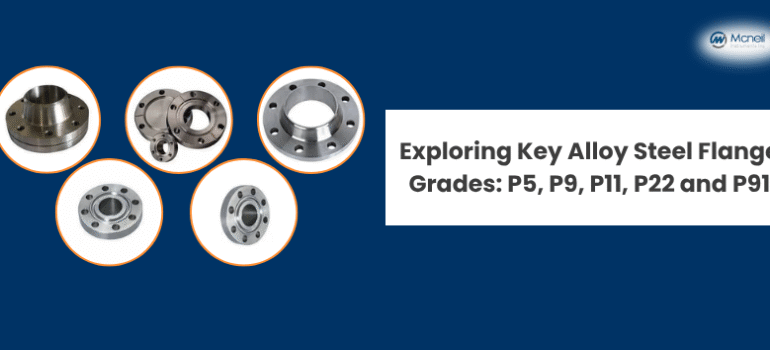
Exploring Key Alloy Steel Flange Grades: P5, P9, P11, P22 and P91

In industries that rely on high-temperature, high-pressure environments like oil & gas, petrochemical, thermal power, and refineries alloy steel flanges play a critical role in ensuring leak-proof connections and long-term structural integrity. Among the many options, grades P5, P9, P11, P22 and P91 stand out for their specific chemical compositions, performance under stress, and temperature resistance.

Mcneil Instrument, a leading entity in India, stands at the forefront as a premier manufacturer, supplier, and exporter of these specialized alloy steel flanges. We understand that selecting the correct flange grade is not merely a technicality; it’s a critical decision impacting system performance, safety, and longevity. This guide aims to demystify these key alloy steel flange grades, offering engineers and buyers comprehensive insights into their properties, applications, and the distinct advantages of partnering with a seasoned expert like Mcneil Instrument.

Whether you’re an engineer, procurement professional, or EPC contractor, understanding these alloy steel flange grades can help you make the right selection for your piping system avoiding material failures and costly downtime.

Why Alloy Steel for Flanges?

Alloy steel flanges are favored over carbon steel in applications where elevated temperatures and corrosive environments are involved. The addition of alloying elements like Chromium (Cr) and Molybdenum (Mo) enhances mechanical strength, creep resistance, and corrosion resistance properties that are essential for systems under prolonged thermal stress.

Overview of Grades: P5, P9, P11, P22 and P91

Each grade under the ASTM A182 / A336 / A234 / A387 or ASME SA series has its unique composition and use case. Here’s a breakdown of the most widely used ones:

These “P-grades” are part of the ASTM A182/ASME SA182 specification, which covers forged or rolled alloy-steel pipe flanges, forged fittings, and valves for high-temperature service. Each grade has a specific chemical composition that dictates its unique properties and suitability for different operational parameters.

Here’s a brief breakdown of each:

  • P5 Alloy Steel Flanges (5% Cr, 0.5% Mo):
    • Composition: Contains approximately 5% Chromium and 0.5% Molybdenum.
    • Characteristics: Offers good resistance to corrosion and oxidation at moderate-to-high temperatures. The Chromium provides better scaling resistance than lower alloy grades, while Molybdenum enhances high-temperature strength and creep resistance.
    • Typical Uses: Used in refineries, petrochemical plants, and power generation for systems dealing with less aggressive corrosive media but requiring elevated temperature service.
  • P9 Alloy Steel Flanges (9% Cr, 1% Mo):
    • Composition: Contains approximately 9% Chromium and 1% Molybdenum.
    • Characteristics: Provides significantly enhanced resistance to oxidation, corrosion, and hydrogen attack compared to P5. The higher Cr and Mo content boosts its high-temperature strength and creep rupture strength, extending its operating temperature range.
    • Typical Uses: Employed in more severe high-temperature applications within power plants (e.g., boiler components, superheater outlets) and advanced refinery units where higher resistance to sulfidation and hydrogen damage is required.
  • P11 Alloy Steel Flanges (1.25% Cr, 0.5% Mo):
    • Composition: Features about 1.25% Chromium and 0.5% Molybdenum.
    • Characteristics: A very popular and versatile grade offering excellent high-temperature strength, good creep resistance, and reasonable resistance to oxidation. It balances performance with cost-effectiveness for a wide range of applications.
    • Typical Uses: Widely used in conventional thermal power plants, industrial boilers, steam piping, and various parts of refinery and chemical processing units.
  • P22 Alloy Steel Flanges (2.25% Cr, 1% Mo):
    • Composition: Contains approximately 2.25% Chromium and 1% Molybdenum.
    • Characteristics: Offers superior creep rupture strength and high-temperature performance compared to P11. The increased Cr and Mo content further enhances its resistance to oxidation, sulfidation, and hydrogen attack. Designed for the most severe high-temperature and high-pressure applications.
    • Typical Uses: Crucial for critical components in modern ultra-supercritical power plants (e.g., main steam lines, headers, reheater sections), and highly demanding refinery applications.
  • P91 Alloy Steel Flanges (9% Cr, 1% Mo, V, Nb, N):
    • Composition: Contains approximately 8–9.5% Chromium, 0.85–1.05% Molybdenum, with additions of Vanadium (0.18–0.25%), Niobium (0.06–0.10%), and Nitrogen (0.03–0.07%). This complex chemistry enhances long-term strength and creep resistance.
    • Characteristics: P91 is a high-performance, creep-resistant alloy designed for supercritical and ultra-supercritical temperature service. It offers exceptional thermal fatigue resistance, long-term dimensional stability, and high creep rupture strength. Its fine microstructure, achieved through precise heat treatment, ensures durability under continuous high-temperature, high-pressure conditions.
    • Typical Uses: Extensively used in modern thermal and nuclear power plants, particularly for superheater and reheater tubes, steam headers, high-pressure pipelines, and refinery heat exchanger systems. Ideal for systems exposed to prolonged stress at elevated temperatures.

Comparison Table: Alloy Steel Grades P5, P9, P11, P22 and P91

GradeChromium (%)Molybdenum (%)Max TemperatureCommon Use
P54–60.4–0.6~590°CRefineries, Steam Lines
P98–100.9–1.1~600°CPower Plants, Superheated Systems
P111–1.50.4–0.6~570°CBoilers, Economizers
P222.0–2.50.87–1.13~600°CReheaters, High Pressure Systems
P91
8.0–9.5


0.85–1.05~650–670°CSupercritical Boilers, Long-Term High Temp Systems

Technical Specifications & Mechanical Properties

PropertyP5P9P11P22
Tensile Strength≥ 415 MPa≥ 585 MPa≥ 415 MPa≥ 415 MPa
Yield Strength≥ 205 MPa≥ 275 MPa≥ 205 MPa≥ 205 MPa
Elongation≥ 20%≥ 20%≥ 20%≥ 20%
Hardness≤ 197 HBW≤ 197 HBW≤ 197 HBW≤ 197 HBW

Certifications to Look For

When sourcing alloy steel flanges, especially for critical operations, certifications are non-negotiable.

CertificationRelevance
ASTM / ASME ComplianceProduct standard conformity
EN 10204 3.1 / 3.2Mill Test Certificate (MTC)
IBR CertificationFor Indian Boiler Regulations
ISO 9001:2015Quality Management Systems
NACE MR0175Sour service compatibility (optional)

Why Mcneil Instrument for Alloy Steel Flanges?

Mcneil Instrument is a leading manufacturer, supplier, and exporter of P5, P9, P11, P22 and P91 alloy steel flanges in India. Our reputation is built on precision, durability, and international-grade metallurgy. Here’s what makes us stand out:

  • Comprehensive Stock of alloy flanges in varied sizes, pressure ratings (Class 150 to 2500), and face types (RF, FF, RTJ).
  • In-house Testing: PMI, ultrasonic testing, hydro testing, and mechanical verification.
  • Global Export Network: Serving clients in Saudi Arabia, Qatar, Nigeria, Malaysia, Brazil, and Singapore.
  • Custom Orders for plant shutdowns, EPCs, and urgent replacement needs.

Conclusion: 

Choosing between P5, P9, P11, P22 and P91 alloy steel flange grades comes down to understanding operating temperatures, pressure ratings, and corrosive exposure. Whether you’re replacing components or designing new systems, the right flange material can extend service life and enhance system safety.

For guaranteed quality and expert guidance, trust Mcneil Instrument – your reliable partner in high-performance alloy steel flanges.

Read More

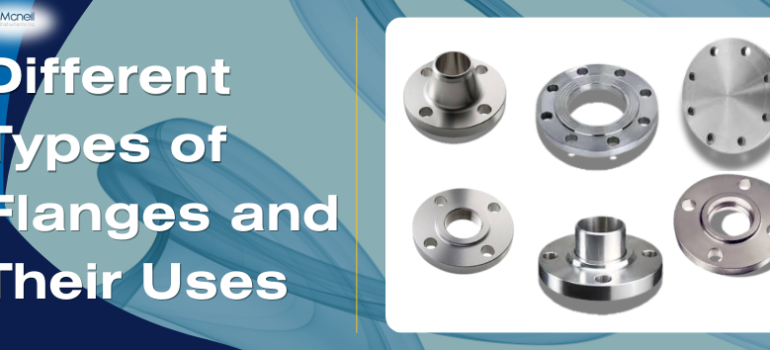
Different Types of Flanges and Their Uses

Flanges play a pivotal role in connecting pipes, valves, and other equipment in a wide array of industries, including oil and gas, petrochemicals, power plants, and construction. At Mcneil Instrument, we are one of the leading Flanges Manufacturers in India, offering a wide range of high-quality flanges to meet the needs of industries worldwide. In this blog, we’ll explore everything you need to know about flanges, including their types, uses, standards, materials, and more.

Mcneil Instrument is a leading manufacturer, supplier, and exporter of high-quality Flanges in India. Our flanges are designed to meet the stringent demands of various industries, ensuring reliable and efficient connections.

What Exactly is a Flange?

A flange is a ring-shaped component that is attached to the end of a pipe, valve, or pump. It provides a surface for bolting together two or more components, creating a sealed joint.

A flange is a mechanical component used to join pipes, valves, pumps, or other equipment. It provides a reliable, detachable connection that facilitates inspection, modification, or maintenance. Flanges are commonly used in systems where strength, durability, and a secure seal are critical.

How Are Flanges Connected?

Flanges are typically connected using bolts and gaskets to create a secure seal. They are welded or screwed to pipes or equipment, ensuring the system remains leak-proof under pressure. Proper alignment and torque application are crucial for efficient installation and maintenance of flanges.

Types of Flanges Available

Mcneil Instruments offers a diverse range of flanges to cater to various industrial needs. Here’s a breakdown of the most common types of flanges and their uses:

1. Weld Neck Flanges: These flanges are designed with a long tapered hub that provides excellent stress distribution and are welded directly to the pipe. They are ideal for high-pressure and high-temperature applications.

2. Slip-On Flanges: Slip-on flanges slide over the pipe and are then welded to ensure a secure fit. They are economical and easy to install, making them suitable for low-pressure systems.

3. Socket Weld Flanges: Socket weld flanges are used for small-sized, high-pressure piping systems. The pipe is inserted into the socket, providing a smooth bore and excellent strength.

4. Blind Flanges: Blind flanges are used to seal the ends of pipes or equipment. They provide easy access for inspections or modifications while maintaining system integrity.

5. Lap Joint Flanges: Lap joint flanges work in conjunction with stub ends, providing a loose connection. They are used where frequent disassembly is required.

6. Threaded Flanges: Threaded flanges are connected by screwing the pipe into the flange without welding. They are suitable for low-pressure systems and applications with flammable substances.

7. Ring Type Joint (RTJ) Flanges: RTJ flanges are designed with grooves to accommodate a metal ring gasket, ensuring a leak-proof seal in high-pressure and high-temperature environments.

Special Types of Flanges

TypeDescription
Spectacle BlindUsed to isolate or bypass pipe sections during maintenance.
Orifice FlangesUsed in flow measurement applications.
Long Weld NeckProvide added strength for critical applications.
Expander FlangesUsed to connect pipes of varying diameters.
Reducing FlangesFacilitate transitions between different pipe sizes.

Flanges by Material Grade

Flanges are available in a variety of materials to suit different industrial environments. Common materials include:

MaterialApplications
Stainless SteelCorrosion-resistant, ideal for harsh environments.
Carbon SteelEconomical and suitable for general applications.
Alloy SteelHigh strength and resistance to extreme conditions.
Duplex SteelCombines corrosion resistance with strength.
Nickel AlloysExcellent resistance to chemicals and acids.

Flanges by Face Type

The face type of a flange determines the sealing surface. Common face types include:

  • Flat Face (FF): Suitable for low-pressure applications.
  • Raised Face (RF): The most common, used for enhanced sealing.
  • Ring Joint (RTJ): Ideal for high-pressure and high-temperature conditions.

Flanges by Finish

The finish of a flange affects the gasket’s ability to seal. Typical finishes include:

  • Smooth Finish: Used in low-pressure systems.
  • Serrated Finish: Ensures better gasket grip in high-pressure systems.

Flange Standards and Ratings

Flanges must adhere to specific standards to ensure compatibility and reliability. Mcneil Instruments manufactures flanges that comply with:

CategoryDetails
Standards for DimensionsASTM, ASME, ANSI standards ensure compatibility and material reliability.
Industry ComplianceKOC Approved, ADNOC Approved, Saudi Aramco Approved, Takreer Approved, BP Approved, PDO, Approved, Technip Approved, Sabic Approved, Petro Rabigh Approved, KNPC Approved, Lamprell Approved, Qatar Gas Approved, Qatar Petroleum Flanges Approved, Gpic Flanges Approved.
Pressure RatingsFlanges available in pressure ratings from Class 150 to Class 2500 for diverse needs.
Common Flange StandardsASME B16.5: Pipe flanges and fittings; ANSI B16.5: ANSI standards for pipe flanges.
DIN: German standard for flanges and fittings; JIS: Japanese Industrial Standard.
Flange RatingsDefine maximum pressure and temperature a flange can withstand under specified conditions.

Flange Gaskets

Gaskets are crucial for ensuring a tight seal between flanges. Common types include:

  • Metallic Gaskets: Used for high-pressure applications.
  • Non-Metallic Gaskets: Suitable for low-pressure systems.
  • Composite Gaskets: Offer a balance of strength and flexibility.

Flange Installation and Maintenance

Proper installation and maintenance of flanges are crucial to ensure their performance and safety. Key considerations include:

  • Bolt Torque: Ensuring proper bolt torque to prevent leaks.
  • Gasket Selection: Choosing the right gasket material for the specific application.
  • Alignment: Correct alignment of the flanges to avoid stress and leaks.
  • Regular Inspection: Inspecting flanges for signs of wear, corrosion, or damage.

Flange Design Considerations

When choosing a flange, consider factors such as pressure rating, material compatibility, temperature conditions, and the intended application. For high-stress environments, opt for weld neck or RTJ flanges, while slip-on or threaded flanges work well for less demanding applications.

FAQs About Flanges

Q: What is the purpose of a flange?
A: Flanges are used to connect pipes, valves, and equipment securely, allowing for maintenance or modifications.

Q: How do I select the right flange material?
A: Consider factors like operating pressure, temperature, and corrosion resistance. Stainless steel flanges are ideal for harsh environments.

Q: What are the common flange standards?
A: Flanges are manufactured to standards such as ASME B16.5 and ASTM A182, ensuring quality and compatibility.

Conclusion

Flanges are an indispensable component in industrial piping systems, offering reliable connectivity, strength, and versatility. At Mcneil Instrument, a trusted name among flanges manufacturers, suppliers, and exporters in India, we deliver top-quality flanges that meet global standards, including Saudi Aramco Approved Flanges and Qatar Petroleum Flanges. Contact us today to find the perfect flange solution for your needs!

At Mcneil, we focus on the goal of making our customers satisfied. The products that we sell are of a higher quality, which allows the buyers to heave a sigh of relief, as these products will ensure your safety. That is why choosing our products is a smart choice on the end of our customers.

Read More