Introduction
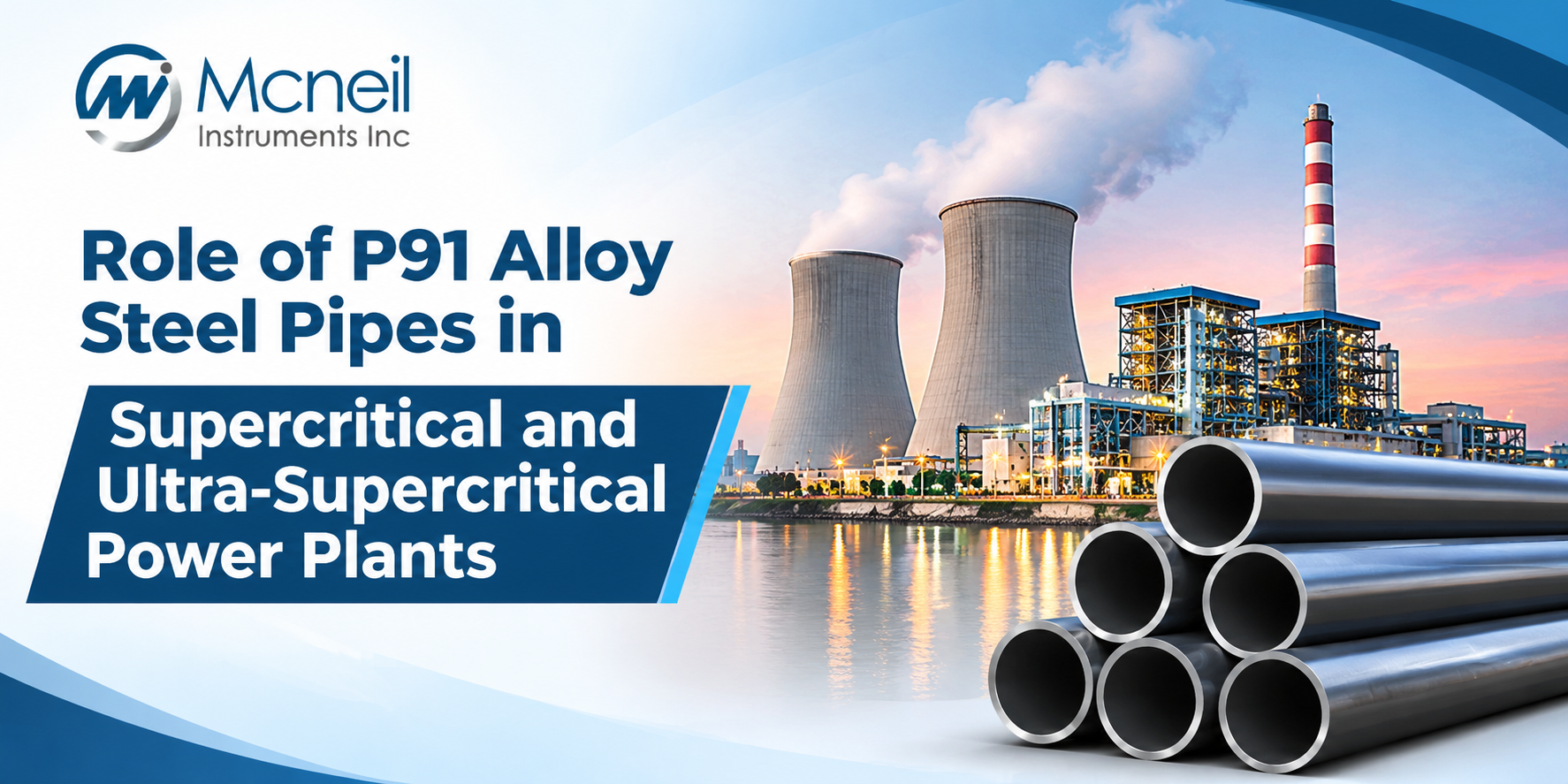
The power generation industry constantly demands materials that can withstand extreme temperatures, high pressure, and continuous operating conditions. With the development of supercritical and ultra-supercritical (USC) power plants, the importance of advanced alloy steel piping solutions has increased significantly. Among the various materials used in high-temperature applications, P91 Alloy Steel Pipes play an important role because of their excellent creep strength, high-temperature resistance, and mechanical stability.
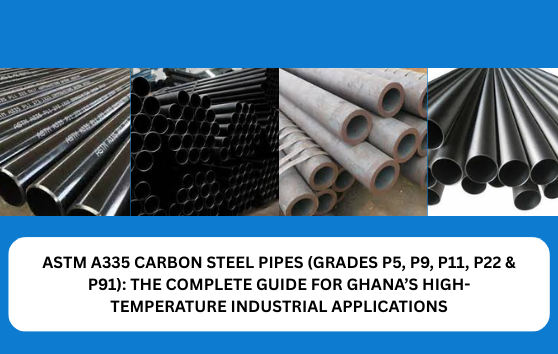
Manufactured as per ASTM A335 / ASME SA335 specifications, P91 alloy steel pipes are designed for demanding high-pressure and high-temperature services. Their chromium-molybdenum-vanadium-niobium composition provides enhanced mechanical properties, making them suitable for critical steam pipelines, boiler systems, superheaters, and reheaters.
At Mcneil Instrument, we understand the importance of reliable piping materials in power generation and industrial applications. P91 alloy steel pipes offer an effective solution for applications where long-term performance, dimensional stability, and resistance to thermal stress are essential.
Understanding P91 Alloy Steel Pipes
P91 is a high-strength, creep-resistant ferritic alloy steel grade commonly identified as 9Cr-1Mo-V-Nb steel. It contains approximately 8–9.5% chromium and 0.85–1.05% molybdenum, along with controlled additions of vanadium and niobium.
These alloying elements improve the material’s strength, thermal stability, and resistance to deformation under prolonged high-temperature exposure.
P91 pipes are generally manufactured according to ASTM A335 P91 specifications for seamless ferritic alloy steel pipes used in high-temperature services.
What Are Supercritical and Ultra-Supercritical Power Plants?
Supercritical and ultra-supercritical power plants operate at higher steam pressures and temperatures than conventional thermal power plants.
Supercritical Power Plants: These plants operate above the critical pressure of water, approximately 22.06 MPa. They offer improved thermal efficiency and reduced fuel consumption compared to conventional subcritical plants.
Ultra-Supercritical Power Plants: USC power plants operate at even higher steam temperatures and pressures, requiring advanced materials that can maintain mechanical strength and stability under demanding operating conditions.
In both systems, piping materials must withstand continuous exposure to high-pressure steam, thermal expansion, and long-term mechanical stress. This is where P91 alloy steel pipes become an important material choice.
Why Are P91 Alloy Steel Pipes Important in Power Plants?
P91 alloy steel pipes offer several performance advantages that make them suitable for critical power generation applications.
Excellent Creep Resistance: P91 maintains its mechanical strength under prolonged exposure to high temperatures and pressure, reducing the risk of creep-related deformation.
High-Temperature Strength: Its advanced alloy composition provides the strength required for demanding steam transportation systems.
Oxidation Resistance: The high chromium content improves resistance to oxidation and scaling during elevated-temperature operations.
Thermal Stability: P91 offers good structural stability under demanding thermal operating conditions when properly manufactured and heat-treated.
Reduced Wall Thickness: Its high strength can allow thinner pipe walls compared with certain conventional alloy steel grades, subject to engineering design requirements.
Major Applications of P91 Pipes in Supercritical Power Plants
P91 alloy steel pipes are used in several critical components of modern thermal power generation facilities.
Main Steam Pipelines: They transport high-temperature steam from boilers to turbine systems under demanding pressure conditions.
Superheater Systems: P91 pipes are suitable for selected superheater applications where steam temperature and pressure require enhanced material strength.
Reheater Systems: They support high-temperature steam transportation in reheating circuits.
High-Pressure Steam Headers: P91 is used in selected steam header applications where creep resistance and long-term mechanical performance are important.
Boiler Piping Systems: These pipes support high-temperature fluid and steam transportation in advanced boiler installations.
P91 vs P22 Alloy Steel Pipes: Understanding the Difference
P22 and P91 are commonly used alloy steel grades in power generation and industrial applications. However, their chemical compositions and performance characteristics differ.
P22 contains approximately 2.25% chromium and 1% molybdenum, while P91 contains approximately 9% chromium, 1% molybdenum, and additional alloying elements such as vanadium and niobium.
P91 generally offers higher creep strength and high-temperature performance than P22. This makes it suitable for more demanding steam applications where improved strength and reduced wall thickness may be required.
The final material selection depends on operating temperature, pressure, design codes, and project requirements.
Importance of Quality and Inspection in P91 Pipes
Quality assurance is essential when selecting P91 alloy steel pipes for power plant applications. Improper manufacturing, heat treatment, or welding can affect their mechanical properties and long-term performance.
Important quality checks include:
Chemical composition analysis.
Mechanical property testing.
Hardness testing.
Hydrostatic testing, where applicable.
Non-destructive examination as specified.
Dimensional and visual inspection.
Heat treatment verification.
Material Test Certificate (MTC) verification.
Proper welding procedures and post-weld heat treatment (PWHT) are particularly important for maintaining the required microstructure and mechanical properties of P91 materials.
Choosing the Right P91 Alloy Steel Pipe Supplier
Selecting a reliable supplier is important for maintaining quality and consistency in power generation projects. Buyers should consider material specifications, manufacturing standards, product traceability, inspection documentation, and dimensional requirements.
At Mcneil Instrument, we focus on providing industrial piping solutions that meet demanding application requirements. Our P91 alloy steel pipe offerings are intended for high-temperature and high-pressure applications across power generation and other critical industries.
Choosing the right material with proper quality documentation helps support operational reliability, equipment performance, and long-term industrial efficiency.
Conclusion
P91 alloy steel pipes play an important role in modern supercritical and ultra-supercritical power plants. Their excellent creep strength, high-temperature performance, and mechanical stability make them suitable for critical steam piping, boiler systems, superheaters, and reheaters.
As power generation technology continues to advance, the demand for high-performance alloy steel piping solutions will remain important. Selecting quality-assured P91 pipes from a reliable supplier like Mcneil Instrument can help industries meet demanding engineering and operational requirements.
Looking for high-quality P91 Alloy Steel Pipes for demanding industrial and power generation applications?
Choose Mcneil Instrument for reliable alloy steel piping solutions designed to meet critical industrial requirements.
Contact us today to discuss your P91 pipe requirements!
Website: www.mcneilinstrument.com
Email: info@mcneilinstruments.com
Contact: +91 98708 83613
Frequently Asked Questions (FAQs)
- What are P91 Alloy Steel Pipes?
P91 alloy steel pipes are high-strength chromium-molybdenum alloy steel pipes containing vanadium and niobium, designed for high-temperature and high-pressure applications. - Which standard is used for P91 Alloy Steel Pipes?
P91 seamless alloy steel pipes are generally manufactured according to ASTM A335 P91 and ASME SA335 P91 specifications. - Why are P91 pipes used in ultra-supercritical power plants?
P91 pipes offer excellent creep resistance, high-temperature strength, and mechanical stability, making them suitable for demanding steam piping applications. - What is the chemical composition of P91 alloy steel?
P91 typically contains 8–9.5% chromium, 0.85–1.05% molybdenum, 0.18–0.25% vanadium, and 0.06–0.10% niobium, along with other controlled elements. - What are the major applications of P91 pipes?
P91 pipes are used in main steam pipelines, superheaters, reheaters, boiler systems, high-pressure steam headers, and other critical high-temperature applications. - What is the difference between P91 and P22 pipes?
P91 contains higher chromium content and additional alloying elements, providing greater creep strength and high-temperature performance than P22 for suitable design conditions. - Why is heat treatment important for P91 pipes?
Proper heat treatment helps achieve the required microstructure, hardness, toughness, and mechanical properties necessary for reliable high-temperature service. - Which industries use P91 alloy steel pipes?
P91 pipes are primarily used in thermal power plants, electricity generation facilities, petrochemical plants, refineries, and other high-temperature industrial applications.