

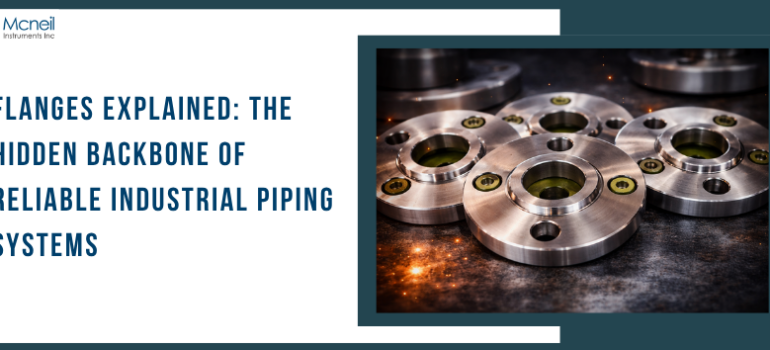
Flanges Explained: The Hidden Backbone of Reliable Industrial Piping Systems
Introduction: The Connection That Holds Everything Together
Here’s what most people overlook—pipes don’t fail as often as connections do. A poorly designed joint can cause leaks, pressure drops, and system failure.
That’s why flanges are so critical. They create strong, detachable, and leak-proof connections between pipes and equipment, making maintenance easier and systems more reliable.
Across industries, flanges are the silent components that keep everything running smoothly.
What Are Flanges?
Flanges are mechanical components used to connect pipes, valves, pumps, and other equipment in a piping system.
They are typically bolted together with a gasket in between to create a tight seal.
What They Do
• Connect pipeline components securely
• Allow easy disassembly for maintenance
• Ensure leak-proof sealing
• Maintain alignment of piping systems
Types of Flanges
Different applications require different flange designs.
Weld Neck Flanges
• Strongest type
• Used in high-pressure systems
Slip-On Flanges
• Easy to install
• Cost-effective for low-pressure use
Blind Flanges
• Seal pipeline ends
• Used for inspection and testing
Socket Weld Flanges
• Ideal for small pipes with high pressure
Threaded Flanges
• No welding required
• Used in low-pressure systems
Each type is designed to handle specific operational conditions.
Materials Used in Flanges
Flanges are available in different materials depending on usage.
Common Materials
| Material | Application |
| Stainless Steel | Corrosion-resistant environments |
| Carbon Steel | General industrial use |
| Alloy Steel | High temperature and pressure |
| Duplex Steel | Marine and offshore use |
| Nickel Alloys | Extreme corrosion conditions |
Choosing the right material ensures long-term performance.
Technical Specifications
| Specification | Details |
| Standards | ASME B16.5 / B16.47 |
| Size Range | ½″ to 48″ |
| Pressure Class | 150# to 2500# |
| Face Types | RF, FF, RTJ |
| Manufacturing | Forged / Machined |
These standards ensure compatibility across global piping systems.
Key Advantages of Flanges
Strong Leak-Proof Joints
Ensures safety in high-pressure systems.
Easy Maintenance
Can be dismantled quickly for inspection.
Versatility
Available in various sizes and materials.
High Strength
Handles pressure and temperature variations.
Long Service Life
Reliable for long-term industrial use.
Industrial Applications
Flanges are used in almost every major industry:
Oil & Gas
Pipeline and refinery systems
Petrochemical Plants
Handling chemicals and fluids
Power Generation
Boilers and turbines
Water Treatment
Distribution and filtration systems
Construction & Infrastructure
HVAC and plumbing systems
How Flanges Work
A typical flanged joint includes:
• Two flanges
• A gasket
• Bolts and nuts
When tightened, they form a secure, leak-proof seal that can be opened when needed.
Quality Testing
Flanges go through strict quality checks:
• Mechanical strength testing
• Pressure testing
• Ultrasonic inspection
• Dimensional verification
• Material testing
These tests ensure safety and reliability.
Conclusion
Flanges may look simple, but they are one of the most critical components in any piping system. They provide strength, flexibility, and ease of maintenance.
Without them, modern industrial systems simply wouldn’t function efficiently.


