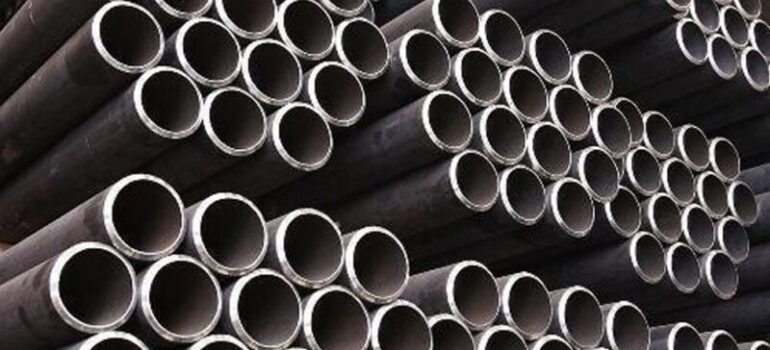
Molybdenum Grade P9 Pipes in USA: ASTM A335 P9 Specifications, Applications & Selection Guide
Industrial piping systems operating at elevated temperatures require materials that can retain mechanical strength, resist oxidation and maintain dimensional stability during prolonged service. Molybdenum Grade P9 Pipes, manufactured from chromium-molybdenum alloy steel, are designed for demanding high-temperature applications across power generation, refineries, petrochemical plants, steam systems, industrial furnaces and process industries.
Mcneil Instrument supplies ASTM A335 / ASME SA335 P9 Molybdenum Pipes for industrial requirements, offering seamless alloy steel piping intended for high-temperature and high-pressure service. P9 is distinguished by its relatively high chromium and molybdenum content, which contributes to oxidation resistance, thermal stability and high-temperature mechanical performance.
What Are Molybdenum Grade P9 Pipes?
Molybdenum Grade P9 Pipes in USA are seamless ferritic alloy steel pipes manufactured for elevated-temperature service under ASTM A335 / ASME SA335. Grade P9 contains approximately 8–10% chromium and 0.90–1.10% molybdenum, according to Mcneil Instrument’s published specifications.
The combination of chromium and molybdenum provides properties that are valuable in high-temperature piping systems, including:
- High-temperature strength
- Improved oxidation resistance
- Thermal stability
- Creep resistance
- Pressure-handling capability
- Resistance to scaling at elevated temperatures
- Long-term mechanical performance
P9 pipes in USA are particularly relevant where piping is exposed continuously to heat, pressure and thermal cycling.
The final material grade should always be selected according to the actual design temperature, operating pressure, process medium, applicable engineering code, fabrication requirements and project specifications.
Why Are P9 Molybdenum Pipes Important for USA Industries?
Industrial facilities throughout the United States operate equipment under demanding combinations of temperature, pressure and mechanical loading. Power plants, refineries, petrochemical facilities and industrial heating systems can require alloy steel piping capable of maintaining its properties over extended operating periods.
P9 Molybdenum Pipes can be considered for applications where higher chromium content and elevated-temperature performance are required.
Key characteristics include:
- High chromium content for improved oxidation and scaling resistance
- Molybdenum alloying for improved high-temperature mechanical performance
- Thermal stability during prolonged elevated-temperature service
- Creep resistance under sustained stress
- High-pressure capability when correctly specified
- Suitability for demanding process environments
ASTM A335 P9 is therefore used in selected high-temperature piping systems across power, refining, petrochemical and process industries.
ASTM A335 P9 Pipe Chemical Composition
The alloy chemistry of P9 is responsible for much of its high-temperature performance.
| Element | Typical P9 Composition |
| Carbon (C) | 0.15% max |
| Manganese (Mn) | 0.30–0.60% |
| Phosphorus (P) | 0.025% max |
| Sulfur (S) | 0.025% max |
| Silicon (Si) | 0.25–1.00% |
| Chromium (Cr) | 8.00–10.00% |
| Molybdenum (Mo) | 0.90–1.10% |
These ranges are based on Mcneil Instrument’s published ASTM A335 P9 information. Actual chemistry must be verified against the applicable material standard and the material test certificate supplied with the pipe.
Role of Chromium
Chromium contributes significantly to oxidation and scaling resistance at elevated temperatures. The relatively high chromium content of P9 distinguishes it from lower-chromium grades such as P11.
Role of Molybdenum
Molybdenum contributes to high-temperature strength and resistance to deformation under prolonged thermal and mechanical loading.
Together, these alloying elements make P9 suitable for demanding elevated-temperature applications.
Key Properties of Molybdenum Grade P9 Pipes
1. High-Temperature Performance
P9 is designed for service where piping is exposed to elevated temperatures for extended periods.
2. Oxidation Resistance
The chromium content improves resistance to oxidation and scaling compared with conventional carbon steel piping.
3. Creep Resistance
P9 can provide improved resistance to deformation under sustained stress and elevated temperature, making it suitable for selected long-duration thermal applications.
4. Thermal Stability
The chromium-molybdenum alloy structure supports stable performance during demanding thermal service and temperature fluctuations.
5. Pressure Performance
When manufactured and specified correctly, P9 seamless pipes can be used in high-pressure piping systems where elevated-temperature alloy steel performance is required.
6. Long-Term Service Capability
Correct material selection, heat treatment, welding procedures and inspection can help P9 piping maintain dependable performance over extended operating periods.
ASTM A335 P9 Pipes for High-Temperature Applications
P9 pipes are particularly relevant to industrial systems where elevated temperature and pressure occur simultaneously.
Common applications include:
- High-temperature process piping
- Steam pipelines
- Industrial furnaces
- Refinery process systems
- Heat exchangers
- High-pressure boilers
- Superheaters
- Petrochemical process lines
- Industrial heating systems
- Power-generation equipment
The specific suitability of P9 should be established through engineering calculations and the applicable design code rather than application category alone.
P9 Pipes for Power Plants in the USA
Power-generation facilities contain piping systems exposed to high temperatures, pressure and thermal cycling.
ASTM A335 P9 pipes can be considered for selected applications such as:
Steam Systems
P9 can be used for high-temperature steam piping where its alloy composition provides the required thermal and oxidation performance.
Superheaters
Superheater systems expose piping to elevated steam temperatures, requiring materials capable of maintaining mechanical properties during continuous service.
Boilers
Selected boiler piping applications can use P9 where the engineering design specifies the grade.
Industrial Heating Systems
P9 pipes in USA can also be considered for high-temperature heating and process equipment.
The exact grade depends on the plant’s operating temperature, pressure, design code and service conditions.
P9 Molybdenum Pipes for Refineries in the USA
Refineries operate heaters, furnaces, heat exchangers and process units under elevated temperatures.
P9 pipes may be used in applications such as:
- Refinery heater systems
- Furnace piping
- High-temperature process lines
- Steam systems
- Heat-transfer services
- Petrochemical process units
- High-temperature utility piping
The material selection process should consider temperature, pressure, process chemistry, hydrogen exposure where applicable, thermal cycling and the applicable refinery engineering specification.
P9 Pipes for Petrochemical and Chemical Processing
Petrochemical facilities can combine high temperature, pressure and chemically aggressive process environments.
P9 alloy steel pipes can be evaluated for:
- Hydrocarbon processing systems
- High-temperature process piping
- Steam distribution systems
- Heat-transfer systems
- Furnace circuits
- Process utility lines
- High-temperature chemical processing
P9 should not be selected solely because a process operates at high temperature. The process medium and corrosion mechanisms must also be evaluated.
P9 Pipes for Industrial Furnaces and Heating Equipment
Industrial furnaces expose piping and associated components to continuous thermal stress.
P9’s chromium content provides enhanced oxidation resistance, while molybdenum contributes to elevated-temperature mechanical performance.
Potential applications include:
- Furnace piping
- Heater systems
- High-temperature transfer lines
- Process heating equipment
- Refinery heaters
- Petrochemical heating systems
Correct design and fabrication remain essential because operating conditions can vary considerably between furnace systems.
ASTM A335 P9 vs Other Alloy Steel Pipe Grades
P9 belongs to the broader ASTM A335 family of ferritic alloy steel pipes.
| Grade | Approx. Chromium | Approx. Molybdenum | Typical Application Focus |
| P5 | 4.00–6.00% | 0.45–0.65% | Refineries, heat exchangers, high-temperature process systems |
| P9 | 8.00–10.00% | 0.90–1.10% | Steam systems, furnaces, power and petrochemical applications |
| P11 | 1.00–1.50% | 0.44–0.65% | Boilers, steam lines, power plants |
| P22 | 1.90–2.60% | 0.87–1.13% | Power plants, reheaters, high-temperature steam systems |
| P91 | 8.00–9.50% | 0.85–1.05% | Critical high-temperature and high-pressure power systems |
The published Mcneil Instrument composition data shows that P9 has considerably higher chromium and molybdenum than P11, while its chemistry differs from P91 through the latter’s additional alloying elements.
The highest-alloy grade is not automatically the best choice. Grade selection must be based on the actual operating envelope and applicable design requirements.
Seamless ASTM A335 P9 Pipes for USA Projects
Mcneil Instrument identifies its P-series alloy steel pipe range as seamless and publishes the following general product information.
| Specification | Details |
| Product | Molybdenum / Alloy Steel P9 Pipes |
| Standard | ASTM A335 / ASME SA335 |
| Grade | P9 |
| Construction | Seamless |
| Size Range | 1/8″ NB to 24″ NB |
| Schedule | SCH 20 to SCH XXS |
| Length | Random, Double Random, Cut Length |
| End Types | Plain, Beveled, Threaded |
| Manufacturing | Hot Rolled / Cold Drawn |
| Applications | Power, refining, petrochemical, steam and process systems |
Exact dimensions, wall thicknesses, schedules, lengths and manufacturing conditions should be confirmed against the project purchase specification.
Manufacturing and Quality Considerations for P9 Pipes
Because P9 pipes in USA are intended for demanding service, manufacturing quality is an important part of procurement.
Buyers should consider:
Chemical Verification
Material chemistry should be checked against ASTM A335 requirements.
Heat Treatment
Applicable heat-treatment requirements should be confirmed for the P9 grade and product dimensions.
Mechanical Testing
Required tensile, yield, elongation and hardness testing should be established according to the applicable specification and purchase order.
Non-Destructive Examination
Depending on project requirements, inspection can include ultrasonic, radiographic or other non-destructive examination methods.
Hydrostatic Testing
Pressure testing should be performed when required by the applicable specification or project requirements.
Positive Material Identification
PMI can be specified for critical projects to verify alloy composition and grade identity.
Material Traceability
Heat numbers, material certificates and inspection records should be maintained where project traceability is required.
Mcneil Instrument’s published P9 information identifies testing procedures including hydrostatic and pneumatic testing, ultrasonic and radiographic testing, dimensional inspection, hardness and tensile testing, and PMI.
How to Select P9 Molybdenum Pipes for a USA Project
Selecting P9 pipes in USA requires more than specifying the grade.
1. Define the Applicable Standard
Specify ASTM A335 / ASME SA335 and any supplementary project requirements.
2. Confirm the Grade
Verify that P9 is appropriate for the design temperature, pressure and process conditions.
3. Determine Pipe Dimensions
Specify:
- Nominal pipe size
- Outside diameter
- Wall thickness
- Schedule
- Required length
4. Review Operating Temperature
The design temperature is one of the most important factors affecting alloy steel pipe selection.
5. Review Operating Pressure
The required wall thickness and material allowable stresses must be established through the applicable engineering design.
6. Evaluate the Process Medium
Consider oxidation, corrosion, hydrogen exposure and other process-specific degradation mechanisms where relevant.
7. Establish Welding Requirements
P9 piping fabrication should use qualified welding procedures and appropriate heat-treatment practices where required.
8. Define Inspection Requirements
Specify hydrostatic testing, NDE, dimensional inspection, PMI and other tests according to the project specification.
9. Confirm Documentation
For critical applications, buyers should establish requirements for:
- Material Test Certificates
- Heat-number traceability
- Inspection reports
- Test results
- Compliance certificates
- Third-party inspection where required
Industries Using ASTM A335 P9 Pipes in the USA
Power Generation
Used in selected steam, boiler, heating and high-temperature piping systems.
Oil & Gas
Applicable to selected refinery, gas-processing and high-temperature process systems.
Petrochemical
Used for process piping, steam systems, heaters and heat-transfer applications.
Refineries
P9 can be evaluated for refinery heaters, furnace piping and other elevated-temperature systems.
Chemical Processing
Used where process temperature and mechanical requirements justify alloy steel piping.
Industrial Heating
Suitable for selected furnace, heater and high-temperature process applications.
Heavy Engineering
Can be incorporated into specialized industrial equipment and engineered piping systems requiring ASTM A335 alloy steel.
Advantages of Choosing Molybdenum Grade P9 Pipes
P9 offers a combination of alloying characteristics that make it useful for elevated-temperature service.
Major advantages include:
- High chromium content
- Good oxidation resistance
- High-temperature mechanical performance
- Improved thermal stability
- Creep resistance
- Pressure-handling capability
- Suitability for demanding process systems
- Availability in seamless construction
- Compatibility with high-temperature industrial applications
These benefits are realized only when the grade, dimensions, fabrication procedures and operating conditions are correctly matched.
Why Choose Mcneil Instrument for P9 Molybdenum Pipes?
Mcneil Instrument supplies ASTM A335 / ASME SA335 alloy steel pipes, including Grade P9, for high-temperature industrial applications and international markets. Its published product range identifies seamless construction, multiple dimensions and schedules, and project-specific inspection and documentation support.
Key supply considerations include:
- ASTM A335 / ASME SA335 P9 pipe supply
- Seamless alloy steel construction
- Multiple sizes and schedules
- Project-specific dimensional requirements
- Testing and inspection support
- Material certification
- Traceability documentation
- International export capability
- Applications across power, refining and petrochemical industries
For USA projects, buyers can provide the required grade, size, schedule, length, end preparation, testing, inspection and certification requirements when requesting a quotation.
Frequently Asked Questions
What are Molybdenum Grade P9 Pipes?
Molybdenum Grade P9 Pipes in USA are chromium-molybdenum alloy steel pipes manufactured for elevated-temperature service. ASTM A335 P9 contains approximately 8–10% chromium and 0.90–1.10% molybdenum according to Mcneil Instrument’s published specifications.
What standard covers P9 Molybdenum Pipes?
ASTM A335 / ASME SA335 covers the seamless ferritic alloy steel pipe specification used for high-temperature service, including Grade P9.
What are ASTM A335 P9 Pipes used for?
P9 pipes are used in selected high-temperature applications including power stations, refinery systems, industrial furnaces, steam systems, petrochemical facilities, heat exchangers and high-temperature process piping.
Why does P9 contain a high percentage of chromium?
The relatively high chromium content contributes to oxidation and scaling resistance during elevated-temperature service.
What does molybdenum do in P9 steel?
Molybdenum contributes to high-temperature mechanical performance and resistance to deformation under sustained thermal and mechanical loading.
Are P9 Pipes suitable for high-pressure applications?
Yes, P9 pipes can be specified for high-pressure service when the grade, wall thickness, design conditions and applicable engineering code are appropriate.
Are ASTM A335 P9 Pipes seamless?
Yes. Mcneil Instrument identifies its ASTM A335 P-series range, including P9, as seamless alloy steel pipes.
What sizes of P9 Pipes are available?
Mcneil Instrument’s published alloy steel range lists sizes from 1/8″ NB to 24″ NB, with schedules from SCH 20 to SCH XXS. Exact availability should be confirmed for the specific order.
Can Mcneil Instrument supply P9 Pipes for USA projects?
Yes. Mcneil Instrument publishes USA-focused information for its alloy and Chrome Moly pipe products and identifies international supply to the USA.
How should P9 Pipes be selected?
P9 should be selected according to design temperature, pressure, process medium, creep requirements, dimensions, welding requirements, applicable code and project specifications rather than simply by application name.
Conclusion
Molybdenum Grade P9 Pipes provide a specialized alloy steel piping option for industrial systems exposed to elevated temperatures, pressure and prolonged thermal loading. With approximately 8–10% chromium and 0.90–1.10% molybdenum, ASTM A335 P9 combines oxidation resistance with high-temperature mechanical performance and thermal stability.
For USA industrial applications, P9 can be considered for power-generation systems, refinery heaters, petrochemical facilities, steam systems, industrial furnaces, heat exchangers and high-temperature process piping.
The correct P9 pipe specification should always be established from the actual operating temperature, pressure, process chemistry, pipe dimensions, applicable design code, welding requirements and inspection criteria.
Mcneil Instrument supplies ASTM A335 / ASME SA335 P9 Molybdenum Pipes for industrial applications, with seamless construction, multiple sizes and schedules, testing, inspection and documentation options available according to project requirements.