How to Select the Right Flange Material for High-Temperature and Corrosive Environments

Introduction

Industrial piping systems are only as reliable as the components that connect them. Among these components, flanges play a critical role by providing secure, leak-proof joints between pipes, valves, pumps, pressure vessels, and other equipment. However, selecting the wrong flange material for harsh operating conditions can lead to corrosion, mechanical failure, costly downtime, and safety risks.

Industries such as oil & gas, petrochemicals, power generation, offshore engineering, LNG processing, marine applications, and chemical manufacturing operate in environments where extreme temperatures, aggressive chemicals, and high-pressure conditions are common. In these applications, choosing the correct flange material is just as important as selecting the right pipe or valve.

At Mcneil Instrument, we manufacture and supply a comprehensive range of industrial flanges in stainless steel, alloy steel, duplex steel, super duplex steel, carbon steel, and nickel alloys, helping industries worldwide achieve reliable and long-lasting piping systems. Mcneil Instrument supplies industrial flanges in a wide variety of materials and configurations that comply with international standards for demanding industrial applications.

Why Flange Material Selection Matters

A flange must perform reliably throughout the life of the piping system.

Selecting an unsuitable material can result in:

• Corrosion damage

• Leakage

• Bolt failure

• Thermal fatigue

• Pressure loss

• Frequent shutdowns

• Increased maintenance costs

Choosing the correct material ensures:

• Long service life

• Leak-free performance

• Improved plant safety

• Reduced maintenance

• Better operational efficiency

• Lower lifecycle costs

Key Factors to Consider Before Selecting a Flange Material

1. Operating Temperature

Temperature is one of the most important factors.

Industrial applications may involve:

• Steam systems

• Boilers

• Furnaces

• Heat exchangers

• Thermal power plants

• Petrochemical reactors

For elevated temperatures, alloy steels and nickel alloys generally provide significantly better strength retention than standard carbon steels.

2. Corrosive Environment

Determine what media the flange will encounter.

Examples include:

• Seawater

• Chlorides

• Sulfuric acid

• Nitric acid

• Hydrogen

• LNG

• Saltwater

• Process chemicals

Corrosion resistance should always match the process fluid.

3. Operating Pressure

Pressure ratings influence both flange design and material selection.

Higher operating pressures require materials capable of maintaining strength without deformation.

4. Mechanical Loading

Consider:

• Vibration

• Thermal cycling

• Pipeline expansion

• External loading

Materials with higher fatigue strength perform better under cyclic loading.

5. Industry Standards

Always select flanges manufactured according to internationally recognized standards such as:

• ASTM

• ASME

• ANSI

• API

• DIN

• EN

These standards help ensure compatibility, dimensional accuracy, and reliable performance.

Choosing the Right Flange Material

Stainless Steel Flanges

Best For

• Food Processing

• Pharmaceutical Plants

• Water Treatment

• General Chemical Processing

• Process Industries

Popular Grades

• Stainless Steel 304 Flanges

• Stainless Steel 304L Flanges

• Stainless Steel 316 Flanges

• Stainless Steel 316L Flanges

• Stainless Steel 321 Flanges

• Stainless Steel 347 Flanges

Advantages

• Excellent corrosion resistance

• Good weldability

• Long service life

• Attractive finish

Stainless steel is an excellent choice for applications where corrosion resistance is required without exposure to extremely aggressive chemicals.

Carbon Steel Flanges

Best For

• Utility Pipelines

• Water Distribution

• Structural Applications

• Low to Medium Temperature Systems

Benefits

• High strength

• Cost-effective

• Easy fabrication

Carbon steel flanges are widely used where corrosion exposure is limited and economic considerations are important.

Alloy Steel Flanges

Recommended For

• Power Plants

• Refineries

• Steam Systems

• Boilers

• Petrochemical Facilities

Common Grades

• ASTM A182 F5 Flanges

• ASTM A182 F9 Flanges

• ASTM A182 F11 Flanges

• ASTM A182 F22 Flanges

• ASTM A182 F91 Flanges

Advantages

• Excellent high-temperature strength

• Outstanding creep resistance

• Superior oxidation resistance

• Long-term thermal stability

Chrome Moly Alloy Steel Flanges are specifically developed for elevated temperature and high-pressure applications.

Duplex Stainless Steel Flanges

Ideal For

• Offshore Platforms

• Marine Engineering

• Desalination Plants

• Oil & Gas Pipelines

Popular Grades

• Duplex 2205 Flanges

• ASTM A182 F51 Flanges

Benefits

• High mechanical strength

• Excellent chloride resistance

• Superior stress corrosion resistance

Super Duplex Stainless Steel Flanges

Recommended For

• Offshore Oil Production

• Seawater Systems

• Chemical Processing

• Marine Installations

Available Grades

• Super Duplex S32750 Flanges

• Super Duplex S32760 Flanges

• Super Duplex 2507 Flanges

Advantages

• Outstanding seawater resistance

• Exceptional pitting resistance

• Excellent fatigue strength

Inconel Flanges

Best Applications

• Gas Turbines

• LNG Facilities

• Aerospace

• Petrochemical Plants

Available Grades

• Inconel 600 Flanges

• Inconel 625 Flanges

• Inconel 718 Flanges

• Inconel 800 Flanges

• Inconel 800H Flanges

Benefits

• Excellent oxidation resistance

• High-temperature stability

• Superior corrosion protection

Monel Flanges

Recommended For

• Marine Industry

• Offshore Platforms

• Desalination Plants

Popular Grades

• Monel 400 Flanges

• Monel K500 Flanges

Advantages

• Outstanding seawater resistance

• Excellent corrosion resistance

• Long operational life

Hastelloy Flanges

Best For

• Acid Processing

• Chemical Manufacturing

• Fertilizer Plants

Available Grades

• Hastelloy C276 Flanges

• Hastelloy C22 Flanges

• Hastelloy B2 Flanges

• Hastelloy B3 Flanges

• Hastelloy X Flanges

Benefits

• Exceptional chemical resistance

• Superior corrosion protection

• Outstanding durability

Titanium Flanges

Recommended For

• Aerospace

• Offshore Engineering

• Desalination

• Marine Systems

Popular Grades

• Titanium Grade 1 Flanges

• Titanium Grade 2 Flanges

• Titanium Grade 5 Flanges

Advantages

• Lightweight

• Outstanding corrosion resistance

• Excellent strength-to-weight ratio

Match the Material to the Environment

Operating EnvironmentRecommended Flange Material
High Temperature SteamASTM A182 F11, F22, F91 Alloy Steel
Offshore & SeawaterDuplex, Super Duplex, Monel
Chemical ProcessingHastelloy, Titanium
LNG PlantsInconel, Stainless Steel 316L
PharmaceuticalStainless Steel 316L
Food ProcessingStainless Steel 304/316
Marine ApplicationsMonel, Duplex, Titanium
Power GenerationAlloy Steel F11, F22, F91

Choosing the Right Flange Type

Material selection should also complement the flange design.

Mcneil Instrument manufactures:

• Weld Neck Flanges

• Slip-On Flanges

• Blind Flanges

• Socket Weld Flanges

• Threaded Flanges

• Lap Joint Flanges

• Ring Type Joint (RTJ) Flanges

Different flange types are selected based on pressure, maintenance requirements, and piping configuration. Mcneil Instrument supplies a complete range of industrial flange types for oil & gas, petrochemical, power, and process industries.

Industries That Require Specialized Flange Materials

Mcneil Instrument supplies industrial flanges to:

Oil & Gas

• Refineries

• Pipelines

• Offshore Platforms

Petrochemical

• Process Plants

• Chemical Reactors

Power Generation

• Boilers

• Turbines

• Steam Pipelines

Marine Industry

• Shipbuilding

• Offshore Installations

LNG Industry

• Cryogenic Systems

• Gas Processing

Chemical Industry

• Acid Processing

• Corrosive Fluid Handling

Why Choose Mcneil Instrument?

Mcneil Instrument is a trusted manufacturer, supplier, exporter, distributor, and wholesaler of industrial flanges serving global industries.

Our strengths include:

• Extensive material options

• International manufacturing standards

• Precision machining

• Strict quality inspections

• Ready stock for project requirements

• Worldwide exports

• Technical support for material selection

The company supplies flanges in stainless steel, carbon steel, alloy steel, duplex, super duplex, and nickel alloys for customers across global industrial markets.

Quality Assurance

Every flange undergoes comprehensive testing including:

• PMI Testing

• Hydrostatic Testing

• Mechanical Testing

• Dimensional Inspection

• Material Traceability

• Visual Inspection

• Third-Party Inspection

These inspections help ensure compliance with international standards and reliable field performance.

Conclusion

Selecting the correct flange material is essential for ensuring safety, durability, and operational efficiency in industrial piping systems. Factors such as operating temperature, pressure, corrosion exposure, and mechanical loading should always be evaluated before making a material selection.

Whether your project requires Stainless Steel Flanges, Carbon Steel Flanges, ASTM A182 F5 Flanges, ASTM A182 F11 Flanges, ASTM A182 F22 Flanges, ASTM A182 F91 Flanges, Duplex Steel Flanges, Super Duplex Flanges, Inconel Flanges, Monel Flanges, Hastelloy Flanges, or Titanium Flanges, Mcneil Instrument delivers precision-engineered flange solutions designed for the world’s most demanding industrial applications.

Read More

Beyond Standard Flanges: Why ASTM A182 F5, F9, F11, F22 & F91 Alloy Steel Flanges Are Essential for High-Temperature Industrial Operations

Introduction

Industrial facilities operating under extreme temperatures and high-pressure conditions require piping components that deliver strength, reliability, and long-term performance. In sectors such as power generation, petrochemical processing, oil & gas refining, thermal power plants, LNG terminals, and chemical manufacturing, flange failures can lead to costly downtime and operational risks.

This is why ASTM A182 Alloy Steel Flanges remain one of the most preferred flange materials for critical industrial applications.

Manufactured from chromium-molybdenum alloy steel, ASTM A182 F5, F9, F11, F22, and F91 Alloy Steel Flanges are specifically engineered to withstand elevated temperatures, pressure fluctuations, thermal stress, and corrosive environments. These flanges are widely used for connecting pipes, valves, pumps, and pressure equipment where ordinary carbon steel components may not perform effectively.

At Mcneil Instrument, a comprehensive range of Alloy Steel Flanges is supplied to customers worldwide, supporting some of the most demanding industrial projects across the energy and process sectors.

Why Alloy Steel Flanges Matter in Critical Piping Systems

Industrial piping networks must withstand:

• High-pressure steam
• Extreme temperatures
• Thermal cycling conditions
• Corrosive process media
• Mechanical stress
• Continuous plant operation

ASTM A182 Alloy Steel Flanges provide:

• Excellent heat resistance
• Superior creep strength
• Outstanding oxidation resistance
• High tensile strength
• Long service life
• Reliable sealing performance

These advantages make Chrome Moly Flanges a preferred choice for critical service applications.

Mcneil Instrument: Trusted Supplier of ASTM A182 Alloy Steel Flanges

Mcneil Instrument is a leading manufacturer, supplier, exporter, stockist, and distributor of:

• ASTM A182 F5 Alloy Steel Flanges
• ASTM A182 F9 Alloy Steel Flanges
• ASTM A182 F11 Alloy Steel Flanges
• ASTM A182 F22 Alloy Steel Flanges
• ASTM A182 F91 Alloy Steel Flanges

The company manufactures flanges in accordance with ASME and international quality standards for use in power plants, refineries, petrochemical facilities, boilers, and pressure systems.

ASTM A182 F5 Alloy Steel Flanges

Reliable Oxidation Resistance for High-Temperature Service

ASTM A182 F5 Alloy Steel Flanges contain approximately 5% chromium and 0.5% molybdenum, providing excellent resistance against oxidation and elevated temperatures.

Key Benefits

• Excellent thermal stability
• Good corrosion resistance
• Strong mechanical properties
• Long-term durability

Applications

• Refineries
• Heat Exchangers
• Industrial Furnaces
• Process Piping Systems

ASTM A182 F9 Alloy Steel Flanges

Enhanced Strength for Severe Operating Conditions

ASTM A182 F9 Alloy Steel Flanges are designed for high-temperature and high-pressure service environments.

Advantages

• Superior creep resistance
• Enhanced mechanical strength
• Excellent oxidation resistance
• Improved thermal performance

Applications

• Thermal Power Plants
• Petrochemical Facilities
• High-Pressure Steam Systems
• Boiler Installations

ASTM A182 F11 Alloy Steel Flanges

The Industry’s Most Popular Chrome Moly Flange Grade

ASTM A182 F11 Alloy Steel Flanges are widely used due to their excellent combination of strength, weldability, and heat resistance.

Features

• Excellent weldability
• High tensile strength
• Reliable thermal stability
• Good corrosion resistance

Applications

• Power Generation Plants
• Steam Pipelines
• Petrochemical Units
• Pressure Vessels

ASTM A182 F22 Alloy Steel Flanges

Built for High-Pressure and High-Temperature Operations

ASTM A182 F22 Alloy Steel Flanges offer superior creep resistance and exceptional durability under elevated temperatures.

Benefits

• Outstanding pressure handling capability
• Excellent thermal stability
• Long operational life
• Reliable mechanical performance

Applications

• Boilers
• Heat Exchangers
• Steam Systems
• Refinery Processing Units

ASTM A182 F91 Alloy Steel Flanges

Advanced Alloy Steel Solution for Extreme Conditions

ASTM A182 F91 Alloy Steel Flanges are among the highest-performing chrome moly flanges available.

Containing approximately 9% chromium and 1% molybdenum with additional strengthening elements, F91 flanges are engineered for the most demanding industrial environments.

Advantages

• Exceptional creep resistance
• Superior heat resistance
• Outstanding mechanical strength
• Excellent thermal fatigue resistance

Applications

• Supercritical Power Plants
• Nuclear Facilities
• High-Temperature Steam Pipelines
• Petrochemical Refineries

Types of Alloy Steel Flanges Available

Mcneil Instrument supplies a complete range of Alloy Steel Flanges including:

Weld Neck Flanges

Ideal for high-pressure and high-temperature service.

Slip-On Flanges

Easy installation and cost-effective operation.

Blind Flanges

Used to isolate piping systems and pressure vessels.

Socket Weld Flanges

Suitable for smaller diameter high-pressure pipelines.

Threaded Flanges

Designed for systems where welding is not preferred.

Lap Joint Flanges

Ideal for systems requiring frequent maintenance and inspection.

Technical Specifications

SpecificationDetails
StandardASTM A182 / ASME SA182
GradesF5, F9, F11, F22, F91
Size Range½” to 48″
Pressure Class150# to 2500#
Flange TypesWeld Neck, Slip-On, Blind, Socket Weld, Threaded
StandardsASME B16.5, ASME B16.47

Industries Using ASTM A182 Alloy Steel Flanges

Power Generation Industry

Used in:

• Boilers
• Steam Pipelines
• Turbine Systems
• Heat Recovery Units

Oil & Gas Industry

Supports:

• Refineries
• Processing Facilities
• Pipeline Networks
• Offshore Installations

Petrochemical Industry

Provides reliable performance in:

• High-temperature processing units
• Chemical transfer systems
• Pressure equipment

LNG Industry

Used in:

• LNG Processing Facilities
• Storage Systems
• Cryogenic Infrastructure

Chemical Processing Industry

Supports corrosive and high-temperature operations.

Why Global Industries Choose Mcneil Instrument

Mcneil Instrument continues to supply Alloy Steel Flanges to customers across the Middle East, Asia, Europe, and Africa.

Key strengths include:

• ASTM and ASME compliant manufacturing
• Ready stock availability
• Extensive grade range
• International exports
• Advanced quality testing procedures
• Competitive project pricing

Conclusion

As industrial systems continue operating under higher temperatures and greater pressures, the demand for reliable flange solutions continues to grow.

Whether it is ASTM A182 F5 Alloy Steel Flanges, ASTM A182 F9 Alloy Steel Flanges, ASTM A182 F11 Alloy Steel Flanges, ASTM A182 F22 Alloy Steel Flanges, or ASTM A182 F91 Alloy Steel Flanges, these products deliver the strength, durability, and performance required for critical industrial applications.

With extensive manufacturing expertise and global supply capabilities, Mcneil Instrument remains a trusted partner for premium Alloy Steel Flanges serving the world’s most demanding industries.

Read More

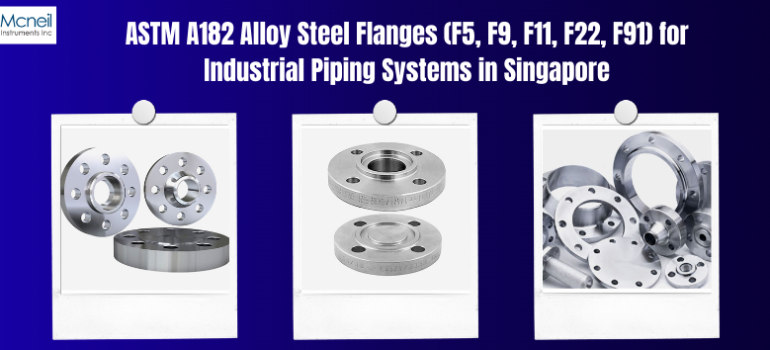
ASTM A182 Alloy Steel Flanges (F5, F9, F11, F22, F91) for Industrial Piping Systems in Singapore

Introduction: Why Alloy Steel Flanges Are Essential in High-Pressure Piping Systems

Industrial pipelines used in energy plants, refineries, marine facilities, and chemical plants require strong and reliable components to handle high pressure and extreme temperatures. Among these components, alloy steel flanges play a crucial role in connecting pipes, valves, pumps, and other equipment within a piping network.

ASTM A182 alloy steel flanges are widely used because they are specifically designed for high-temperature and high-pressure service environments. This specification covers forged or rolled alloy steel flanges, fittings, and valve components used in demanding industrial applications.

Industries in Singapore, particularly oil & gas terminals, petrochemical plants, marine infrastructure, and power generation facilities, rely on ASTM A182 F5, F9, F11, F22, and F91 alloy steel flanges because of their excellent mechanical strength, corrosion resistance, and heat resistance.

These chrome-moly alloy steel flanges are engineered to perform reliably in extreme environments where conventional carbon steel components may fail.

This article explains ASTM A182 alloy steel flanges, their properties, grades, industrial uses, and importance in modern piping systems.

What Are ASTM A182 Alloy Steel Flanges?

ASTM A182 alloy steel flanges are forged piping components used to connect pipes, valves, pumps, and other equipment in industrial piping systems. Flanged joints are typically bolted together with a gasket placed between them to create a leak-proof seal.

The ASTM A182 specification covers forged alloy steel materials used in pressure systems, especially where pipelines operate at high temperature or high pressure.

These flanges are manufactured using forging and machining processes that ensure durability, strength, and dimensional precision.

Common Types of Alloy Steel Flanges

• Weld Neck Flanges – used for high pressure pipelines
• Slip-On Flanges – easy to install and commonly used
• Socket Weld Flanges – ideal for small diameter pipes
• Blind Flanges – used to close pipeline ends
• Threaded Flanges – used where welding is not preferred

Each flange type is designed to support different piping configurations and pressure conditions.

Chemical Composition of ASTM A182 Alloy Steel Flanges

Alloy steel flanges are manufactured using chromium-molybdenum alloy steels that offer superior mechanical strength and temperature resistance.

Typical elements present in these materials include:

ElementRole in Alloy
Chromium (Cr)Improves corrosion resistance
Molybdenum (Mo)Enhances high-temperature strength
Carbon (C)Provides hardness and strength
Manganese (Mn)Improves toughness
Silicon (Si)Enhances oxidation resistance

For example, ASTM A182 F22 contains chromium and molybdenum, which enhance both corrosion resistance and high-temperature strength.

Mechanical Properties of ASTM A182 Alloy Steel Flanges

Alloy steel flanges offer high strength and durability, making them suitable for demanding industrial systems.

PropertyTypical Value
Tensile Strength≥ 415 MPa
Yield Strength≥ 205 MPa
Elongation≥ 20%
HardnessVaries by grade

Grades such as ASTM A182 F91 provide excellent mechanical strength and resistance to high temperatures and pressure.

Key Advantages of ASTM A182 Alloy Steel Flanges

Excellent High-Temperature Performance

Chrome-moly alloy steels are designed to operate under elevated temperatures, making them suitable for power plants and refineries.

Superior Mechanical Strength

These flanges maintain structural integrity even under heavy pressure and mechanical stress.

Strong Corrosion Resistance

Chromium content enhances resistance against oxidation and corrosion in industrial environments.

High Pressure Handling Capability

Alloy steel flanges are designed for pressure systems in boilers, reactors, and petrochemical pipelines.

Long Operational Life

The durability of these materials ensures long-term reliability and reduced maintenance costs.

Technical Specifications of ASTM A182 Alloy Steel Flanges

SpecificationDetails
StandardASTM A182 / ASME SA182
GradesF5, F9, F11, F22, F91
Size Range½″ to 36″ NB
Pressure Class150# to 2500#
Flange FacesRaised Face (RF), Flat Face (FF), RTJ
Manufacturing TypeForged
Flange TypesWeld Neck, Slip-On, Blind, Socket Weld, Threaded

These flanges comply with international piping standards such as ASME B16.5 and B16.47.

Industrial Applications of Alloy Steel Flanges in Singapore

Singapore is a global hub for petrochemical refining, offshore energy, and marine engineering. ASTM A182 alloy steel flanges are widely used in these sectors.

Oil and Gas Industry

Used in refineries and offshore platforms for transporting hydrocarbons.

Petrochemical Plants

Suitable for handling high-temperature chemical processes.

Power Generation Plants

Used in steam pipelines, boilers, and turbine systems.

Marine and Offshore Infrastructure

Corrosion-resistant flanges are essential for offshore energy facilities.

Chemical Processing Industry

Reliable for transporting aggressive chemicals and high-pressure fluids.

Major ASTM A182 Alloy Steel Flange Grades

ASTM A182 F5 Alloy Steel Flanges

F5 flanges contain approximately 5% chromium, providing excellent oxidation resistance and durability.

Applications

• Oil refineries
• Chemical plants
• High-temperature piping systems

ASTM A182 F9 Alloy Steel Flanges

F9 flanges provide enhanced strength and corrosion resistance in high-temperature environments.

Applications

• Petrochemical plants
• Power generation facilities
• Industrial heat processing systems

ASTM A182 F11 Alloy Steel Flanges

F11 flanges are widely used in high-temperature and high-pressure systems.

Key Characteristics

• High tensile strength
• Excellent heat resistance
• Good weldability

Applications

• Power plants
• Oil & gas pipelines
• Nuclear and petrochemical industries

ASTM A182 F22 Alloy Steel Flanges

F22 is a chromium-molybdenum alloy steel with excellent resistance to high pressure and heat.

Applications

• Boilers and condensers
• Heat exchangers
• Pressure vessels

ASTM A182 F91 Alloy Steel Flanges

F91 is a high-strength alloy steel designed for extreme temperature applications.

Key Characteristics

• Excellent creep resistance
• High mechanical strength
• Strong oxidation resistance

Applications

• Nuclear power plants
• Petrochemical refineries
• High-temperature steam pipelines

Comparison of Alloy Steel Flange Grades

GradeAlloy CompositionKey AdvantageTypical Applications
F5Chromium alloy steelOxidation resistanceRefineries
F9Chrome-moly steelHigh temperature durabilityPetrochemical plants
F11Chrome-moly steelHigh pressure performancePower plants
F22Chromium + molybdenumExcellent strengthBoilers & heat exchangers
F919% Cr + 1% MoExtreme temperature resistanceNuclear & energy plants

Quality Testing of Alloy Steel Flanges

To ensure reliability and safety, ASTM A182 alloy steel flanges undergo strict quality inspections.

Common testing procedures include:

• Chemical composition analysis
• Mechanical strength testing
• Hydrostatic pressure testing
• Ultrasonic testing
• Radiographic testing
• Positive Material Identification (PMI)
• Dimensional inspection

These tests ensure the flanges comply with international engineering standards.

Conclusion

ASTM A182 alloy steel flanges are critical components in modern industrial piping systems. Their chrome-moly alloy composition provides excellent strength, corrosion resistance, and stability at high temperatures.

Industries in Singapore, particularly petrochemical refining, marine engineering, and power generation, rely on ASTM A182 F5, F9, F11, F22, and F91 alloy steel flanges for reliable and long-lasting pipeline connections.

With their ability to withstand extreme operating conditions, these flanges remain a preferred choice for high-pressure and high-temperature industrial applications.

Read More