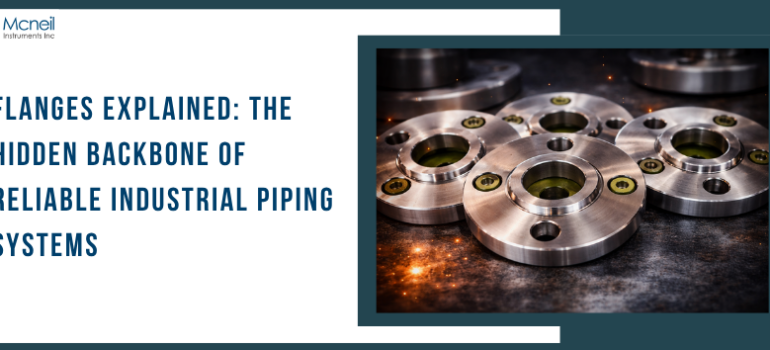
Introduction: The Connection That Holds Everything Together
Here’s what most people overlook—pipes don’t fail as often as connections do. A poorly designed joint can cause leaks, pressure drops, and system failure.
That’s why flanges are so critical. They create strong, detachable, and leak-proof connections between pipes and equipment, making maintenance easier and systems more reliable.
Across industries, flanges are the silent components that keep everything running smoothly.
What Are Flanges?
Flanges are mechanical components used to connect pipes, valves, pumps, and other equipment in a piping system.
They are typically bolted together with a gasket in between to create a tight seal.
What They Do
• Connect pipeline components securely • Allow easy disassembly for maintenance • Ensure leak-proof sealing • Maintain alignment of piping systems
Flanges may look simple, but they are one of the most critical components in any piping system. They provide strength, flexibility, and ease of maintenance.
Without them, modern industrial systems simply wouldn’t function efficiently.
Introduction: The Critical Role of Flanges in Industrial Piping Systems
In heavy industries, from oil and gas to petrochemical, power generation, water treatment, and manufacturing, piping systems are the arteries that carry critical fluids and gases. Flanges are the indispensable connectors within these systems – allowing sections of pipe, valves, pumps, and equipment to be joined securely while providing ease of assembly and maintenance.
Flanges are more than simple connectors; they play a vital role in ensuring piping integrity under high pressure, high temperature, corrosive media, and dynamic operational conditions. When a flange leaks or fails, the consequences can include safety hazards, environmental damage, and costly production downtime.
As a trustedmanufacturer, supplier, and exporter, Mcneil Instrumentdelivers high-quality industrial flanges engineered to meet global standards. This blog covers everything you need to know about flanges, including types, materials, specifications, industrial applications, testing, and why Mcneil Instrument stands out as a dependable global partner.
What Are Flanges and Why They Matter
A flange is a flat, disc-shaped component with bolt holes around its perimeter, used to connect pipes or equipment. Two flanges are bolted together with a gasket between them, creating a secure, leak-resistant joint. This bolted configuration allows easy assembly, disassembly, inspection, and replacement, which is crucial in industrial environments where maintenance access is essential.
Flanges are used for:
● Joining pipes of the same or different diameters
● Connecting pipes to valves, pumps, and pressure vessels
● Isolating sections of piping for maintenance
● Closing or terminating a pipeline
● Enabling pressure testing and inspection access
Flanges are extensively used across industries where piping systems face extreme conditions and regulatory compliance is essential.
Mcneil Instrument supplies a wide range of flanges designed to meet project requirements across global industries. Choosing the right type depends on operating conditions such as pressure, temperature, media, and installation practices.
1. Weld Neck Flanges
Weld neck flanges have a long tapered hub and are butt-welded to the pipe. This provides excellent stress distribution and minimizes turbulence and erosion.
Best suited for:
● High-pressure systems
● High-temperature steam lines
● Subsea and offshore pipelines
2. Slip-On Flanges
Slip-on flanges slide over the pipe and are fillet-welded both inside and outside. They are easier to install and align.
Best suited for:
● Low to medium pressure systems
● HVAC lines and water distribution
3. Socket Weld Flanges
Socket weld flanges allow the pipe to seat inside the flange and are then fillet-welded at the top. These are suitable for small-diameter, high-pressure systems.
Best suited for:
● Instrumentation lines
● Small-bore high-pressure fluid transfer
4. Threaded Flanges
Threaded flanges have internal threads allowing them to be screwed onto threaded pipes without welding.
Best suited for:
● Low-pressure systems
● Temporary installations
5. Blind Flanges
Blind flanges are solid discs with no bore; used to close the end of a piping system, a pressure vessel, or apparatus.
Best suited for:
● End-of-line closures
● Inspection and maintenance access
6. Lap Joint Flanges
Lap joint flanges are used with a stub end. They allow the flange to rotate around the pipe for easier alignment of bolt holes.
Best suited for:
● High-corrosion media with frequent disassembly
● Stainless steel or clad pipe systems
7. Orifice Flanges
Orifice flanges have tapped holes and alignment points for orifice plates used in flow measurement systems.
Best suited for:
● Metering and instrumentation
● Process control systems
Materials and Grades Available
Flanges are supplied in a wide range of materials to suit application environments, including:
Carbon Steel
● ASTM A105
● ASTM A350 LF2
● Suitable for high-pressure and temperature applications in oil & gas and power plants.
● Used in aggressive chemical and high temperature environments.
Materials are selected based on service conditions such as pressure ratings, temperature, corrosive exposure, and mechanical requirements.
Standards and Specifications
Flanges from Mcneil Instrument comply with key global standards, ensuring their suitability for industrial use worldwide.
Materials & Manufacturing
Standard
Description
ASTM / ASME
Material and quality standards
ANSI / ASME B16.5
Pipe Flange and Flanged Fittings
ASME B16.47
Large Diameter Steel Flanges
MSS SP-44
Steel Pipe Line Flanges
API 6A
Flanges used in oil well equipment
Size, Pressure & End Connections
Feature
Description
Diameter Range
½″ NB to 48″ NB and above (custom)
Pressure Class
ANSI Class 150, 300, 600, 900, 1500, 2500
End Types
Weld Neck, Slip-On, Socket Weld, Threaded, Blind, Lap Joint
Surface Finish
Pickled, Polished, Bead Blasted, Black
Materials are tested for mechanical integrity, chemical composition, and dimensional accuracy, ensuring reliability in even the most demanding applications.
Mechanical Properties (Typical)
Material
Tensile Strength
Yield Strength
Hardness (Typical)
Carbon Steel A105
High
High
Moderate
Stainless Steel 304
≥ 515 MPa
≥ 205 MPa
≤ 95 HRB
Stainless Steel 316
≥ 515 MPa
≥ 205 MPa
≤ 95 HRB
Alloy Steel F22
≥ 620 MPa
≥ 415 MPa
High
Duplex 2205
≥ 620 MPa
≥ 450 MPa
Very High
Super Duplex 2507
≥ 850 MPa
≥ 620 MPa
Very High
Actual values may vary by grade and manufacturing process. Detailed values are provided with Mill Test Certificates (MTCs) and test reports.
Testing & Quality Assurance
Quality assurance is paramount, especially for critical industrial components like flanges. Mcneil Instrument’s stringent quality control process includes:
● Material Test Certificates (EN 10204 3.1/3.2)
● Positive Material Identification (PMI)
● Hydrostatic Testing
● Ultrasonic & Radiographic (NDT)
● Dimensional Inspection (ASME Standards)
● Visual and Mechanical Testing
Full traceability and documentation accompany all flange deliveries — a key requirement for EPC contractors, industrial buyers, and major project teams.
Industries Served
Mcneil Instrument’s flanges support a wide range of industries globally:
Mcneil Instrument stands out as a global flange provider due to:
1. Comprehensive Product Range
A vast portfolio including carbon, stainless, alloy, duplex, super duplex, and exotic materials.
2. Standards Compliance
Engineering and testing to ASTM, ASME, ISO, API, and ANSI standards.
3. Technical Expertise
Assistance with material selection, pressure class determination, and custom design needs.
4. Global Supply Chain
Reliable export logistics, documentation management, and delivery coordination to project sites worldwide.
5. Quality & Traceability
Rigorous testing, certified documentation, and full traceability for industrial compliance.
Conclusion: Precision Flanges for Global Industrial Systems
Industrial flanges are more than connectors; they are pivotal elements that ensure piping integrity, safety, and performance. From oil & gas and petrochemical plants to power stations and high-purity process systems, Mcneil Instrument’s flanges deliver durability, precision, and global compliance.
ChoosingMcneil Instrument as yourmanufacturer, supplier, and exporter means investing in quality, reliability, and performance that stand the test of pressure, temperature, and time — supporting critical infrastructure and industrial pipelines across the world.
Flangesare critical components used to connect pipes, valves, and other equipment in various industries. They provide a secure, leak-proof connection that ensures the safe flow of liquids, gases, or solids. Flanges are available in various types, materials, and dimensions, designed to meet the specific needs of different applications. Understanding these requirements is essential to ensure proper performance, safety, and longevity in any industrial setup.
Types of Flanges
There are several types of flanges, including weld neck flanges, slip-on flanges, blind flanges, lap joint flanges, and threaded flanges. Each type is designed to meet specific connection and sealing requirements, depending on the application. For example, weld neck flanges provide excellent stress distribution, while blind flanges are used to seal off pipeline ends.
Short Descriptions of Flange Types:
Weld Neck Flange: Provides a high-strength, stress-resistant connection.
Slip-On Flange: Easy to install but less durable.
Blind Flange: Seals the pipeline end or vessel opening.
Lap Joint Flange: Used with stub ends in low-pressure applications.
Threaded Flange: Screwed directly onto pipes for low-pressure systems.
Flanges are made from a variety of materials, including stainless steel, carbon steel, alloy steel, and non-ferrous metals. The choice of material depends on the operating environment, such as temperature, pressure, and the type of fluid or gas being handled. For example, stainless steel flanges are highly resistant to corrosion and are used in chemical and food industries.
Flange Ratings and Standards
Flanges are rated based on their ability to withstand pressure and temperature, with standard ratings ranging from 150 to 2500 psi. Various organizations, such as ASME, ANSI, and DIN, provide guidelines for these ratings. Industry-specific standards ensure that flanges meet performance requirements under specific conditions.
Industry-Specific Requirements for Flanges
As a leading manufacturer, supplier, and exporter Mcneil Instrument provides a range of high-quality flanges that meet the diverse demands of industries across the globe. But what makes flange requirements different from one industry to another? Let’s explore the specific needs in different sectors.
Oil and Gas Industry: Flanges in this industry need to withstand high pressures and temperatures. Corrosion-resistant materials, such as stainless steel and nickel alloys, are often used. The oil and gas industry requires strict adherence to ASME and API standards.
Chemical Industry: Flanges in the chemical industry must resist corrosion and chemical reactions. PTFE-lined flanges and stainless steel flanges are commonly used to handle aggressive chemicals. These flanges also need to maintain leak-tight seals in extreme conditions.
Power Generation Industry: In power plants, flanges are exposed to high temperatures and steam pressure. High-temperature alloys are preferred for these applications, and regular inspection and testing are critical to ensure safety and efficiency.
Food and Beverage Industry: For this industry, flanges must meet hygienic standards and resist contamination. Stainless steel is the most common material used due to its corrosion resistance and ease of cleaning.
Pharmaceutical Industry: Flanges in the pharmaceutical industry must ensure sanitary conditions. The materials used, such as stainless steel, are chosen for their ability to withstand frequent cleaning and sterilization processes.
Construction Industry: In construction, flanges are often used for reinforcing pipelines and connecting HVAC systems. Durability and ease of installation are key requirements, and carbon steel is frequently used for its strength.
Flange Gaskets and Their Importance
Gaskets are placed between flange faces to create a tight seal, preventing leaks in the system. The selection of the right gasket material—such as rubber, metal, or PTFE—is essential to maintain the integrity of the seal under various conditions.
Flange Inspection and Testing
Regular inspection and testing of flanges are necessary to ensure their performance and prevent failures. Methods like ultrasonic testing and radiography are commonly used to detect defects in the material or connections.
Flange Failures and Troubleshooting
Common causes of flange failures include improper installation, material fatigue, and gasket failure. Troubleshooting these issues involves inspecting for cracks, leaks, and corrosion and replacing damaged components promptly.
Emerging Trends in Flange Technology
Recent advancements in flange technology include the development of corrosion-resistant coatings, customized flange designs, and the use of advanced materials that enhance durability and performance in extreme environments.
At Mcneil Instrument, we manufacture flanges that meet the stringent requirements of various industries. Our flanges are approved by leading organizations, including KOC, Saudi Aramco, ADNOC, and BP. These approvals guarantee that our flanges meet the highest quality standards for use in critical applications.
Flanges are essential components across industries, each with specific requirements based on pressure, temperature, and environmental conditions. At Mcneil Instrument, we provide a wide range of flanges designed to meet the diverse needs of industries such as oil and gas, chemical, pharmaceutical, and more. Our products adhere to international standards and are tested to ensure top-notch quality and reliability.